The 100 best PC games of all time in 2025
The definitely definitive list as defined by us
Image credit:Rock Paper Shotgun

Since 1873, the team at Rock Paper Shotgun have gathered once a year to select what they believe to be the best PC games of all time. Admittedly, they only started writing the list down in 2021, but try not to hold their spotty recordkeeping against them.
If you’ve been following along at home, you will have seen that what we consider to be the best PC games of all time changes substantially from year to year. We’re capricious souls and firm believers in Ralph Waldo Emerson’s maxim that a foolish consistency is the hobgoblin of little minds. Just because we ranked a game one year doesn’t mean it will forever make the cut. This is a list that reflects the current team’s current tastes.
Creating lists is an exciting challenge. Even if there were a thousand places to fill, we would struggle to fit in every game we considered to be one of the best PC games of all time. As such, we have chosen our personal favourite games. We’ve not added games because they’re considered important or influential. And, as Katharine (RPS in peace) said back when the first of these lists was published, “Remember, if there’s a favourite game of yours we haven’t included, know that it’s at number 101”.
Without further ado, here are our picks for the RPS 100: 2025 Edition.
- 100 - 81
- 80 - 61
- 60 - 41
- 40 - 21
- 20 - 1
100. Like A Dragon: Infinite Wealth

Image credit:Rock Paper Shotgun / Sega / Ryu Ga Gotoku Studio
Genre: Action game
Released: 2024
After bouncing off its predecessor, I was hesitant to review Like A Dragon: Infinite Wealth review. Despite blazing through all the games leading up to Yakuza: Like A Dragon, the series’ switch from real-time goon-smacking action to turn-based RPG battles with the not at all confusingly named Y:LAD left me cold. I missed the simple, cathartic fist swinging brawls of the earlier entries.
Infinite Wealth changed all that. Set across sun-drenched Hawaii and more familiar stomping grounds in Japan, Infinite Wealth gives Ichiban Kasuga - the face of the series’ new turn-based era - and classic protagonist Kazuma Kiryu - he of the beat-em-up fury - double-billing as dual leads. The Yakuza games have always had to balance serious Japanese gangster drama with surrealist laughs, and the two leads’ contrasting quests to find family and grapple with mortality aid the different settings in offering plenty of scope for meaningful smiles and sadness without risking tonal whiplash.
From a practical perspective, perhaps the better time I had with it was simply because I was more conscious of the need to seek out every battle, building my strength so the story never screeched to a halt when encountering a high-level boss, as it had in my Yakuza: Like A Dragon run. But more than that, I was able to appreciate that the fundamental switch to turn-based RPGdom hadn’t dulled the mainline series’ ability to offer the sort of straightforward romp which made me initially fall in love with Karaokegangstermanslappingoons Simulator. – Mark
99. Inscryption

Image credit:Rock Paper Shotgun / Daniel Mullins Games
Genre: Horror, card battler
Released: 2021
Daniel Mullins’ Inscryption begins with you sitting in a log cabin facing a scraggly gremlin who gets a kick out of shoving his knobbly fingers in your face. But there’s no time to have a conversation about personal space because your new friend is jazzed to play his card game with you. A little like Slay The Spire, it sees you progress through a haunted forest, fighting woodland animals with the cards in your hand. The game is difficult, tipped against you. Animals rip and tear at you, ending your run short of the cabin at the end of the wood. So you play, over and over, beaten repeatedly because this crinkly ogre is straight-up cheating.
But there are ways you can cheat back…
To say much more would take away from the surprises up Inscryption’s sleeves. It is a horror game that transforms before your eyes time and time again, flipping systems it introduced hours ago, playing around with essential mechanics, and enticing you to break its rules and rig its systems in your favour. It is rare to find a game so inventive, so unexpected. – Callum
98. House Of The Dying Sun

Image credit:Rock Paper Shotgun / Marauder Interactive
Genre: Space combat game
Released: 2016
Not one to let bygones be bygones, the final order of your murdered emperor in House Of The Dying Sun is a punchy one: hunt the traitor lords and bring ruin to their people. So starts your short rampage through the solar system, blasting away fighters, frigates, and capital ships with vengeful abandon.
House Of The Dying Sun is a space combat game built in the mold of Wing Commander, Descent, and Star Wars: X-Wing Vs Tie Fighter. Each battle in its short campaign sees you warp into a map littered with asteroids and other stellar clutter, and a target you must terminate before their backup arrives and outguns you.
Played on a gamepad, your little fighter feels both nippy and powerful, able to pull off maneuvers that would be impossible in gravity. By holding down the left shoulder button, you can shut off your rear thruster and spin round to fire on enemies chasing you, all while retaining your forward velocity. It’s the closest I’ve come to feeling like Starbuck in Battlestar Galactica outside of the demo for the (sadly cancelled) Beyond the Red Line Freespace mod.
While there are larger and more complex space fighter games, they overstay their welcome and run out of ideas. House Of The Dying Sun is an adrenal shot of moody cool space shootery. And, if you’ve a VR headset, it’s one of the best games to play with a screen strapped to your head. – Julian
97. Dragon’s Dogma II

Image credit:Rock Paper Shotgun / Capcom
Genre: Fantasy RPG
Released: 2024
To the folk who insist Dragon’s Dogma II is merely a remake of the first game, I hear you. But it still sticks with me as a singular case of Capcom using their fancy RE Engine to create the equivalent of a D&D campaign run by an improvising Dungeon Master. Case in point: as you walk from town to town or ride a caravan (there’s no fast travel here), you’ll bump into a big ogre, say, and chaos will ensue. You’ll scramble up its back to whack its noggin. As you do so, there’s a chance the ogre will bump into a griffin, and suddenly a whole bloody kaiju battle has commenced in the forest.
While the first Dragon’s Dogma had these moments of barely-controlled chaos, it didn’t have an item called the Unmaking Arrow. An item that kills whatever it touches in one shot. Dragon’s Dogma II makes this list, then, for the chutzpah it possesses to forego modern gaming habits and tropes, similar to a Dungeon Master throwing their hands up and exclaiming, “Okay, you want to use the Unmaking Arrow on the final boss? The one I spent all week preparing? Fine. But you have to live with the consequences.” – Jeremy
96. Devotion

Image credit:Rock Paper Shotgun / Red Candle Games
Genre: Horror
Released: 2019
Devotion is remembered for being hounded off the internet by Chinese bigwigs over an in-game reference to a meme about Xi Jinping resembling Winnie the Pooh. Said Chinese bigwigs might have been less narked if developers Red Candle weren’t Taiwanese.
In any case, Devotion deserves to be remembered for more than denting Winnie Jinping’s ego. It’s one of the best horror games ever made, a tale of despair, kooky cults and crushing familial expectations that charts several periods in one majestically creepy apartment building. It makes exquisite use of a tiny layout, expanding the setting into delusion where necessary, and mixing in Edith Finch-esque dalliances with other genres and aesthetics. Its manipulations are dreadful: you’ll see a Thing, make a slow deduction and turn to find that, yes, there is another Thing behind you. In terms of ambience, it’s not worlds away from P.T. and Silent Hill 4, but it’s far too crafty a game to be called a homage. Fortunately, you can now buy it direct from the developers . – Edwin
95. DayZ

Image credit:Rock Paper Shotgun / Bohemia Interactive
Genre: Multiplayer survival game
Released: 2018
Well before anyone fought through trembling hands in the final ring of a battle royale, or stole the spoils from a murdered stranger in an extraction shooter, there was DayZ : a zombie-flavoured ArmA II survival mod whose unbearably tense PvP shootouts led the world in shaky hands and stranger murder alike.
This, the standalone version, is still defined by the danger of being cruelly shot by a man dressed as a shrub from 400 yards away. And while years of early access refinements and post-1.0 launches have fleshed out sandbox elements like base building and disease management, both these and, indeed, the zombies remain secondary concerns to the risk of player-induced death.
Accept this risk, however, and DayZ can still deliver the thrills that the mod did in 2012. Exchanges of gunfire remain heart-punchingly intense, and looting what appears to be a completely abandoned hut still carries the tension of knowing that a Czech psychopath could stick a Mosin through the window at any moment. This uneasiness continues to flavour encounters with friendlier players too – even telling someone you’re only passing through, and them believing you , is like narrowly surviving another close call. Death is everywhere in DayZ, and yet few games make me feel so alive. – James
94. Wreckfest

Image credit:Rock Paper Shotgun / Bugbear Entertainment
Genre: Racing game
Released: 2018
Bang. Bash. Bonk. Wreckfest is a driving game that wants you to do all of these plosives. It encourages you to pick any track, be it a dirt circuit, stunt run, or figure eight and smash shit up. It has a nice roster of customisable scrapyard-dwellers for you to do that smashing with. They thunk and bump to bits in immensely satisfying fashion, especially if you’re hit or hit someone from the side or head-on.
Wheels, bodywork, detritus, the entire boxy skin of a motorhome, or the twisted form of a school bus that’s been buckled nearly in half, it all goes flying or drags along in your wake. Like wrapping paper on Christmas morning. If you’re lucky, your ride might still run at the end. Even if it doesn’t, you’ll have had a blast. – Mark
93. Dyson Sphere Program

Image credit:Rock Paper Shotgun / Youthcat Studio
Genre: Sci-fi management game
Released: 2021
Dyson Sphere Program was such an ambitious idea for a game, I immediately scoffed upon hearing it. A factory building game like Factorio, set on an actual spherical planet? Oh excuse me - not just one planet, but dozens of planets across multiple star systems, all entirely traversable? And the aim is to create a Dyson Sphere out of hundreds or thousands of parts, capable of harnessing the power of a star to run an entire civilization living inside a virtual reality simulation? Bah! Preposterous! Turns out, they completely and utterly nailed it.
From the first moments trundling about the surface of a planet mining ores with your fuel-powered mech, I was sold. The game ran smoothly, the scope and soundtrack were inspiring, and the lure of steadily automating mega-factories spanning whole solar systems, and creating massive interplanetary transport and logistics networks, was utterly captivating. It’s a truly special game. – Ollie
92. BattleTech

Image credit:Rock Paper Shotgun / Paradox Interactive / Harebrained Schemes
Genre: Turn-based tactics game
Released: 2018
What sets BattleTech apart from the other turn-based tactical games on this list is a healthy infusion of callous capitalism. As you fly from planet to planet in the Inner Sphere, commanding your lance of mechpilots on competing jobs for feuding warlords, you’re never far from the mercenary company’s P&L sheet.
Each month you need enough money in the bank to pay your pilots and the maintenance cost of their mechs. Fail and you’ll have a mechanised mutiny on your hands. This doesn’t just mean you’ll take almost any job just to keep the engine running, but in battle it impacts all of your decisions. Repairs are costly, so quick kills will keep your overheads low. However, if you want valuable loot, you need to disable enemy mechs without destroying them outright – bringing them low by sniping at their legs instead of the higher hit-chance torso shots.
This vein of sci-fi accountancy brings surprising dramatic weight to the battlefield, which is impressive in a game already dotted with 100-tonne war machines. – Julian
91. Full Throttle

Image credit:Rock Paper Shotgun / Lucas Arts Games
Genre: Point and click adventure game
Released: 1995
There are many arguments over which Tim Schafer adventure game is best, and while Grim Fandango is certainly worthy of praise, my favourite has always been Full Throttle. Maybe it’s my inner dieselhead speaking, or perhaps it’s the high production values of this LucasArts masterwork, which kicked my ass with its opening rock song “Legacy,” courtesy of The Gone Jackals.
Focusing on a biker named Ben who’s stuck in the middle of a motorcycle company takeover orchestrated by the corrupt businessman Adrian Ripburger (voiced with sinister glee by Mark Hamill), Full Throttle oozes style as it prods you to solve puzzles and punch thugs in the face while driving at 90 miles per hour. It’s a very short affair - only requiring about two hours of your time if you know what you’re doing - but this is the worst thing about it. Channeling Mad Max with a dash of that standard LucasArts humour, Full Throttle was one of Tim Schafer’s finest works, and it’s a damn shame that the sequel never came about. – Jeremy
90. Deep Rock Galactic

Image credit:Rock Paper Shotgun / Ghost Ship Games
Genre: Co-op first-person shooter
Released: 2020
Built by a small studio in Copenhagen, Deep Rock Galactic is a fine example of doing more with less. Its alien mines are proc-genned instead of handcrafted, but the system produces such visual striking and spatially engaging cave networks that it’s hard to complain. The four classes of playable space dwarf all use pitch-shifted variants of the same lines recorded by a single voice actor, but this simple editing bodge produces so much distinction between their granted bantz that it’s hard to notice.
More importantly, Deep Rock Galactic is just simply a very, very good co-op shooter. Bouts of chunky insect-blasting mix satisfyingly with teamplay-heavy spelunking, aided by a set of traversal tools that are flexible enough to allow for more expressive and creative deployments in combat – a favoured point defence tactic among my usual crew is to have a Driller dig out a makeshift bunker in the nearest wall while an Engineer blocks off the ceiling with deployable platforms, funnelling bugs into a tidy frontal killbox.
This easy synergizing is just one of several qualities that contributes to Deep Rock Galactic’s friendly, laid-back vibe, which in turn keeps it as a welcoming retreat for anyone burnt out on the competitiveness and/or daily login grind of contemporary live service FPSes. Others include the mission control base having a functioning pub, the inherent comic value of accidentally downing half the team with wayward explosives, and the dedicated keybind for shouting out “Rock and Stone”. Rock and Stone. – James
89. Stray

Image credit:Rock Paper Shotgun / Blue Twelve Studios
Genre: Adventure game
Released: 2022
Stray remains my favourite of the early 2020s cat games, which were oddly numerous, now that I think about it. And despite the sci-fi elements of this third-person (for want of a better phrase) adventure across the streets and roofs of a Kowloon-styled walled city, part of its appeal does lie in how authentically cat-like your ginger tabby feels through the thumbsticks. The light trotting! The little wind-up before a jump! The knocking over of objects that would preferably not have been knocked over! I’ve never had “be a domestic shorthair” on my most-wanted list of video game fantasies but hey, turns out they can make quite the charming protagonists.
Even better than the feline kinetics, mind, is the city itself. It’s a brilliantly realised space, all but a few areas being chokingly dense, hyper-detailed urban canyons where manky walls and rain-soaked pavements bathe in the light of neon signs and the optical sensors of friendly robot inhabitants. It’s gross and gorgeous and steeped in an atmosphere that manages to find the warmth among the gloom. Not the worst conditions for a cat, there. – James
88. Return Of The Obra Dinn

Image credit:Rock Paper Shotgun / Lucas Pope
Genre: Detective game
Released: 2018
As the offspring of two parents who consume a concerning amount of detective shows, it was inevitable I’d inherit a genetic disposition towards solving whodunits. Though I don’t spend my Sunday afternoons bingeing the Alibi channel, I moonlight as a digital gumshoe, chowing through every detective game I can find. However, after playing Return of the Obra Dinn, none of them scratch that itch quite the same.
You’re investigating an insurance claim on the Obra Dinn, a ship owned by the East India Company., working out who, if anyone, is owed a payout. The vessel arrived in port with no surviving crew or passengers. It’s your job to determine what happened to all sixty of them. Though, the smattering of corpses on board, suggest something unsavoury occurred.
Thanks to your pocket watch, the Memento Mortem, you investigate a body to see the last seconds before its death. From these frozen snippets, you must figure out who you’re watching, their job, their relationships, and their secrets. Your notes and timelines quickly turn into a conspiracy board. It’s a mystery and story you can only unravel by attending to every tiny detail. – Callum
87. Plants Vs Zombies

Image credit:Rock Paper Shotgun / EA / Popcap Games
Genre: Tower defence game
Released: 2009
I replay the original Plants vs. Zombies nearly every year, and each year it reminds me without fail why no other tower defence game comes close. It feels like a game from an alternate universe where everyone knows all you need is a single static screen, some colourful sprites, and an unbelievable amount of charm and charisma to make a masterpiece.
In Plants vs. Zombies, you must protect your house by placing plants in the lanes of your garden, so you can defend against the waves of zombies looking to feast on your brains. With almost every one of its levels, you get a new type of plant to play with, and a new type of zombie will appear, gently forcing you to rethink your tactics and try new things. The rhythm is further broken up by minigames every five levels or so, where instead of placing down plants you’re playing Whack-A-Zombie, or going Wall-Nut bowling. And every ten levels, the setting changes. Suddenly you’re in the back garden, where the middle two lanes are a pool of water that only allows certain plants. Or perhaps it’s nighttime, and graves appear towards the end of the lanes which spawn additional zombies during the final waves.
If you’ve never played a game in your life, let Plants vs. Zombies be your first. Everything is understandable at a glance, and - perhaps more importantly - endearing at a glance too. The plants are all stupidly adorable, and somehow so are the zombies. The bobbing Sunflowers, the little smile of the Wall-Nut which turns sad as more and more of it gets eaten… And all the while, the timeless soundtrack by Laura Shigihara plays in the background, making it genuinely impossible for you not to play with a big dumb smile on your face. – Ollie
86. Pentiment

Image credit:Rock Paper Shotgun / Microsoft / Obsidian Entertainment
Genre: Adventure game
Released: 2022
If you’ve ever wondered what 16th century monks had for lunch, Obsidian and Josh Sawyer have got the game for you. Pentiment’s about loving history in all of its most pedantic detail, putting you in the shoes of artist turned impromptu detective Andreas Maler. There’s a murder mystery to solve and in classic RPG fashion, the lives of everyone in the village of Tassing and Kiersau Abbey will be affected by the choices you make as you search for the culprit.
The art style, inspired by illuminated manuscripts and early printed works, is gorgeous and gives the whole thing an enchanting storybook feel. That said, it’s not afraid to tackle the cold realities of a strictly stratified medieval society and the deep effects life’s ugly twists can have on people. That’s when it fancies rolling away from the sort of pleasant charm that comes from chatting to someone about the various aspects of Andreas’ life and skillset. You can pick different options for these traits for each playthrough, opening up different bits of dialogue and pathways for some nice replayability.
As one of the few games I know for sure I can run on my regular old laptop, it’s inevitably gotten whipped out during summer holiday evenings for the last couple of years, and will be for years to come. – Mark
85. Gorogoa

Image credit:Rock Paper Shotgun / Annapurna Interactive / Jason Roberts
Genre: Puzzle game
Released: 2017
The best thing about writing up Gorogoa for this list is that I have sort of forgotten about Gorogoa, and can go discover it again. Here’s what I remember: you are trying to assemble mundane things and places into an image of the divine. The game takes place in hand-drawn worlds of castles and staircases, orchards and towers. These scenes occupy four panels, and can be dragged about, combined and transformed to allow a wanderer to move between them. The art is 2D and depthless in both senses: each image hosts others, secreted in the texture or revealed by means of your growing understanding of unspoken cosmic principles. Between the folds of the palimpsest, you see the peacock’s eye and endless rolling scales of something like a god. I do wonder in hindsight if Gorogoa is too cleanly-made and gratifying, almost soporific in its gracefulness, but still, I’m not sure I’ve ever played anything quite this enchanted. – Edwin
84. Conquests of the Longbow

Image credit:Rock Paper Shotgun / Sierra On-Line
Genre: Point and click adventure game
Released: 1991
Robin Hood has starred in his fair share of electronic amusements (Defender of the Crown, anyone?) but there’s only one game that lovingly encapsulates the heart of Nottingham’s favourite forest fella. Conquests of the Longbow explores Robin’s drive to unite his merry men against the foul Sheriff in a tale that we’ve heard before. But what makes it stand out beyond typical fare of the era is an earnest dollop of historical authenticity thanks to director and writer Christy Marx (of Jem, Elfquest, and Red Sonja fame). This is a game that inhabits the Robin Hood myth. It brings to live 1190s England, filling it with puzzles, staff fighting on Watling Street, archery contents, and even a game of Nine Men’s Morris - a form of copy protection, no doubt, but at least a fun one.
The sequel to Conquests of Camelot, a 1990 effort that shone a similar light on Arthurian legend, Conquests of the Longbow remains a worthy yet overlooked gem. Where else can you relax with a pixelated Friar Tuck while musing over the vagaries of Sherwood Forest and listening to lute tunes as translated via the smooth sounds of an AdLib soundcard? Ready your arrows and give this one a go if you’re tired of pirate wannabes in your adventure games - the original outlaw can give ’em a run for their money. – Jeremy
83. Into The Breach

Image credit:Rock Paper Shotgun / Subset Games
Genre: Turn-based tactics game
Released: 2018
Earth is lost, the supersized alien bugs have won. Across the globe, cities burn as mandibles click-clack in celebration. Humanity’s only hope is to send a team of mechpilots back in time to stamp out the insect invaders before they can overwhelm the planet’s defenders.
In Into The Breach you command those time-travelling, mech-piloting, bug-stomping soldiers in a turn-based tactical offering in a tiny package. Each procedurally-generated map is only an 8x8 grid, made up of civilian-filled city blocks, forests, rivers, and mountains. Yet, despite their size, these diorama-like levels are stuffed with life. When your mechs beam into action, speech bubbles relaying messages of relief appear above the homes that dot the map.
You and the aliens take turns trying to destroy each other, but clever tweaks to the genre’s tried-and-tested formula transform Into The Breach into something unique. For a start, your health isn’t tied to your mech pilots’ survival, but the civilians’. If too many die then it’s game over. Second, the aliens telegraph their intended moves, giving you total knowledge (and responsibility) for what the enemy achieves in its turn. Third, while your cannons and artillery do damage, they also shove their targets away from the explosions. Each turn becomes an intricate puzzle of how to use your limited actions to derail the bugs’ plans. Using your weapons to shove and pull foes into a new pattern that sees their attacks hit allies instead of your mechs.
But it’s offloading your health bar to the civilian structures that makes the most impact. It’s a twist that points at your role as humanity’s defender. Over a campaign, you will choose to make heroic sacrifices, moving your mechs into enemy fire to block shots that would otherwise level a city block. You become the valorous commander from a kaiju movie, protecting innocent life above all else. – Julian
82. The Stanley Parable

Image credit:Rock Paper Shotgun / Galactic Cafe
Genre: First-person adventure game
Released: 2013
I’ll level with you, reader, I hate describing why The Stanley Parable is good. It’s exactly the kind of game where, ideally, the only thing you’d know about it going in is whether or not you meet the system requirements.
Then again, it’s also surprising, funny, and inventive enough that it can probably endure a spot of gushing. I’ve adored The Stanley Parable’s walking simulation, in which you wander an office in accordance with or in defiance of a caramel-voiced narrator, since its original Half-Life 2 mod; its standalone remake in 2013 greatly expanded the scope of your potential disobedience and honed the sharpness of the jokes, before the Ultra Deluxe edition (which is probably the one you should buy today) did both yet again.
The resulting complexity might tempt you towards performance-enhancing guides, mapping out the game’s many secrets and myriad endings. Please try to resist. The Stanley Parable’s offbeat charm is truly singular, and thus, best appreciated with as little knowledge and as few expectations as possible. – James
81. Peggle

Image credit:Rock Paper Shotgun / EA / Popcap Games
Genre: Pinball game
Released: 2007
I have played more than 200 hours of Peggle, so I have to believe there is something more to it than bouncing marbles between pegs in a desperate need to hear Ode To Joy.
Maybe it’s about the randomness of the universe. A parable of how we are but marbles flinging through life, pinging between encounters with family, friends, and strangers. Often those meetings go nowhere, we bounce away earning only an awkward memory – like that time you said “And you too!” to the person in the trainstation ticket booth who wished you a pleasant trip.
But sometimes… sometimes, one connection pings you into another. You strike up a chat with a stranger on the train and realise they went to your school. You’ve friends in common. You like the same band. It’s a moment of joyous synchronicity. You realise this is what people call kismet; it’s as though the universe is aligning around you. Every beat in the conversation feels like a link in a preordained chain of events that flies in the face of the idea that the universe is a simplye sea of chaos. You step off the train together, ready to explore this fledgling friendship, and step right into the 100,000 point bonus bucket, Ode To Joy starts playing and your sick score earns you the admiration of a unicorn called Bjorn.
Look, I don’t know. It’s Peggle. I’ve played 200 hours of it and it’s great. – Julian
80. Arc Raiders

Image credit:Rock Paper Shotgun / Embark Studios
Genre: Extraction shooter
Released: 2025
Reading articles and forums about extraction shooter Arc Raiders, the general consensus seems to be surprise at how nice players are to one another. After all, in theory, anyone can shoot anyone in this game and take their valuable loot. Yet there are so many stories of good Samaritans coming to the aid of a player pinned down by AI-controlled drones, or generous strangers stopping to share their loot with low-level rookies that it really seems like we’re turning a corner as a culture. Here, in 2025, gamers are reaching out to each other, offering a helping hand.
I need you to know that when I play Arc Raiders, I shoot players and take their stuff. I wait until players use their ammo and shields taking down a big robot, and then I shoot them in the back and loot their corpses. If they’re sensibly avoiding the drones, I throw a lure in their direction to draw the robots to them. And then I take their stuff. I’ve not yet used the proximity mic to call for help only to shoot anyone who turns up, but know that it’s an option in my arsenal. If it weren’t for players like me, the moments of friendly interaction the internet is lapping up wouldn’t stand out. I’m generous in my own way, giving other players the gift of knowing that in 2025 a stranger can still, in fact, mean danger.
When a game lets me be this awful, how could I not vote for it be one of the best of all time? – Julian
79. Sleeping Dogs

Image credit:Rock Paper Shotgun / Square Enix / United Front Games
Genre: Open-world undercover cop ’em up
Released: 2012
It’s frankly criminal that Grand Theft Auto 6 is being characterised as the single biggest thing to hit the Earth since the meteor killed the dinosaurs, and there’s still no sign of a Sleeping Dogs 2. If I hadn’t been paying attention, which I certainly haven’t, I’d say it’s almost like Square Enix aren’t planning to follow up on Wei Shen’s martial artsy brawl through Hong Kong’s criminal underworld.
Part undercover cop, part criminal and 10/10 psuedo-GTA protagonist, Shen fronts a game that remains a wonderful mishmash of the things I love about Rockstar’s crime sandboxes and the old school Yakuza series’ prop-heavy street fights. You can opt to shoot a guy from cover rather than punch him, as you might in GTA, then go and sing The Clash’s I Fought the Law at a karaoke bar, as you might in a Yakuza game. Meanwhile, Sleeping Dogs’ slick parkour and role reversal of putting you in a cop’s shoes helps it set up its own uniquely cool pork bun stall amid its underworld brethren. It’s far from a clone. Surely a sequel will arrive any day now… – Mark
78. Heroine’s Quest: The Herald of Ragnarok

Image credit:Rock Paper Shotgun / Crystal Shard
Genre: Point and click adventure game
Released: 2014
If Heroine’s Quest: The Herald of Ragnarok had been released in 1993, it would’ve been dubbed one of the pillars of adventure/RPG gaming and given the Quest for Glory franchise (which appears elsewhere on this list) a run for its money. As it stands, this 2013 indie gem actually began life as a Quest for Glory fan project.
Those QFG roots remain strong, with three playable character classes, a large valley to explore, plenty of monsters to fight and people to assist, but Heroine’s Quest exceeds its inspiration in many areas with a larger sense of scope, more involved sidequests, and so many fantastic references to Norse myth. Here, you’re not just a hero exploring some vaguely Nordic-inspired world - you’re a spirited lass venturing into Svartalfheim to meet Loki himself. Best of all, Heroine’s Quest is 100% free. There’s nothing to stop you from trying it and experiencing one of the finest fanmade efforts to actually make it to the finish line. – Jeremy
77. Blue Prince

Image credit:Rock Paper Shotgun / Dogubomb / Raw Fury
Genre: Roguelike adventure game
Released: 2025
Of all the run-based roguelike, roguelite or otherwise roguish games in existence, few tackle the premise of a procedurally generated world more cleverly than Blue Prince. The trick is that you are co-architect of that world, joining up semi-randomly dealt rooms and hallways yourself according to a dense mesh of gradually understood relationships, as you try to reach one particular room.
For much of the game, of course, you aren’t really trying to reach that room – you’re just having fun figuring out all the others. What happens when you plonk gardens and patios in certain spots on the mansion layout? How should you mitigate the problem of the red rooms, which broadly eat into your day’s supply of footsteps for traversal? What’s the significance of certain decorations? How do you make the Utility Closet show up right next to the Darkroom? You deal and draw and are misdirected by archives and defeated by toilets. You focus on collecting gems, not keys and coins, and are rewarded with access to exotic chambers deep within the estate. At some point, you remember that you’re trying to win possession of the place, not just perpetually reassemble it, but come, why force a house like this into a final shape? – Edwin
76. Her Story

Image credit:Rock Paper Shotgun / Half Mermaid
Genre: Detective game
Released: 2015
While there are many games in which you play a detective, Her Story was the first that made me actually do the work of one. Your task is to solve a murder by searching through transcripts of a suspect’s old video interviews. Enter a keyword, hit enter, and if the word’s there, then your search returns the clip in which it’s uttered, all the while listening out for clues you can search next. While these are old interviews, so inevitably past tense, searching feels active, like you are questioning the woman in front of you. We use the term ‘Query’ when talking about web searches, but Her Story restores something of the investigator to the word that’s lost in everyday googling.
Other games feature detective modes that highlight important objects in an environment, or deduction minigames where you slot together evidence until you’re told you have the correct answer. Her Story is more ambiguous. Her Story only ends when you decide you’re satisfied with your investigation, not because you hit an end screen confirming your conclusions. There’s a reality to that uncertainty which most detective games avoid.
Sam Barlow has made other, maybe better games in Telling Lies and Immortality, but I will always hold onto the magic of becoming an active investigator for the first time, the night of staying up late, filling anote book with scrawled notes to chase down next. – Julian
75. Subnautica

Image credit:Rock Paper Shotgun / Unknown Worlds Entertainment
Genre: Survival game
Released: 2018
Under the sea! Under the sea! Down where it’s wetter that’s where OH GOD IT’S GOT MY WHOLE SUBMARINE IN ITS MOUTH. Seven years since the 1.0 release, I have still yet to play a survival game as harrowing and wonderful as Subnautica, nor a lusher and weirder videogame ocean.
Subnautica takes you from the tropical shallows near an escape pod to black glass megaliths in the volcanic trenches of a toxic alien world. The sealife may be deadly, but it’s always fascinating to stumble on new creatures, study their habits, and follow them into the crevices as you steadily upgrade your oxygen reserve and add modules to a series of luminous white bases. There are such sights in this game - spires of weed prowled by sharklike predators, guiding you down to chunks of blueprint-rich spacecraft detritus, and leviathans whose backs are miniature coral reefs. The water has such texture, its mood changing by depth and the time of day.
A round of applause, too, for the vehicles – the spry Prawnsuit, the majestic, two-storey Cyclops, and the nimble Seamoth. I just wish the latter didn’t fit quite so conveniently into a Reaper’s jaws. – Edwin
74. Sid Meier’s Pirates!

Image credit:Rock Paper Shotgun / MicroProse
Genre: ArrrrPG
Released: 2004
If I could protect just one of Sid Meier’s games from the apocalypse, I would let the Civilization series perish without a second thought. Sid Meier’s Pirates! is my childhood, and it’ll likely be my child’s childhood as well, because this game just doesn’t get old. It’s little more than a compendium of minigames when you stop and consider it. There’s a fencing minigame, a dancing minigame, a naval combat minigame, a port-sacking minigame, a stealth-your-way-out-of-prison minigame… It’s a sad thing that minigames have picked up this connotation of disjointedness, or perhaps a lack of effort or depth. Sid Meier’s Pirates! does it right. Every part of the game is designed simply to indulge all your maritime fantasies.
A gentle tale of a family wronged by an evil marquis and a young man’s rise to fame (or infamy, your choice) gives you a slight push forward if you need it, but Pirates! is really about setting sail wherever you like, and pissing off whoever you want. Generally, my games begin with some innocent debauchery and twirling of governors’ daughters, and end with not even a single Spanish port left on the map, and a price on my head that not even the entire Treasure Fleet could pay. Sid Meier’s Pirates! is still the best pirate game out there. It’s compelling and enjoyable no matter where the wind takes you, and its slow rise-to-glory progression is one of the most satisfying of any game. – Ollie
73. Raceroom Racing Experience

Image credit:Rock Paper Shotgun / KW Studios
Genre: Racing simulator
Released: 2013
It’s the little things that give away Raceroom Racing Experience’s age. For instance, as we all know, back in 2013 when it was released, rain hadn’t been invented. So Raceroom doesn’t feature it. Ditto nighttime.
Yet, despite these oversights, I keep coming back to it, because I like touring cars. Tintops can feel like an afterthought compared to the ubiquitous GTs and single-seaters in many modern sims, so Raceroom’s garage, which boasts several years worth of licensed DTM and WTCC touring cars, gives it something I can’t get elsewhere. I’ve especially loved the relatively recent additions of rare mid-90s class one DTM cars, monster saloons with bodykits to die for, and the super touring machines which dominated the latter part of the decade.
While Raceroom’s age means other sims might have been able to render these rides with more fidelity, the graphical overhaul the game got back in September has helped bring its visuals a bit closer to its modern competition. Plus, if you drop into one of the cars it’s had for over a decade, you can still have plenty of fun. – Mark
72. QWOP

Image credit:Rock Paper Shotgun / Bennett Foddy
Genre: Walking simulator
Released: 2008
There are over 600 skeletal muscles in the human body, but most of us don’t think of them when we go for a walk or pick something up. Likewise, a video game character may represent thousands of collective hours of rigging, animation and physics, but none of that labour is really obvious when you push the analog stick to make Ezio Auditore run.
Bennett Foddy’s 2008 ragdoll physics QWOP is provocative on both fronts. It puts you in charge of a 2D sprinter, whose thighs and calves are mapped to the titular keyboard buttons. The idea is simply to run 100 metres without falling over. It’s hilariously difficult, and the quintessential Flash game – a short, vivid experiment that craves to be shared. It’s also a great place to start for anybody eager to think through assumptions about bodies in video games, perhaps as part of a wider investigation of ableism and normativity. – Edwin
71. Indiana Jones and the Fate of Atlantis

Image credit:Rock Paper Shotgun / LucasArts
Genre: Point and click adventure game
Released: 1992
Prior to Kingdom of the Crystal Skull and Dial of Destiny, Indiana Jones and the Fate of Atlantis was for many years dubbed the equivalent of a fourth Indy film. And even though we now have tales of old Dr. Jones in the 1960s, and even a fancy Bethesda game where everyone’s favourite archeologist is voiced by Troy Baker , Fate of Atlantis still holds its own.
Starring Indy as he treks across the world to uncover the titular lost city, Fate of Atlantis is notable for featuring three unique paths - Fists, Wits, and Team - that completely alter the trajectory of your game. Want to smack the hell out of Nazis, as you always should? Take the Fists path, and engage in more punching mini-games than you can swing a whip at. Prefer puzzles? The Wits path is for you. Want to hang out with a love interest and fellow tomb raider? Take the Team path, and enjoy adventuring alongside Sophia Hapgood, Indy’s game-exclusive galpal who also appeared in Indiana Jones and the Infernal Machine. Few story-focused games offer this degree of replayability, and even fewer capture the magic behind Indiana Jones - a fact that even Bethesda seem to agree with, as it’s been acknowledged that Fate of Atlantis was an inspiration behind Indiana Jones and the Great Circle. – Jeremy
70. Space Quest IV: Roger Wilco and the Time Rippers

Image credit:Rock Paper Shotgun / Sierra On-Line
Genre: Point and click adventure game
Released: 1991
The space-loving geezers reading this might remember Roger Wilco, distinguished janitor and star of Sierra’s Space Quest, a series that pre-emptively channeled Futurama back in the ’80s to the mid-’90s. Space Quest IV was the best of the bunch thanks to a story that saw Roger tumbling back and forth through time, entering past games, long before Star Trek did the same in Trials and Tribble-ations . More hilarious were his trips into worlds supposedly set in future Space Quest games - Space Quest XII: Vohaul’s Revenge II and Space Quest X: Latex Babes of Estros!
We sadly saw those entries manifest, because Space Quest ended with its sixth title. Here was a franchise full of self-referential goofiness, and Roger Wilco and the Time Rippers was the best of this - particularly with acclaimed voice actor Gary Owens serving as the narrator, telling us with enthusiastic gusto of every boneheaded move Roger made during his travels. – Jeremy
69. Pyre

Image credit:Rock Paper Shotgun / Supergiant Games
Genre: Sports RPG
Released: 2017
The only game to genuinely make me want to lose. Pyre is the most easily forgotten of Supergiant’s creations, a strange sidestep into sports games, but because of it unique..
Set in probably the most beautiful world I’ve seen, you play the role of a Reader (capital R) in a purgatory fantasy realm. The only way home is to use your Reader-y powers to play matches of a fantasy basketball-esque sport against fellow residents, each with their own heartfelt stories and reasons for needing to get home. All of Supergiant’s signature imagination and beauty, wrapped in their most daring, genre-defying creation to date. – Ollie
68. Papers Please

Image credit:Rock Paper Shotgun / Lucas Pope
Genre: Passport ’em up
Released: 2013
Operating a passport booth for a fictional nation may sound like a particularly dry way to spend your free time, but in the hands of developer Lucas Pope it becomes a means to place you within an authoritarian regime and see how you will behave while you’re trying to survive.
At first, I was locked into my role, checking passports, cross-referencing details, and hunting for errors. But between shifts I faced bills. Housing. Food. Utilities. Then my son gets ill, and he needs medicine. I need to save up but the work barely pays my upkeep, and then there are the people you see at the border. A woman begs me to let her through the border, despite not having the correct paperwork. Her husband passed through moments before. I want to turn a blind eye, but I’ll get fined, and then what happens to my son? Without the medicine, I don’t think he’ll make it.
Lucas Pope sets firm rules, makes them familiar and seem reasonable, and then he exposes their cruelty. If you follow the rules and work with the system, people suffer. How complicit are you willing to be? And will break them when it hurts you to do so? – Callum
67. Automobilista 2

Image credit:Rock Paper Shotgun / Reiza Studios
Genre: Racing simulator
Released: 2020
Of all the plug in your wheel racetrack vroom vroom games out there, Automobilista 2’s at the top of my list. A game that can offer me a big selection of different cars to drive, both modern and historical, will always have a place in my library. While the depth’s there, it’s Automobilista’s 2’s retro offerings which really appeal to me, with a litany of classic F1 cars, 90s Indycars you rarely find elsewhere, and a still-growing selection of old school endurance racers.
It’s a gloriously detailed time machine with flappy paddles, easily accessible without the need for too much modding palaver or setup tweaking, and it feels great to drive in. At the end of the day, when I fire up a racing game, I want to get on with racing whatever takes my fancy that day. Project Cars 2 once offered me that before it stopped getting updates, now Automobilista 2 does.
You are looking at a hefty DLC investment to catch up with everything devs Reiza Studios have added over the years. Though, for the price, you’re buying into a racing sim that is leagues ahead of the competition. – Mark
66. Transistor

Image credit:Rock Paper Shotgun / Supergiant Games
Genre: Turn-based tacticsx
Released: 2014
Hades is rightfully their flagship game, but 2014’s Transistor is Supergiant Games at their absolute, unassailable best: telling an intimate, soulful story within a stunning, complex, exquisitely fucked up virtual reality. Add to this some marvellous writing, the best soundtrack in video games, and Jen Zee’s peerless visual design, and you fast run out of superlatives with which to describe this wonderful isometric RPG. And I haven’t even spoken about the brain-melting combat system, which allows you to layer weapon upon weapon in bizarre ways to hundreds of different attack types. Just play Transistor, and cry with me when it’s over. – Ollie
65. The Secret of Monkey Island

Image credit:Rock Paper Shotgun / LucasArts
Genre: Point and click adventure game
Released: 1990
Enter Guybrush Threepwood, a fella with a ridiculous name who wishes to be a pirate. He begins his mission deep in the Carribean, and a world of jokes, rubber chickens with pulleys in the middle, and confrontations with the undead buccaneer LeChuck await him. This is the only computer game franchise I know of where the lovable loser manages to defeat the villain via root beer, and that should give you a sense for the slapstick but sincere vibes that Monkey Island has always traded in.
There have been several Monkey Islands over the years, but the first is most vital in my eyes (even if it never explains what the “Secret” actually is - something series creator Ron Gilbert has always played close to the chest). This game put LucasArts on the map and cemented it as a reigning studio of the early ’90s, and there’s something about the magical nature of the dark island of Mêlée, with its twisty alleyways and insult-flinging swordsmen, that sticks with me all these years later. (Also, this game deserves attention for featuring a nice, self-contained narrative that isn’t aggressively meta - I’m still not sure what to think about the finales of Monkey Island 2 and Return to Monkey Island!) – Jeremy
64. The Legacy of Kain: Soul Reaver

Image credit:Rock Paper Shotgun / Eidos Interactive / Crystal Dynamics
Genre: Action game
Released: 1999
Today’s computing technology makes the idea of shifting between parallel worlds all but routine, but no game does it better than Soul Reaver, because it makes shifting dimensions look painful. It starts with the character animation: chinless revenant Raziel extends his sinewy claws and twists the air around himself, like a key turning a lock. As he does so, floors and ceilings distend, jumpable surfaces reshuffle, entrances yawn or shrink. The world is put out of joint so that you can solve a platforming puzzle, then just as arbitrarily bent back into shape. It says a lot in passing about the aristocratic fecklessness of Raziel, a former vampire prince who now exists only to kill his creator.
When Raziel isn’t twisting the scenery, he’s chewing it. Soul Reaver has some of the most entertaining voice-acting in a game, carving every last slice of ham from a script that feeds Anne Rice to Bram Stoker. It’s carried by the patrician core trio of Michael Bell, Tony Jay and Simon Templeman, whose every interaction is a thespian bitchfest. Nobody ever speaks plainly, nobody ever gives an inch, and the plot directing it all is ostentatiously contorted. Not until Wayne June in Darkest Dungeon would a video game rise to similar heights of grandiosity.
The chemistry between Bell, Jay and Templeman is ageless, and so is Soul Reaver’s geography, however much Raziel distorts it. The highlights include a pipe organ the size of a cathedral, once designed to annihilate all undead with a single holy note, now the nest of a faction of vampire arachnids. The enchantment is greater for knowing that the world is unfinished: there is so much leftover development material to find, including an aimless city of human vampire-worshippers. A reboot could polish off these fragments, but would it break the spell in doing so? – Edwin
63. Skyrim

Image credit:Rock Paper Shotgun / Bethesda Softworks / Bethesda Game Studios
Genre: Fantasy RPG
Released: 2011
Ah, the rim that launched a thousand skies, or at least a thousand special edition re-releases. Skyrim, once you scratch past all of the memes and the by-the-numbers main quest, is as beloved as it is because it’s a perfect playground. There are conservatively 50 billion mods you can use to put your own spin on it, and even if you don’t, the base game’s a familiar fantasy RPG with an pleasing world and plenty of killer quests to punctuate your free-flowing adventures through Tamriel.
It might not have the alien culture with densely-weaved and unique lore of Morrowind, or all of the batshit zaniness that I’d argue makes Oblivion really sing in the Shivering Isles. It does, however, have enough going for it that you’d really be doing it a disservice just to dismiss it as the OK game everyone mods to make a great one. – Mark
62. Control

Image credit:Rock Paper Shotgun / 505 Games / Remedy Entertainment
Genre: Action game
Released: 2019
In the early 90s, before forming Remedy Entertainment, the founders were heavily involved in demoscene, an art movement that used computer hardware to create impossible spaces. It’s easy to trace a throughline from those days to Control, the studio’s weird fiction-inflected shooter set in an impossible-to-map brutalist office block. But following that thread would make for a very dry way of talking about a third-person shooter where you hover in the air and use your mind powers to fling bits of masonry at your enemies.
After the cutscene-stuffed, po-faced sci-fi of Quantum Break, Control is Remedy having fun with itself again. You play Jesse Fadden, newly appointed director of the Federal Bureau of Control, an organisation that investigates the strange goings-ons in our world. Think X-Files or Men in Black. Unfortunately for you, your offices have been overrun by an otherworldly being called The Hiss. While the very silly main story is told seriously, it’s a great backdrop for superpowered gunfights in rooms filled with office furniture that explodes into clouds of dust and printer paper. – Julian
61. Horizon Zero Dawn

Image credit:Rock Paper Shotgun / Sony Interactive Entertainment / Guerrilla Games
Genre: Open-world action game
Released: 2024
Sony’s first-party games have developed a bit of a reputation as grim, bloated, overly scripted wannabe films, usually among people who haven’t played Horizon Zero Dawn. What a wonderful place this is, this patch of far-future USA that’s been reclaimed by nature and populated by clicking, whirring metallosaurs. It’s a grand tour of vistas that’s pretty enough to simply explore on robo-horseback, though HZD’s woman-versus-machine combat still encourages action, striking a keen balance of pace, precision, and physicality that makes hunts feel like dangerously back-and-forth duels. Even when you’ve got a bow and they’ve got jaw-mounted laser cannons.
It can get a bit po-faced in places, but generally, this is one of the more optimistic post-apocalypses, with regular levity and a central mystery that shocks with its boldness rather than bleakness. That’s also why I’ve put my votes towards Zero Dawn over the sequel, Horizon Forbidden West. While that’s inarguably better in some ways – more weapon variety, slicker traversal tools – it doesn’t quite recapture the morish sense of discovery that Zero Dawb managed so effectively. You should play both. But try this first. – James
60. Dishonored 2

Image credit:Rock Paper Shotgun / Bethesda Softworks / Arkane Lyon
Genre: Eat the rich ’em up
Released: 2016
It’s Christmas, and my cool older brother buys me a beautiful puzzle box. I spend the morning trying to open it. Twisting its mechanisms. Sliding latches back and forth. But it’s no use. My brain isn’t meant for puzzles. Lunch is served, but the box is possesses my mind as I snaffle roast potatoes. I break. Grabbing the box, I rattle it. It’s fragile, so I whack it against the floor. I expect my brother to be pissed, but instead, he encourages me to hit it again. So I do. Over and over. When it doesn’t relent, I grab my Dad’s hammer. My brother nods in approval, so I whack it as hard as I can, shattering the latches and interlinked mechanisms, then finish the job by launching it at the kitchen wall, which my brother thinks is metal as hell.
Now, replace the puzzle box with an ornate palace, the trinket inside with a corrupt duke in need of beheading, and the brother with Arkane’s care-free encouragement to dismember however you desire, and you have Dishonored 2.
Arkane’s immersive sim is as intricately designed as a puzzle box. Each level’s entry points are its sliding latches, its precisely-defined guard patrols and towering clockwork robots are its vexing notches, and by combining its suite of supernatural powers, like turning intricate mechanisms in sync, you can solve it. Or you can cave and shatter its byzantine design, bashing your way through its side streets and palaces, shoving, shooting and stabbing anyone in your way. Arkane don’t care. They want you to find your fun in their world. They’re metal as hell like that. – Callum
59. Roadwarden

Image credit:Rock Paper Shotgun / Assemble Entertainment / Moral Anxiety Studio
Genre: Text-based RPG
Released: 2022
58. The Cycle: Frontier

Image credit:Rock Paper Shotgun / Yager Development
Genre: Extraction shooter
Released: 2022
Shut down: 2023
Oh, how wrenching it is to write about The Cycle: Frontier , one of my all-time favourite competitive shooters, shutdown in its prime. It had so much going for it: the best storms in gaming, by far my favourite maps in any extraction shooter or battle royale, strong gunplay, great lore, stressful standoffs, and tonnes of opportunities for outsmarting other players so you can run home with all their hard-earned gear.
The Cycle was killed by cheaters and then a lack of interest or good content updates, but even post-mortem it remains the most enjoyable extraction shooter I’ve ever played. – Ollie
57. Satisfactory

Image credit:Rock Paper Shotgun / Coffee Stain Studios
Genre: Factory simulation
Released: 2024
Within minutes of landing on Satisfactory’s alien world, one unmarred by human hands, you set about cutting down its trees and mining its minerals to fuel and fill the machines that will turn the planet’s surface into a factory floor producing nuts, bolts, and computer chips to send back home.
The orders from Earth ratchet up in complexity, demanding more intricate components made by hungrier machines. You must expand your factory floor, plunder new resources, and generate more power. Efficiency is essential. You never want to see the machine-feeding conveyor belts sitting idle. The aim is constant motion – materials arriving at machines just as they’re needed.
If the above adulation of automation appalls you, then Satisfactory likely isn’t for you. If it appeals then come on in - the water is heated to an optimal temperature. – Julian
56. Prince of Persia: The Sands of Time

Image credit:Rock Paper Shotgun / Ubisoft
Genre: 3D platformer
Released: 2003
Jordan Mechner’s Prince of Persia series had a rough jump into three dimensions with its first attempt in 1999. It wasn’t until The Sands of Time released in 2003 that the Prince truly stuck the landing of polygonal art of running and leaping past deathtraps. This was also the entry that introduced the rewind and fast forwarding powers that now define the series.
Ubisoft is working on a remake, but if I boot up the original Sands of Time in 2025 I experience my own exercise in time travel. It may be more than 20 years old, but I’m still enraptured as the Prince flips over a serrated blade, runs along a wall overlooking a desert city illuminated by the stars, only to screw up at the last moment and fall into a spike pit. But the Dagger of Time is by his side, and when I activate it, I see all of the Prince’s actions in reverse, letting me rewind and guide him safely across the trap. Despite all future Prince of Persia games following in its footsteps – unable to rewind to a time before this definitive twist on the series – none quite capture the magic of Sands of Time. Here’s hoping that the long-delayed remake gets close. – Jeremy
55. Atom Zombie Smasher

Image credit:Rock Paper Shotgun / Blendo Games
Genre: Real-time strategy game
Released: 2011
There are lots of zombie games where you play a survivor in the aftermath of an outbreak, picking through the scraps of a government’s desperate attempt to keep the undead at bay. But Atom Zombie Smasher puts you in the bleakly utilitarian shoes of someone managing that defence. The city of Nuevos Aires is under assault from the undead, trapping hundreds of civilians in its tight blocks. As one of the military’s commanders, it falls to you to deploy your limited troops across the city, creating chokepoints and killzones to slow the undead’s advance while directing rescue choppers to evacuate the survivors.
By giving you the distance of a commander’s bird’s eye view, Atom Zombie Smasher maker Brendon Chung changes what winning looks like. You will very rarely kill all the zombies attacking Nuevos Aires and almost never finish a level having saved every civilian, so any day you extract more people than the number that fall to the dead is a win. When that becomes the equation, you begin to make horrible choices. Civilians are spread across the city and you can only send one helicopter at a time, so in designating a landing zone you are making a choice of who to save and who to leave behind. When placing barricades to block off potential routes for the zombies, you will also be blocking off any people stuck on the wrong side of the walls. A single undead can turn an entire crowd of survivors, so when you use dynamite to blow up the advancing undead, do you wait until every civilian is clear of the blast, a delay that risks a zombie getting through? Go on, go tarnish your soul and play Atom Zombie Smasher. – Julian
54. Assassin’s Creed IV: Black Flag

Image credit:Rock Paper Shotgun / Ubisoft
Genre: Open-world action game
Released: 2013
Black Flag is a very good pirate game with a pretty good Assassin’s Creed game strapped to its belt – probably between the flintlock pistols and cutlasses. You play Edward Kenway, a Welshman who’s scored a victory for the working class by stealing the clothes of posh assassin/traitor Duncan Walpole. Thus begins the usual Assassin’s Creed-y tale of templar and assassin bickering amid some version of bickering that did actually take place in the annals of history.
There are Mayan ruins, some bollocks about sages and observatories, as well as a number of sections which see you running around the offices of an evil video game company. Those don’t really matter though. The real draw is sailing around the Caribbean aboard your ship, The Jackdaw, getting into battles with British frigates and Spanish galleons. Cannons boom, swords flash, boarding parties swing across narrow gaps. Loot is plundered again and again.
If you ever get bored of sailing ships, attacking forts, and sticking it to the redcoats, you can go and build your own pirate hideaway or stand next to Blackbeard in one of the story missions. Regardless of whether the much rumoured and reported remaster ends up arriving, there’s still life in the old dog yet. – Mark
53. Rescue!

Image credit:Rock Paper Shotgun / Tom Spreen
Genre: sci-fi action game
Released: 1993
Space! The usefully non-copyrightable final frontier. These are the voyages of a starship that isn’t the Starship Enterprise. Its continuing mission, to evacuate colonists from a bunch of random 2D planets while fending off the strangely recognisable Rulians and the unaccountably familiar Cube Ship.
To pull all that off, you’ll need to monitor reports of approaching vessels from friendly worlds, and manage the distribution of reactor energy between your shields, sensors, warp and impulse drive. Beware, Captain, for unlike that two-faced Janeway you only have a finite supply of torpedoes. Please save them all for the Cube Ship, and be prepared to fire them all in one go, because that thing goes through shields like a Tribble-adjacent furry creature through a genetically engineered grain hybrid that definitely isn’t quadrotriticale.
This isn’t me having unlicensed holodeck flashbacks. I’m talking about Rescue!, Tom Spreen’s Mac shareware game from 1993 , which took all of Star Trek’s aspirational spacey-waceyness and stuffed it down into tense, 15-minute rounds of action-strategy. I adored Rescue! as a kid, partly because it plays out in a bunch of gorgeous, individually draggable Macintosh menus, but mostly because it’s so fast and elegant in its choice of props. I worry that it’s the purest videogame I’ve played. – Edwin
52. Orcs Must Die! Unchained

Image credit:Rock Paper Shotgun / Robot Entertainment
Genre: Competitive tower defence
Released: 2017
Shut down: 2019
One of the many times Microsoft have poked themselves in the eyes over the years is when they closed Ensemble Studios, the makers of Age Of Empires. Honestly, what were they thinking? It would be like closing FASA or Lionhead… I digress. Out of that pea-headed decision, we at least got Robot Entertainment, the team behind the impeccable tower defence series Orcs Must Die.
In most entries in the series, you play a magical apprentice guarding portals through to the human world from invading orcs. By placing traps along the horde’s path, you can smash, electrocute, impale, and immolate the attackers on their way to the portal. Preferably all of the above.
In Unchained, Robot took those bones and, in a move paleontologists call ‘A bit gross’, rearranged them to look like League of Legends. Now two teams both placed traps to defend their portals and also chose waves of monsters to attack their opponents’. You could also get stuck into the action yourself, using abilities to boost your horde, disable enemy traps, or cut out the middle man and attack the enemy players directly.
Sadly, Unchained never found the audience it deserved and Robot shut down the servers in 2019. But I won’t let that stop me from immortalising the game on this list that we rewrite every year. – Julian
51. Final Fantasy Tactics: The Ivalice Chronicles

Image credit:Rock Paper Shotgun / Square Enix
Genre: turn-based tactical RPG
Released: 2025
What’s the best Final Fantasy game? Don’t be fooled by the “mainline” entries. It’s the grid-based, terrain-focused turn-based combat on display in Tactics that shows the series at its best. For one, it’s the best version of Final Fantasy’s Job system, which lets you turn your troops into everything from skilled Archers to dastardly Arithmeticians. (Attack via the eldritch power of MATHS!)
For years, the most playable version of Final Fantasy Tactics was limited to the PSP’s2007 War of the Lions 2007 rerelease. But The Ivalice Chronicles is out now, finally giving us – the unwashed, keyboard and mouse-toting masses – access to this highly political tale in a shiny new wrapper resplendent with a rewritten script. The story of class warfare that this game tells is relevant today more than ever – play it even if you normally aren’t a fan of moving units across a map and summoning Ifrit to smite your foes. (Though, I refuse to believe such people exist.) – Jeremy
50. Deus Ex

Image credit:Rock Paper Shotgun / Eidos Interactive / Ion Storm
Genre: Immersive sim
Released: 2000
Two and a half decades later, Deus Ex still feels like the best in the world at telling a focused singleplayer story – a decently twisty conspiracy yarn, to boot – that nonetheless has the reactivity and malleability of a sprawling RPG. From the most planet-rocking Tough Decisions™ to the pettiest of off-script silliness, Deus Ex weaves its choices and consequences into the very fabric of its being, marking it apart from branching games where your options are only ever presented as binary, glaringly obvious A/B tests.
At its best, the game is so subtle that finding a solution can seem like you’re getting one over on it; as if you’ve found a route through a level that you shouldn’t, or you’ve minced a baddie with a long-range rocket shot twenty minutes before you were supposed to boss fight them. But no. Deus Ex is much, much smarter than you, and even if it doesn’t know your next move, it will have anticipated it, enabled it, and recorded some early 2000’s snark dialogue for an NPC to reference it in five hours’ time. You can’t beat it. But you can reinstall it. – James
49. Resident Evil remake

Image credit:Rock Paper Shotgun / Capcom
Genre: Horror
Released: 2015
I love the Resident Evil series, but the 2015 remake is the epitome (let’s ignore that Capcom released this version in 2002 for the Gamecube). Yet, despite its survival horror appearance, it’s also an intricate puzzle game, filled to the brim with brain teasers that would be at home in a point and click adventure. It’s the way these two genres, survival and adventure, play off one another which creates so much of Resident Evil’s tension and horror.
You have just eight inventory slots, so at every turn you are choosing between carrying survival items and puzzle objects. Dropping shotgun shells to pick up a key when you know the path between you and the locked door is filled with the shambling undead is a decision infused with dread. Capcom also builds fear through place, looping you back through the same locations again and again, with your earlier decisions impacting the environment. Killed the starter zombies? Cool, but did you burn the corpses? No? Oooh, those rooms belong to the super zombies now. Playing Resident Evil is like being trapped in a pressure cooker, with the weight of its world and systems constantly squeezing you.
When you find yourself standing in a safe room plotting the route to your next objective, one that avoids the areas you vowed never to return to, and picking what to carry in your tiny backpack, that’s when you feel the squeeze, and that’s when you’re playing Resident Evil at its best. It’s a game about adapting, performing under pressure, and surviving within tight rules. To me, that’s what horror’s all about. – Callum
48. Minecraft

Image credit:Rock Paper Shotgun / Microsoft / Mojang
Genre: Sandbox game
Released: 2011
We’ve all seen what a determined crafter of mines can do with enough time and cubes. To-scale recreations of fantasy cities. Working computers. Mile-wide mosaic art of Hatsune Miku. Not all of us are destined to create such masterpieces, of course, but exploring them isn’t half bad either. At its very best, and as strange as it is to say this about a Microsoft product, Minecraft’s sandbox can be a bonafide force for good: Reporters Without Borders, for example, constructed a library full of banned texts, subverting censorship in countries that do allow block-building games but don’t allow a free press. Its social and cooperative aspects have also made it a useful support network for neurodivergent people, and it’s recently shown promise as a therapy tool for Ukrainian child refugees.
My Minecraft habits are neither grand nor noble: every few months I’ll start up a new singleplayer save, knock together some variety of glorified shed, and go off creeping around caves. But it’s still an outstanding survival/exploration game, even if you can’t build worth a damn. Its procgen worlds are, for something made of squares, routinely beautiful, and their twisting subterranean caverns and wide-open oceans emit a call to adventure that fills your ears as soon as you’ve pummelled down your first tree. – James
47. King’s Quest VI: Heir Today, Gone Tomorrow

Image credit:Rock Paper Shotgun / Sierra On-line
Genre: Point and click adventure game
Released: 1992
“Girl in the tower, I’m calling out, my heart cries out for you!” So rang the cheesy chorus of King’s Quest VI’s closing song, a love ballad that is wonderfully dated with its early ’90s vibes. But there’s nothing dated about King’s Quest VI, which remains the greatest in its franchise.
King’s Quest has always been a bit trite in the plot department, but thanks to writer Jane Jensen, this saga of Prince Alexander journeying to the Land of the Green Isles to rescue his beloved Cassima rang true with nuance, earnestness, and not nearly as big a reliance on fairy tale tropes as previous games. With multiple islands to explore, a Minotaur’s labyrinth to navigate, and two endings depending on if you decide to sneak into the castle via disguise to save Cassima or journey to the Land of the Dead to rescue her parents, there’s much to see, experience, and fall in love with when it comes to this classic. This was the first point and click adventure game that I played, and it ignited a love for the genre that still burns to this day. Even if your love ballad is corny, I still tip my cap to you, Alexander and Cassima - for a lifetime of good memories. – Jeremy
46. Dwarf Fortress

Image credit:Rock Paper Shotgun / Kitfox Games / Bay 12 Games
Genre: Tolkien’s imagination simulator
Released: 2006
Dwarf Fortress is a game in which systems eat systems and layers smother layers, but all of its complexities exist to convey a simple lesson: the world hates you and you are going to die, but my goodness, the world is marvellous, and dying is fun. It’s so fun! This is a simulation in which you can build a mountain computer out of pistons, then lose it all when some drunken idiot kicks down the wrong wall and disturbs a monstrous, skinless hare. It’s a game where some lion you meet in the woods might have a generated backstory worthy of a Homeric adventurer. It’s a story where a butterfly can doom your colony by getting stuck in a door. These examples are trivial, of course. They are touristy titbits plucked from a simulation that generates a whole planet each time you start a fresh save, then asks you to spend hours slowly and magnificently sabotaging yourself in one, tiny corner of it.
In development since 2002, with no “1.0 version” in sight, Dwarf Fortress is one of the industry’s few genuine life projects. It’s a space of bottomless mystery and threat, as horrifying as it is absurd. Developers Bay12 recently joined forces with Kitfox Games to ship a version with tile-based graphics, building on the efforts of decades of modders.
Inevitably, the 2022 Steam edition loses something, and not just because it’s a few updates behind. The original ASCII visual direction shines because it entangles readable text with soil, rock and vegetation. This is a universe of enciphered materials, and learning how to read it is a pleasing labour. But yes, it is a labour. That Steam version is the place to start if you don’t know what ASCII stands for - and you absolutely must get started with Dwarf Fortress. There is nothing like it, and there probably never will be. – Edwin
45. Race Driver: Grid

Image credit:Rock Paper Shotgun / Codemasters
Genre: Racing game
Released: 2008
I worry if Codemasters made Race Driver: Grid now, it would likely be a straight-laced simulation. They tried rebooting the series in classic arcady (or simcadey if you want to argue that one) form a few years ago with Grid Legends. That one, aside from trying to be F1’s Drive to Survive Netflix series, felt to me like a game that was weirdly out of time.
Going back to Race Driver: Grid gets rid of any baggage about a game focused on broadly realistic circuit racing not being designed from the ground up for people who spend 40 minutes fiddling with their tyre pressures before leaving the pits. It’s a game that’s remarkably simple in its structure, but incredibly effective. You’re a faceless driver who starts their own team with nary a sponsor to your name, setting about to climb the rankings of world motorsport.
There’s a great mix of licensed cars and fun tracks across Europe, the US, and Asia. The world’s believable enough to get you invested in beating your opponents, but not overtly cartoonish or in-your-face. You can still jump in today, in 2025, and enjoy some carnage or spend hours trying to nail the perfect laps and lines. – Mark
44. Homeworld: Cataclysm

Image credit:Rock Paper Shotgun / Sierra Studios / Barking Dog Studios
Genre: Real-time strategy game
Released: 2000
The numbered Homeworld games are about Chosen People finding their way to a prophesied safe harbour, their staging straight out of the Book of Exodus. Cataclysm, nowadays known as Emergence, is about the Other Guys. Its protagonists, Kith Somtaaw, begin the tale as a backwater mining clan with no military wing. It’s the same wonderful strategy sim in broad strokes: each chapter gives you a foggy 3D volume that must be navigated using a surprisingly intuitive interface, with your flagship, the Kuun-Laan, serving as the holomap’s mobile centre and production base. But your flagship isn’t an artful crescent moon like the Mothership, nor even a military vessel. It’s a glorified tractor with a podgy clip-on hangar bay.
You don’t need to have played the mainline Homeworlds to enjoy Cataclysm. But part of the joy of Cataclysm is watching Kith Somtaaw grow into the role of Homeworld protagonists - slowly upgrading their mining gear into weaponry and expanding their homely fleet of asteroid-crackers into destroyers, carriers and dreadnoughts. Their key motivation is defeating the Beast, a Borg-style doppelganger grown from a sloughed-off hunk of the Kuun-Laan. The Beast’s involvement makes Cataclysm one of the strategy genre’s few genuine horror stories, thanks not least to eerie cutscene art and ghoulish audio filters. The missions themselves don’t evolve much beyond the Homeworld fundamentals, but there are some all-timers like having to sacrifice much of your persistent armada in a suicidal battle to stop a friendly elder species fleeing the galaxy.
Sometimes a game comes together in a single line. When you start Cataclysm’s final mission and your command deck announces to the map’s other fleets “this is the Warship Kuun-Laan”, it’s hard to resist punching the air. Underdog stories abound in video games, but Kiith Somtaw are the pick of the litter. – Edwin
43. Trackmania

Image credit:Rock Paper Shotgun / Ubisoft / Nadeo
Genre: Arcade racer
Released: 2020
Over the past couple years, I’ve probably played more Trackmania than any other game. My brother and I call each other every day after work, and more often than not we default to Trackmania. It’s hard to imagine any racing game shouldering its way up to Trackmania’s particular podium - that of an approachable, versatile arcade racer with a dizzyingly prolific community of players and map-makers behind it. The amount of new content is astonishing nowadays, with seasonal campaigns of escalating difficulty; daily community-made tracks where map-makers are free to go wild (and they often do); weekly sets of “shorts” which almost act more like miniature puzzles to solve to shave off ever-more-precious milliseconds; and thousands upon thousands of player-made maps to download if you wish. Some of which are so difficult they make headlines in and of themselves .
It’s stress-free, but also exceptionally challenging at times, depending on the track. A dozen different surfaces, boosts, modifiers, and car types give map-makers what feels like a truly unlimited potential for screwing with players in startlingly unexpected ways. And while there are definitely a few types of tracks which my brother and I steer clear of (looking at you, ice), there’s not a day that’s gone by over the past two years where Trackmania hasn’t offered us easily enough fun and challenge for at least a couple hours of relaxed racing.
Well, it’s relaxed unless you’re around for Trackmania’s cup of the day, which separates you into similar-skill divisions with 40 other real-time players and engages you in a tense elimination-based cup as you struggle to learn the day’s new track. Flop-sweat-inducing it may be, but those cups are probably the most fun I’ve ever had in a racing game. - Ollie
42. Gabriel Knight: Sins of the Fathers

Image credit:Rock Paper Shotgun / Sierra On-line
Genre: Point and click adventure game
Released: 1993
You might think of Mardi Gras when you think New Orleans; me, I think of Gabriel Knight: Sins of the Fathers, the perfect advert for the Crescent City. Starring the titular Gabriel (voiced by Tim Curry, who has a wondrous take on the southern Cajun drawl), a writer who learns that he is descended from a family of Schattenjäger occult detectives, Sins of the Fathers is (shockingly, considering the sentence leading up to this point) Sierra On-Line at their most mature. It remains a standout of their already stood-out releases thanks to a good script, solid investigative gameplay, gorgeous pixel art cutscenes that evoke the best Vertigo comics of the era, and an undeniably strong sense of place.
One word of warning: if you give Sins of the Fathers a go, there’s a high chance that you’ll want to visit New Orleans and wander along Bourbon Street yourself, keeping an ear out for the sound of Gabriel’s motorcycle as the Schattenjäger comes home to St. George’s Bookshop after a long night spent investigating voodoo murders. Some folks swear by the FMV-laden sequel, The Beast Within, but it’s always been Sins of the Fathers for me – preferably the original and not the remastered-but-stylistically-neutered 20th Anniversary edition, though that one serves as a decently accessible option for newcomers. – Jeremy
41. Just Cause 3

Image credit:Rock Paper Shotgun / Square Enix / Avalanche Studios
Genre: Open-world action game
Released: 2015
Grapple hook. Wing suit. Explosions. Infinite parachutes! Need I say more? Sadly, to meet word count, I must.
There is a story in Just Cause 3. Oppressed civilians, rise up against authoritarian ruler, yada yada. Nothing we’ve not seen before. The real story of the Just Cause games is the chaos you create in its sandbox. Providing you with an infinitely reusable grappling hook, parachute, and wing suit, Just Cause 3’s gloriously colourful open world invites you, begs you to glide through it. Moving through the tropical islands of Medici is a joy only matched by Marvel’s Spider-Man and, even then, Peter Parker doesn’t have access to anything like as much Semtex.
The civil engineers of Medici must have skipped their safety briefings, because there’s barely a structure on the islands that isn’t placed within spitting distance of a fuel barrel or gas tank. (At least someone’s highlighted the error by painting them all bright red.) It would be churlish not to show the class-skipping eggheads the error of their ways. Go on, parachute into one of the despot’s numerous outposts, fire a rocket at a fuel tank, and then wing suit out of there while the facility bursts like a firework behind you. – Julian
40. Need For Speed Underground 2

Image credit:Rock Paper Shotgun / EA
Genre: Racing game
Released: 2004
Others might have gone for another classic NFS like the original Hot Pursuit. However, I grew up on the Fast and Furious films, so I can’t see a car without being overcome with a desire to drape it in vinyl and stick neon lights underneath it. Underground 2 takes what its predecessor did well and adds the open world city of Bayview, an American west coast-inspired network of winding roads for you to nitrous boost down between races.
The car customisation and roster might pale in comparison to Forza, but you can stick a bodykit on a Skyline and whack some big speakers in the boot for your bangin’ choons. You can turn your mundane saloon or hatchback into something tastefully exotic or so godawfully tacky it could make pedestrians’ eyes bleed as it roars past.
It’s still the benchmark every street racing game aims for today in my book, and few, if any, have bettered it. – Mark
39. Portal 2

Image credit:Rock Paper Shotgun / Valve
Genre: Puzzle platform game
Released: 2011
As you may have gathered from my Dishonored 2 entry, I’m not a puzzle guy. Put me in an escape room and I’m basically a chatty 5ft 5 paperweight. But Portal 2 tickles my brain something fierce.
From the moment I leave the elevator into a new test chamber and hear the familiar voice of GLaDOS chatting smack, I’m obsessed. I look around the room, spot the obstacles that block my path to the door on the other side. A glass wall here, a laser beam there, a bottomless pit right where I don’t want a bottomless pit to be. Foolishly, I always assume I know the solution. I start giddily painting the walls with portals – it still feels like a kind of magic to punch a hole in the universe and create doorways that defy physics – but it fast becomes clear the solution isn’t quite there. I didn’t think about the laser gate, and how passing through it would delete the light bridge I’m using to cross the bottomless abyss below. So I reset, rethink, and boom, it clicks. What if I direct the bridge higher up instead? It works, sort of, but, damn, there’s a new problem I didn’t consider…
Perhaps the real magic of Portal 2 is that in a game of correct solutions, your missteps feel like you’re making progress. Nah, it’s the magic physics-defying universe holepuncher. – Callum
38. Undertale

Image credit:Rock Paper Shotgun / Toby Fox
Genre: RPG
Released: 2015
I didn’t appreciate Undertale until the second time I completed it. On my first adventure in The Underground, I played the JRPG-inspired monster battler how everyone talks about playing it. This is the game where you could fight the monsters, but really you’re going to make friends with them all. I played on the sagging sofa of my dingy uni flat that permanently smelt like the inside of a Fosters can, and it was the warmest, cosiest five hours you could possibly spend sniffing stale hops. A journey of friendship, filled with weird monsters hitting you with great quips and making for touching moments.
But, a few months later, I booted it up to do the not-so-cosy run where you annihilate everything, and my admiration skyrocketed. This same world, this same journey was now horrifying, morally probing, and downright sinister, breaking the fourth wall to call out your “genocide run”. It plays with the power a game has over anyone with a completionist mentality, what a developer can make a player do. Developer Toby Fox had me looking at a PNG of a break-dancing beetle and considering it as a simulated life. A developer that can do that is well and truly a genius. – Callum
37. Hunt: Showdown

Image credit:Rock Paper Shotgun / Crytek
Genre: Extraction shooter
Released: 2019
No game comes close to Hunt: Showdown’s audio design. Directional audio is crystal clear. Gunshots echo off the landscape in ways that actually mean something. Glass crunches on the floor as you step through it, and birds panic at your approach, alerting other hunters for miles around of your whereabouts. The gunplay itself is also utterly peerless. With one (exceptionally expensive) exception, there are no automatic weapons in Hunt. Every shot counts, and even the measliest pistol can one-shot-kill with a headshot. Forget M4s and AK-74Us. Nothing’s as satisfying as landing a well-timed shot across 100 metres through the cracked scope of a rusty old Springfield 1866.
Hunt: Showdown may be called an extraction shooter, but it feels like its own genre. Its particular dark flavour of tension, stealth, and a slight tint of eldritch horror makes you feel like you’re playing a game the likes of which you’ve never played before, and possibly may never see again. The learning curve is steep, as you adapt to the deliberate clunkiness of the guns, and the behaviours and weaknesses of the different creatures and bosses on the map. But despite the depth and complexity of Hunt’s PvE encounters, it’s PvP where the game becomes unforgettable. Encounters with other hunters can involve tense, minutes-long standoffs, or furious seconds-long scuffles. And no matter how many times I land a tidy headshot or die to a well-placed dynamite bundle, my heart always starts racing at the sound of nearby gunshots or footsteps. It may not (quite) be my favourite shooter, but it’s hard not to call it the best. – Ollie
36. Chrono Trigger

Image credit:Rock Paper Shotgun / Square
Genre: RPG
Released: 2018
A spikey-haired hero, his two doe-eyed female friends, a frog, a robot, a cavewoman, and an emo magus on a quest across time and space. This is Chrono Trigger, as relevant today as it was three decades ago. From a (comparatively) snappy 20-30 hours of playtime that doesn’t suffer from the pacing issues plaguing so many other JRPGs, to a neat combat system that lets you create combo attacks with different party members, to character designs done by Dragonball creator Akira Toriyama (rest in peace), Chrono Trigger is a grabbag of all of the delights that Japanese roleplaying games have to offer. To me, it remains one of my first loves of the 16-bit era, and I’ve felt that way ever since I first saw its intro with a beautifully-rendered pendulum swinging back and forth.
If you’ve never played this loveable example of Square Enix’s work - in those blissful halcyon days when they were known as Squaresoft - you should hop in the Epoch (that’s the name of Chrono Trigger’s flying time machine) and zoom to Steam. The version available there is based off of the Nintendo DS release of 2008. It contains some bonus material tangentially linking this game with Chrono Cross, its much-misunderstood sequel which is not on this RPS list, but probably would be if I had my way. – Jeremy
35. Dawn of War II

Image credit:Rock Paper Shotgun / THQ / Relic Entertainment
Genre: Real-time strategy game
Released: 2009
Since the days of Dune II, you’ve been able to squeeze more out of your units in RTS games by taking direct control of their movements and abilities. Manually plotting the waypoints of a flanking route instead of relying on a game’s more direct, automatic pathfinding, say. Or, changing a unit’s formation to perfectly counter an incoming assault. In any case, to benefit from this kind of micromanagement, you must be an adept plate spinner, able to hop between many units quickly, giving individual orders. For those, like myself, who are not quick of click, that depth of play is beyond us. I default to building the biggest, most varied army I can, and flinging it at the enemy. I’ll make a token nod to tactics by putting a line of toughs in front of my ranged units. But that’s about it. Unless, that is, I’m playing Dawn of War II.
Dropping the traditional basebuilding of its predecessor, Relic’s sequel brings the camera closer to the action. In focusing your attention on a limited set of squads, it demands you control them with the care you would characters in an RPG. With fewer units to command, I now have the headspace to micromanage and coax the most out of my Space Marines. Grenades are flung, firing arcs are defined, hotkeys are learned and used . Oh to live in the timeline where Relic hadn’t returned to the traditional basebuilding mechanics in Dawn of War 3. – Julian
34. Titanfall 2

Image credit:Rock Paper Shotgun / EA / Respawn Entertainment
Genre: First-person shooter
Released: 2016
Other than the fact that Deus Ex is all the way down at #50, Titanfall 2 is the only RPS 100 game I can bring myself to be cross about. One of the most tactile, effervescent shooters ever made, and where is it in 2025? Clinging to life while EA lays off the people assigned to making its spinoffs. (Though I’m actually glad the extraction shooter never got finished – that would have been like seeing the skin of a beloved grandparent stretched over a Boston Dynamics robot.)
That said, you can still play Titanfall 2, and you should. The on-foot, walljumpy movement-shooter component remains breathlessly satisfying, and it’s happily married to mech combat that’s slower in pace but feels every bit as slick, smooth, and responsive. Together, the two halves make for intoxicatingly intense multiplayer encounters, and the relationship betwixt squishy man and metal battlesuit is explored quite touchingly in a campaign that deserves placing next to Half-Life 2 and Bioshock among the singleplayer greats. It even does the instant-time-travel-across-a-single-location gimmick better than Dishonored 2. I’m sorry, it just does. See? Cross. – James
33. Legend of Mana

Image credit:Rock Paper Shotgun / Square Enix
Genre: RPG
Released: 2021
Secret of Mana may have been the more famous entry in the Mana/Seiken Densetsu series for many years, but it was the criminally underrated Legend of Mana - originally released for the PS1 in 1999 - that struck my heart with its watercolour visuals, straight-out-of-a-storybook characters (Duelle the Onion Boy says hello), and lovely theme about rebuilding a ruined world via objects imbued with memories.
This is the second year that Legend of Mana has made the list thanks to me, and it’ll probably always rank high as long as I’m around. Playing this game is like watching The Neverending Story for the first time, complete with a boulder-faced NPC who greatly resembles that film’s Rockbiters. Furthermore, Legend of Mana is possibly better when experienced in this day and age. This is a game that was eviscerated upon release for taking a short story approach to its narrative as opposed to the epic, unravelling yarn that most folks associated with JRPGs. Thankfully, fragmented storytelling and quieter, cosy titles are accepted in 2025’s gaming landscape, and the HD remaster of Legend of Mana currently on Steam encapsulates those values nicely. – Jeremy
32. Hardspace: Shipbreaker

Image credit:Rock Paper Shotgun / Focus Home Interactive / Blackbird Interactive
Genre: Spaceship scrapping simulator
Released: 2022
It stands to reason that in humanity’s spacefaring future, we will need people to scrap old, claptrapped spaceships, stripping out valuable parts and materials to be reused in newer models. Thanks to Hardspace: Shipbreaker, I have trained for that job, at least 300 years too early.
I know how to decouple an Atlas class ships’ quasar thrusters fast enough to prevent the carbon nanopods from exploding. I know the order to power down the coolant system and flush the fuel lines in a Javelin hauler to safely eject its level 2 reactor. Just put me in front of a heavy cargo Gecko with nothing but a cutting laser and a satchel full of gravity tethers and I’ll show you an empty salvage bay in less than two shifts. There are simulation games of real jobs that seem less realistic than Hardspace: Shipbreaker and its chunky spaceships. And there are few jobs, real or fake, that I find as satisfying as breaking ships. – Julian
31. Exile: Escape From The Pit

Image credit:Rock Paper Shotgun / Spiderweb Software
Genre: RPG
Released: 1995
Let me start with an apology to Jeff Vogel of Spiderweb Software: I never actually bought your game back in the 90s. I only played the shareware version, leeched from a magazine cover floppy disc or CD, back when I was a wee nipper who’d never heard of Ultima and had zero brain for equipment optimisation and character level differences. In the free version of Exile: Escape From The Pit, a crevice runs down the heart of the underworld, literally dividing the freeloaders from the paying customers. I didn’t quite understand this at the time, and spent many hours trudging along the lip of that gorge, fending off lizard people and liches while searching for a bridge.
Somehow, this is one of my favourite RPGs regardless. Certain cheesy death screams still haunt my dreams. Even slashed in two by the shareware police, it’s huge, with around 80 towns and dungeons to visit. It’s elegantly written, stuffed with weapons and spells, and perilous in a way I now associate with Caves of Qud. You are an undesirable citizen thrown into a subterranean ghetto of warring creatures, encompassing tunnels and caverns many miles in scope, where forts hide among the stalagmites. Off you go to make a name for yourself and get involved in a rebellion against the Empire above. As evidence of Exile’s quality, consider that Spiderweb have remade and overhauled it repeatedly in the shape of the Avernum games, alongside their Geneforge, Queen’s Wish and Avadon series. – Edwin
30. GTA 5

Image credit:Rock Paper Shotgun / Take-Two Interactive / Rockstar
Genre: Crime ’em up
Released: 2014
Grand Theft Auto vuh’s supposed to be getting a follow-up soon, but since that follow-up keeps scuttling further away with its Florida men and tale of sun-kissed love, you might as well go on one more rampage as Trevor.
Taking the excellent GTA 4, adding a boatload more colour, more than one heist, and even working in car customisation so Rockstar could remind me I’m pissed off at them for ceasing making Midnight Club games, 5 is very much the video game’s video game. Wreak havoc on a believable city, chuck cash around like it’s nothing, laugh at some knob gags, drive about, murder innocents, laugh at some more knob gags. Maybe think about doing a story mission once in a while.
Or, head online to witness the never-ending (at least until GTA 6 does finally drop) war between the two saddest groups of people you’ll ever meet. The griefers have flying rocket bikes with missiles. The grinders have virtual money they’ll protect with more tenacity and ruthless disregard for human life than actual underworld kingpins. Neither will ever win, despite the fact they all have enough fake dollars to finance a small nation’s entire economy for several years.
It’s beautiful. It’s tragic. It’s made more real money for Take-Two than any of us would ever see in several hundred lifetimes. It’s a decent way to waste time in 2025. – Mark
29. Rocket League

Image credit:Rock Paper Shotgun / Psyonix
Genre: Carball game
Released: 2015
Watching a MOBA or FPS pro tournament can feel at times like you need a doctorate in that game to understand what’s happening, who’s winning, who just made the big play that’s got the commentators screaming. With Rocket League, everyone can understand. It’s football with cars. It’s immediately accessible both as a spectator and a player. But if you do begin that journey as a Rocket League player, just know that the mechanical skill ceiling is around as high as they come.
Rocket League is by far the purest competitive game I’ve played. Just you and two others against a trio on the other side of the pitch, battling to shove an oversized football into the opposing goal. But mastering the car’s movements – first on the ground and later in the air – will take hundreds or thousands of hours. A rocket-powered boost mechanic allows you to soar into the air for short bursts, allowing you to intercept the ball while other players look on from below. Perfecting the aerial – the name for this acrobatic manoeuvre – is one of the purest mechanical triumphs in video games, and it gets oh so much sweeter when your deft midair touch sends the ball careening into the net. It just might take a while before it goes in the correct net.
That’s the other thing about a physics-based competitive game. Two cars come together and smash into the ball at the same time, and only a lifetime’s experience of such smashes will help you predict what will happen. When you first start off, it’s more luck than skill, and it takes endless hours to swing that needle more in the skill direction. But the fun and exhilaration is there from minute one, and I’ve yet to encounter a more satisfying journey to mastery over a game. – Ollie
28. 10 Beautiful Postcards

Image credit:Rock Paper Shotgun / thecatamites
Genre: Hotel for the brain
Released: 2019
“The image is hotel to the brain,” explains the Itch.io page for this buckling, bursting collage of 2D and 3D spaces, where people and creatures of all kinds tickle and ferment and serve up bits of Zelda-ish dialogue that, yes, break the fourth wall, but only in order to reach out and drag you into the game, down into palatial, mixed-media grottos of scribble and daub and absolutely no killing or grinding - no “mechanics” at all, really, just frivolity and splendour.
Slapped together by thecatamites, NEW VADERS, Emilie Reed and Alex Degen, 10 Beautiful Postcards is about thinking with your eyes and enjoying the wittiness of the composition. It isn’t a video game, but a holiday from video games. Go on, you deserve a break. – Edwin
27. Burnout Paradise

Image credit:Rock Paper Shotgun / EA / Criterion Games
Genre: Racing game
Released: 2008
And learn even more in our Burnout Paradise Remastered review
Dung diddly ding ding dung diddle-iddle, dung diddly ding ding dung diddle-iddle, dung diddle-iddle, dung diddle-iddle, dung diddly ding ding dung diddle-iddle, TAKE ME DOWN TO THE PARADISE CITY, WHERE THE SASS IS MEAN AND THE BEER IS SHITTY…
Much like the song that serves as its namesake, Burnout Paradise isn’t everyone’s cup of tea. Especially those who’re not into annoying DJs and long for the older entries in the series about arcadey cars crashing crashily. But it hit me at exactly the right point in life, that teenage time when your appetite for destruction is only matched by your ability to find a slightly tacky presentation cool.
It had roads, I had rage, and those combined to unleash a wave of uber-satisfying motoring anarchy across an urban playground littered with things to smash into or jump off of. I still regularly hop back in to this day, Faith No More’s Epic blasting as I go bowling with Carson Inferno vans or nail a rooftop stunt jump for the thousandth time. Then, when you’re all raged out, it surprises you by sticking on a bit of violin from Antonio Vivaldi’s The Four Seasons as the camera gently drifts down one of the boulevards you usually litter with wreckage at warp speed. – Mark
26. Quest for Glory IV: Shadows of Darkness

Image credit:Rock Paper Shotgun / Sierra On-line
Genre: Point and click adventure game
Released: 1993
A hero is teleported to the dark valley of Mordavia, which is filled with creepy sights and sounds, not to mention a slumbering demonic presence known as Avoozl. This hero must save the day, but also right the plights of Mordavia’s various residents, all of whom are aching with inner torments that demand easing. Such is the tale of Shadows of Darkness, the greatest Quest for Glory game and probably the best of Sierra On-Line’s catalogue. This was the game that got me addicted to horror at a young age, that made me appreciate Eastern European creepiness, that taught me what an RPG actually was.
If you can only play one entry in the Quest for Glory series, make it this one. Few electronic experiences, aside from perhaps the Witcher titles, manage to capture the vibe of such a beautifully melancholy setting that still contains doses of humour - in this case, the loveable puns of series creators Lori and Corey Cole. The Street Fighter-inspired combat system, cast of colourful characters, and voice acting courtesy of greats like John Rhys-Davies and Jennifer Hale are cherries atop the pile of Necrotaurs that you’ll inevitably battle whilst wandering those autumnal Mordavian forestways. – Jeremy
25. Hitman: World of Assassination

Image credit:Rock Paper Shotgun / IO Interactive
Genre: Murder ’em up
Released: 2023
Since the very first Hitman, the series has invited experimentation. But with its relaunch in 2016 and subsequent sequels which have now been collected together in Hitman: World of Assassination, the series has been distilled into a murderous playground. Each level is a sandbox set in a different exotic location – a French manor house hosting a fashion show, an embassy in Marrakesh locked down against riots, the neon-soaked streets surrounding a robotics facility in Chongqing, China. Somewhere in the map your target waits. They will be swaddled in layers of security. Locked doors, security cameras, armed guards. All primed to keep out bald-headed assassins. Your handler has delivered you to the location, from there, the rest is up to you – by disguise, infiltration, or sheer force, you must kill your target and escape.
Each map is a dance of choreographed activity you must patiently learn. It’s not just that the guards follow patrol routes, but your target will move to a schedule, too. It may be that the Russian oligarch is safe from harm when he’s in his private rooms, but when he takes a turn around the fashion show below he’s vulnerable. In learning a level’s steps you can glide through it unseen and unharmed. And that feeling of wielding acquired knowledge and pulling off a perfect performance is why I return to this game again and again. – Julian
24. Dota 2

Image credit:Rock Paper Shotgun / Valve
Genre: MOBA
Released: 2013
Oh, Dotes. I don’t normally go in for games as headwarpingly dense as this, a longrunning MOBA with 126 heroes (at the time of writing) and lord knows how many ways of kitting them out during matches – matches that can last anywhere between fifteen minutes and three hours. But then, Dota 2 isn’t just complicated for the sake of it. Rather, its sheer breadth and depth is the natural result of accommodating so many different hero combinations, battle strategies, and inventive item builds that other wizard fighters start looking like they have the tactical richness of Jenga.
Dota 2’s true genius, though, lies in how amidst all the number-crunching and macro teamplay, it still finds room for moments of individual heroism. These are enough to sustain a healthy Dota career even if you only end up sticking to a handful of comfort-pick heroes: if you don’t want to play for the broader strategizing, play because you can change the course of a game with a single teleport, or by saving a key teammate with a cheap invisibility cloak, or turning a fight with a late-arriving ultimate attack from the trees. Don’t be fooled by Dota 2’s complexity: games are still filled with immediate, usually improvised drama, and it’s big enough that the same scene will practically never play out twice. – James
23. Team Fortress 2

Image credit:Rock Paper Shotgun / Valve
Genre: Multiplayer shooter game
Released: 2007
If you’ve had Team Fortress 2 in your life for as long as I have, it might have gained a bittersweet edge in 2025: the final issue of Valve’s tie-in comic felt like a big, fat full stop on a story that’s been drawing laughs and flavouring gunfights for the best part of two decades.
And yet, TF2 itself lives on. Because at this point, how could it not? It’s a masterclass in multiplayer action that’s accessible enough to muck in while erecting such towering skill ceilings that you can spend years getting better at it. Factor in its timeless good looks and a bottomless capacity for both performed and accidental humour, and there’s a good chance that TF2’s servers will still be running as the Earth is finally swallowed up by the sun.
On a personal level, it’s also quite comfortably the most important game in my library. It’s the reason I got a PC in the first place, and I haven’t just played it. I’ve read its stories and watched its animated shorts and learned how to pose its models in Garry’s Mod. I’ve spent thousands of hours watching the results of other people posing its models in Garry’s Mod. I’ve competed in its tournaments and written about its updates and used a tufting gun to make a rug in the design of one of its team logos. I’m not in denial about what that comic meant – I know, on some level, it was a goodbye. But it might be a while before I’m going to say it back. – James
22. Super Hexagon

Image credit:Rock Paper Shotgun / Terry Cavanagh
Genre: Survival game
Released: 2012
So simple you can grasp its rules in seconds, Super Hexagon still has a grip on me 13 years since it first released.
At the centre of the screen is a hexagon, rhythmically thumping to the beat of Chipzel’s chiptune soundtrack. You control a triangle locked in a tight orbit of the throbbing shape. The moment the game begins, shapes collapse inward from the edge of the screen. Using the left and right keys, you must weave the triangle between the incoming polygons.
At first, Super Hexagon is overwhelming. The speed with which the shapes arrive, the way the screen rolls and tumbles, the shifting, pulsing colours all keep me on the edge of nausea. Surviving a few seconds is an achievement. However each death is painless with instantaneous restarts throwing you back into the action. Soon you learn the patterns of incoming shapes, you weave between them, not with desperation but with anticipation of the next wave of walls.
What I get from overcoming the difficulty of Super Hexagon, surviving not just ten seconds but ten minutes, is, I imagine, what other people get from defeating bosses in FromSoftware games. My nail biting challenge just happens to look like the inside of a kaleidoscope-themed club night instead of a Mary Shelley theme park. – Julian
21. Sonic Mania

Image credit:Rock Paper Shotgun / Sega / Christian Whitehead / PagodaWest Games / Headcannon
Genre: Platformer
Released: 2017
Sonic Mania is every Mega Drive Sonic game restored or transmuted with the kind of dizzy yet reverential Mobius energy you only get from fangame creators, messing with the classroom computer while Teacher’s back is turned. It is the retro remix project to beat. You have no choice but to adore it. Yes, even you people who can’t abide Sonic Team’s refusal to build a rollercoaster without putting a spiked wall at the far end. Even you people who went with a SNES.
It’s the familiar pink oblivion of the Chemical Plant Zone with a closing change of genre that had me cackling like a hyena during the review playthrough. It’s the consolation of Green Hill and the unexpected opulence and whimsy of Press Garden. It picks and chooses props and mechanics from the previous 2D games with shimmering confidence, while turning in original level assets and backdrops that deserve to be printed out, framed and licked, daily. The music? Go away and listen to it already" . Just about the only bad thing I can say about Sonic Mania is that the PC version once had Denuvo in it.
20. Factorio

Image credit:Rock Paper Shotgun / Wube Software
Genre: Construction simulator
Released: 2020
The factory must grow. To the detriment of the alien landscape, its inhabitants, and your free time. Factorio is the founder (and best) of a glorious strategy sub-genre called the factory sim. It’s a masterpiece of engineering that challenges you to incrementally build similar masterpieces, kilometres in length and width, that churn out thousands of circuit-boards and pipes and alloys with the eventual aim of building a rocket and leaving the planet. By which point, you’re already too invested in your mega-factory to abandon it, so you continue for another two hundred hours while the ever-growing hordes of biters burrow their way through your walls as recompense for polluting their world. – Ollie
19. Baldur’s Gate 3

Image credit:Rock Paper Shotgun / Larian
Genre: Fantasy RPG
Released: 2023
As you may have gathered from the header image and title of this entry, we had initially planned for #19 to be Baldur’s Gate 3. However, due to circumstances outside of our control it is being temporarily replaced with our #102 entry.
Hostile Waters is a game that even now feels ahead of its time. Emerging at the end of a golden period of developers exploring what third-person perspective could mean for real-time strategy games, Rage Software put you in the damp shoes of the commander of Earth’s last battleship. Sunk to the bottom of the ocean when humanity believed it had left war behind, your carrier has been resurfaced to battle a cabal of exiled military leaders seeking to take control of a defenceless world.
In each mission, you can command your carrier and units through the battle map, directing them as though in a traditional RTS or you can take direct control in third-person perspective. Each unit is a little more than a shell of hardpoints, waiting for a bespoke outfitting of weapons and armour. Faced with a well-defended enemy base, you might load your Hornet attack chopper with high-damage rockets perfect for static targets and armour to withstand SAM site fire. Or, if you’re feeling thrifty (and cocky) you could forgo the armour and take direct control of the unit, using your aerobatic prowess to complete a bombing run no NPC pilot could pull off.
18. Metal Gear Solid

Image credit:Rock Paper Shotgun / Konami
Genre: Stealth game
Released: 2000
I didn’t play Metal Gear Solid in its heyday, so its innovations aren’t what made it resonate with me. I was already working as a games journalist, churning through titles and, frankly, getting burned out on the sameness of many of them, so sinking into its distinct low-poly spy story, stirred up with sick mechs and badass cyberninjas, revived me. Even years after its release at the turn of the millennium, it remains strikingly original.
Modern-day Kojima may go overboard on the theatrics, and wield expository dialogue like a chaingun, but in his earlier days his team’s work was unparalleled. Metal Gear Solid is he and his team at the height of their powers. He may be reaching for something grander, but the fourth wall-breaking Saturday morning cartoon commentary on the military industrial complex is its own unique tale. Metal Gear Solid is relentlessly paced, wildly creative, absolutely drenched with sauce, and, most importantly, damn fun. – Callum
17. Bioshock

Image credit:Rock Paper Shotgun / 2K / Irrational Games
Genre: Submersive sim
Released: 2007
I remember playing Bioshock at 13 years old, way too young to be descending into a subnautical city of sin, corruption and genetically altered monsters. And like all kids experiencing media too old for them, I was obsessed.
I didn’t care about the overt political theory running beneath its rust-and-barnacle-encrusted exterior. Atlas Shrugged? Fountainhead? They sound like dudes I should be shooting with my sick wasp hands. But I couldn’t escape the story of Rapture and its downfall. How humanity’s twisted curiosity killed the proverbial cat. It made me realise videogames could be more than watching Crash Bandicoot plummet off the High Road for the millionth time.
I’ve returned to Rapture as I’ve got older, I’ve learned to appreciate the richness of the world, and the story it tells through little more than voice over and the marks left in the environments by the people who called it home. It’s not all stood the test of time. The gunplay aged like milk, and the hacking mini-game is tedious. But when I’m in Rapture, creeping through sunken corridors, jumping at the faint scuffling heard amidst the endless dripping of leaking, industrial pipes, I realise none of that matters. I’m enraptured by this deep-sea hellscape. – Callum
16. Hollow Knight: Silksong

Image credit:Rock Paper Shotgun / Team Cherry
Genre: Metroidvania
Released: 2025
I love Hollow Knight: Silksong. I love it even more than I hate its stubbornness, which is a lot: much of its checkpointing, platforming, and enemy behaviour seems to be based on outmoded notions of catch-you-out ‘difficulty’ that even arch sadists FromSoftware have abandoned.
The biggest problem with these kinds of games, usually, is the impression that they don’t actually want to be played. But Silksong? Silksong begs for it. It’s constantly egging you onwards, coaxing you through a staggeringly vast network of gorgeous subterranean biomes and drip-feeding glances of secret nooks and side paths. It does demand near-perfection in boss fights, but general combat is simultaneously more graceful, weighty, and tactically complex than Hollow Knight’s as well. Promoted protagonist Hornet makes the first game’s Knight look (and, should you revisit HL after this, feel) like he was battling in slow motion, while the expanded selection of needle-swinging movesets and deployable tools help ease the challenge by enabling a barely fathomable array of item builds and fighting styles.
So yes, Silksong wants to be played. And until it runs out of hidden discoveries or riveting bug duels, I’m happy to grit my teeth and oblige. – James
15. Dark Souls

Image credit:Rock Paper Shotgun / Bandai Namco Entertainment / FromSoftware
Genre: Fantasy RPG
Released: 2011
You’re not special; you’re just another hopeless soul stumbling through FromSoftware’s decaying world, trying to keep it on life support just a little longer. Everything can kill you. You need to be cautious and precise. Turning a corner unprepared is a one-way trip to the grave.
It’s a humbling experience, it certainly was when Dark Souls launched in 2011. But within this onslaught of brutal horrors is FromSoft’s impeccable, distinctly beatable design. Its bosses output complex but readable sequences of attacks, and while it punishes missteps, it never fails to reward your explorations.
Dark Souls is crafted such that when you finally overcome that one bastard that’s batted you down for three hours, the satisfaction makes the pain a distant memory. So, yes, Dark Souls is hard, but, as so many of its lesser copy-cats fail to capture, it also feels like a game whose makers want you to see its end. You just have to earn it. – Callum
14. Half-Life 2

Image credit:Rock Paper Shotgun / Valve
Genre: First-person shooter
Released: 2004
Half-Life 2’s position as arguably the most influential FPS of the 21st century could mean, if you’re feeling grumpy, it’s to blame for some of modern shooters’ most annoying indulgences, just as much as it’s to thank for a raising of standards elsewhere. Should we really be venerating the game that launched a thousand “immersive storytelling” scenes of unskippable NPC blathering?
Yes, we should, because Half-Life 2 is ace. We shouldn’t be moaning that lesser games tried copying it, but worse; we should be asking why none of them have matched HL2’s ambition and radicalism. That’s not to say it hasn’t aged since 2004 (it has), but even playing in 2025, there’s still a freneticism to its shooting and a creativity to its challenges – violent or otherwise – that continues to satisfy the discerning theoretical physicist.
I hesitate to break out the F word, but nothing quite flows like Half-Life 2 either, including its pair of subsequent Episodes. Lots of games mix together distinct settings, like HL2’s city-river-ghost town-coast-prison pipeline. Few have the skill to glide through them in one unbroken shot, and fewer still know how to freshen themselves up further by constantly sprinkling in new mechanical twists along the way. – James
13. XCOM 2

Image credit:Rock Paper Shotgun / 2K / Firaxis
Genre: turn-based tactics game
Released: 2016
With its XCOM reboot, Firaxis launched a thousand turn-based tactical games, even coaxing X-com creator Julian Gollop back into independent development – without which we wouldn’t have Chaos Reborn or Phoenix Point. And yet, it was also able to better itself with XCOM 2.
In setting the sequel in a timeline where your Commander failed to withstand the alien invasion of the first game, Firaxis found a dramatic tension more profound than its predecessor. Yes, forces from outer space are a threat from minute one in XCOM, but you still have the weight of the world behind you. You can take care in missions, moving with patience and caution. In XCOM 2, that weight isn’t behind you, it is on you. The pressure comes through in a myriad of ways, but the introduction of missions with timers is my favourite. While in reality the countdowns were generous, the simple presence of a clock raised the stakes of a mission skyhigh. An overwhelming power was coming and any caution or delay on my part could see the loss of both the mission and my precious troops.
While Firaxis brought a whole slew of additions in the sequel, it was amazing how much that switch in tone made every action in the game feel reinvented. The team has continued to innovate the series, but nothing has felt like such a dramatic reinvention to me. – Julian
12. Persona 5 Royal

Image credit:Rock Paper Shotgun /
Genre: RPG
Released: 2022
It’s not just that Atlus know how to make games without letting style get in the way of substance, or substance get in the way of style, both sides of that coin improve the other. That feat is especially impressive when, most of the time, the story they’re telling is about seven high schoolers throwing hands with god.
Persona 5 Royal is perhaps the best example of this. At 100 hours long, it’s a substantial RPG, but despite being an expanded version of the original game and so ostensibly an unedited version of the game, none of its time feels like filler. Each character has the space to be both their loveable weirdo self and take the time to reveal the demons they have bubbling under the surface. I’d spend a thousand more hours in this game if it meant extra helpings of pulpy turn-based throwdowns, hangouts with Ryuji, and stealing the hearts of caricatured mega villains with ridiculously silly but strangely investing backstories. – Callum
11. Apex Legends

Image credit:Rock Paper Shotgun / EA / Respawn Entertainment
Genre: Battle royale
Released: 2019
Apex Legends could have easily been another half-arsed battle royale, joining the ascendent genre in 2019, when it was still dominated by the mindset of “We have an existing intellectual property and would like some PUBG money please.” Instead, ApeLegs was the game that showed everyone how it’s done, taking the crisp gunplay that Respawn had perfected in Titanfall and adding hero-shooter personalities with just the right amount of power: enough to make expressive plays, not so much that fights became an ult-popping race. All while making innovations, particularly the excellent ping system, that all manner of multiplayer games are still copying today.
It’s aged gracefully, too. While Fortnite descends ever deeper into a brand marketing hellpit of its own digging, Apex Legends is still about the thrill of the fight, repeatedly rejigging its most fundamental systems – movement, health, hero abilities – to incentivise and reward active, fast-paced aggression. Once again, in ways that other BRs have never even attempted. Not every patch has been for the better, and not every new playable Legend has been worth mastering. But something doesn’t need to be perfect to be the best. – James
10. Sekiro: Shadows Die Twice

Image credit:Rock Paper Shotgun / Activision / FromSoftware
Genre: Action game
Released: 2019
In keeping with its origins as a Tenchu reboot, Sekiro is the Soulslike that gives you most room to showboat, upfront. You start with a grapple and stealth abilities of the sort I’d have given my eye-teeth for while trying to bosh the gargoyles of Undead Parish. Throughout the game, you often have the ability to rapid relocate by means of grapples and roof tops, attacking your enemies from all angles, rather than gingerly luring them out, like a first-time player of Dark Souls.
The game only lets you get away with so much, however. Bosses, in particular, require you to perform several deathblows, and to open them up, you’ll generally need to close the gap and surgically deflect whole combos to fill up a stagger bar. I remember how glad I was to have a block button again, after Bloodborne. But then I realised that Sekiro is Parrying: The Game.
This might sound frustrating, and well, it can be. It’s a From Software game, you goof. But Sekiro makes it work. It helps that you have minimal character customisation options to begin with – they arrive gradually in the shape of equipment and abilities - so you can focus on learning to be a better ninja. And if your agility can induce over-confidence, it’s also your ticket to an absorbing world – a gold and scarlet compost heap of temples and fortresses that may lack the online player graffiti of the Souls games, but compensates with a fantastical examination of the Sengoku period that is every bit as grotesque as Yharnam. – Edwin
9. Dirt Rally 2.0

Image credit:Rock Paper Shotgun / Codemasters
Genre: Racing simulator
Released: 2019
Rallying is arguably motorsport’s purest and most unforgiving form, appealing only to those capable of turning off the rational bit of their brains, lest they have to listen to its squeal that they’ve lost the plot. You are effectively driving a very expensive egg around a course at speeds the human body was never designed to experience. Codemasters captured the discipline near perfectly in their second crack at a no-frills modern sim after years in the arcade. The stages are challenging and endlessly satisfying to nail. The cars each present something different to master, or in the case of the 80s Group B monsters, desperately hold onto while they attempt to claw out your eyes.
With a few car brand exceptions and no WRC licence to deliver the tippy top of up-to-date machines, every era of rallying history is present for you to race your way through. Sometimes, you’ll be nursing a scratched 60s Mini with a dodgy gearbox home, sometimes you’ll be Scandinavian flicking a rear-wheel-drive Lancia through some tight hairpins, sometimes you’ll be using the four-wheel-drive grip of a muddy mid-2000s Impreza to land a massive jump without losing it. If you’re prepared to embrace the need to be flat out even when you’re in doubt and aren’t put off by a crash-heavy learning curve, it’s about the most fun you can have with a racing wheel. – Mark
8. Cyberpunk 2077

Image credit:Rock Paper Shotgun / CD Project RED
Genre: Sci-fi RPG
Released: 2020
Forget its inauspicious debut, Cyberpunk 2077’s a must-play in 2025. I write that as someone who loved the base game in spite of the fact it seemed more interested in being a Keanu Reeves best friend simulator than getting the most out of its protagonist’s story at times. Outside of that, once the technical gremlins were under control, it was easy to see CD Projekt had done a phenomenal job of bringing to life their own twist on the Bladerunner-esque dystopian metropolis. Then, as they’re wont to do, CDPR absolutely smashed it with the DLC, Phantom Liberty.
I’m now a good four or five playthroughs deep, simply because Cyberpunk’s varied combat and detailed world design make Night City a joy to live in. Wander the streets. Hop on the metro system added in that litany of post-release patches the devs would not stop putting out. Take a call from a fixer. Sneak, stab, smash or shoot your way through a neatly contained mission that nails the balance between story to give the job stakes and creative freedom to take it on however you like. Pocket the cash. Go install a missile launcher in your arm at a ripper doc. Cruise home, a single tear in the deluge of traffic. Sit by the window as rain trickles down it and ponder what it means to be human. – Mark
7. Mass Effect: Legendary Edition

Image credit:Rock Paper Shotgun / EA / Bioware
Genre: Sci-fi RPG
Released: 2021
It felt wrong seeing promos for Mass Effect: Legendary Edition. The Commander Shepherd in the ads looked nothing like my square-headed, thumb of a man with a receding ginger hairline, because ten-year-old Callum couldn’t hack the character creation screen. EA seemed to suggest Shepherd was some goodie-two-shoes squaddie, not the space cop who just wanted to down beers with Garrus Vakarian, take no shit from his indecisive council overlords, and won back-to-back-to-back “best KO of a nosy reporter” awards.
By the end of the trilogy, my Shepherd felt distinct because of the choices I made. I remember agonising over sparing the Rachni Queen, only for her survival to pay off five years down the line. My run of the Suicide Mission was littered with casualties, and seeing the survivors in Mass Effect 3 made me love them even more. And when you come to the final act of this long journey, staring at your unique combination of War Effort fleets, they feel like your allies.
The ending was unsatisfying, because it didn’t feel like it reflected the path I’d walked. That was out of step for a team that otherwise showed care for making a story that deeply respects your agency. Each entry was formative to my teenage years because it was a story I was telling, and I’ll never forget my commander, even if he did have a face only a regal cockroach monster could love. – Callum
6. Final Fantasy IX

Image credit:Rock Paper Shotgun / Square Enix
Genre: Fantasy RPG
Released: 2016
Final Fantasy IX has my favourite opening of any video game. There’s a brief, bathetic tutorial battle against a guy in a monster hat, and then you’re controlling Vivi, a youthful Black Mage freshly arrived in the castle town of Alexandria. Even as Vivi wanders the cobblestone alleys, learning FF9’s irresistible Tetra Master minigame, the kingdom’s Princess Garnet is plotting an elopement. This is convenient for Zidane, a member of the Tantalus bandit gang, who are planning to kidnap Garnet while masquerading as a theatre troupe. Zidane is shambolically opposed in this by Garnet’s bumbling bodyguard Steiner, one of FF’s great comic characters. These parallel plots culminate in a Benny Hill chase sequence and a preposterous on-stage scene that flips between actual fight and performance.
Final Fantasy IX is the friendly one, the pantomime to FF7’s tragedy. It’s the PS1-era FF that most wants you to enjoy yourself, to go on an adventure and perhaps partner up with an apron-wearing cousin of Kirby. Its amicable mood is anchored by its art direction, which I think has aged the best of any FF – certainly, I don’t see much sense to the frequent calls for a remake. It achieves a special compromise with the graphics tech of its era, offering up a world of soft, rich colours and rounded proportions that soothe the eyes following the starker aesthetics of FF7 and FF8. While it deals in the usual apocalyptic themes and messy parent-child dynamics, FF9 doesn’t have the smouldering angst or ecological despair of its immediate predecessors. There’s a fundamental hopefulness to it, a swashbuckling innocence, and that’s why it’s always the FF I recommend newcomers play first. – Edwin
5. Elden Ring

Image credit:Rock Paper Shotgun / Bandai Namco Entertainment / FromSoftware
Genre: Fantasy RPG
Released: 2022
I’m bored of Elden Ring being talked about in terms of its difficulty, not least because it is, in fact, one of the most generously rewarding games ever made. You can’t take five steps in The Lands Between without tripping over an enormous new sword, or a hitherto unlearned fighting skill, or a fork in the path that leads you off on hours of interesting side-adventuring. Usually through some impossibly striking fantasy locale, built from stars and blood.
The bosses can fuck you up, sure. But weaving through their murder-acrobatics is a pleasure in itself, and there are so many opportunities to strengthen yourself – with so much depth to your own capabilities – that deaths reflect a failure of exploration as much as a lapse in skill. As much as Elden Ring asks of you, it’s willing to offer much more – if you’re willing to reach out and take it. – James
4. Disco Elysium

Image credit:Rock Paper Shotgun / ZA/UM
Genre: RPG
Released: 2019
I can’t seem to write anything about Disco Elysium that isn’t hopelessly overwrought or insufficiently Marxist, so I’m going to keep this brief and scattergun. Disco Elysium is the failure and possible continuation of a revolution, as experienced by a copper whose brain has been smashed by love and regret, producing a parliament of voices through which the soul of a city is heard. It’s the saddest RPG I’ve played, and also the funniest, and also one of the more terrifying in its premise of a world of island realities, floating over an expanding amnesia.
It’s a game where you blunder endlessly, lose things, disappoint people, and generally make a total arse of yourself, but somehow find your way to an ending that throws everything you’ve done into perspective. Its cast includes a spot-on portrayal of chuckling centrism - “Dios Mio! A LIBERAL!” - and a wonderfully acerbic detective sidekick who makes the perfect foil for your fits of dissociation and grandiosity, when he’s not slyly encouraging you. It also has a guy so rich he distorts light.
It’s formally ironic without entering the realm of cheap parody, taking the piss out of non-committal dialogue options in other RPGs, and even the way their players habitually walk, while still engrossing you in a landscape of wheel-churned mud and fritzing electric signs. Disco now has a host of imitators, including projects from embittered former ZA/UM developers, and while there’s something depressing about that rush to cash in, I’m so glad this game has struck such a chord with so many. – Edwin
3. Fallout: New Vegas

Image credit:Rock Paper Shotgun / Bethesda Softworks / Obsidian Entertainment
Genre: Sci-fi RPG
Released: 2010
I remember meeting the villainous foil of Fallout 3: the cut-throat Colonel Autumn. A man so evil that he permanently wears an evil trench coat, and monologues endlessly about how evil he and his clan of power-armoured evildoers are. Even as a teenager, I wasn’t particularly interested in his moustache-twirling bid for wasteland domination.
Smash cut to Fallout: New Vegas, and I’m having my first conversation with its lead villain, Caesar. I expected him to cackle maniacally and detail his world-subjugating to-do list. But, instead, I met a dying fanatic, driven tirelessly by a burning belief that humanity must regress to reform. One who, after detailing his narcissistic interpretation of ancient philosophy, tried to convince me he was truly saving people.
Colonel Autumn is a video game character. Caesar was like someone I’d never met in a game before. A self-designated “saviour” who can’t fathom why I don’t understand the hypothetical ends justifying his monstrous means. Obsidian’s wasteland is doused in murky shades of moral grey, using exceptional writing to keep the high-concept silliness grounded. It’s chock-full of thoughtful storytelling and layered characters, while still providing an excellent array of creepy vaults, mutated monsters, deep role-playing systems, and gripping quests with morally taxing choices. Like the original two Fallout games, every faction has a world view and they want to paint them onto the lawless canvas of the Mojave, but their “noble” causes are all tainted by unintended self-interest. And after exploring it for so long, I know its internal politics, power struggles, and sordid history like the back of my Pip-Boy.
World-building is the big iron on New Vegas’ hip, and it fires that hand-canon straight. It’s a satire with bite and reality, and where its villains aren’t cartoonish, they’re the heroes of their horrifying ideologies. – Callum
2. The Witcher 3: Wild Hunt

Image credit:Rock Paper Shotgun / CD Projekt RED
Genre: Fantasy RPG
Released: 2015
While The Witcher 3 can at times be a demanding adventure, asking that you’ve played the two previous games, read the many novels and short stories, or be prepared to dive into its lengthy codex for background details whenever you bump into your old mates. Then there’s the whole steel sword, silver sword set up for fighting men or monsters. But, cross the initial hurdle and you find a sprawling fantasy RPG that dovetails medieval brutality with enchanting intrigue.
The main story’s about Elven goths trying to steal someone’s kid because their home’s getting a bit chilly, but the side stuff’s arguably where the game sings. It makes the act of being a Witcher, basically a cross between a detective and pest control, an utter joy. Your contracts often lead in directions you couldn’t predict. The world’s gorgeous and expansive, there are choices up the wazoo, and CD Projekt even do a great job working in humour to ensure it doesn’t fall into the wanky fantasy trap of taking itself far too seriously.
The two expansions, Hearts of Stone and Blood and Wine, are basically full games I’ve happily gone back and replayed on their own. The former’s characters are deep and irresistible, while the latter’s a lovely summer holiday from battering drowners in muddy swamps. Play it. – Mark
1. Outer Wilds

Image credit:Rock Paper Shotgun / Annapurna Interactive / Mobius Digital
Genre: Sci-fi mystery
Released: 2019
The Outer Wilds is a tricky game to write about, because explaining why it’s special could spoil what made me fall in love with it in the first place.
If you know nothing of the game, trust that it’s earned its place at the top of this list for a reason and go play it before we risk taking away from your experience.
Gone? Good.
Outer Wilds is an adventure in a solar system that feels both vast and pocket-sized at once. I knew nothing going in, and the first time I boarded my jury-rigged spaceship and took to the cosmos, I confess, I didn’t get the love. I landed on a planet with a big black hole. Tumbled in and died. I visited a scary tornado world. Also died. Even the starting moon became a tomb.
But Outer Wilds is a game that unravels to you. As I explored, I learned from my blunders, I got better at piloting my ship, and I read the messages scrawled all over this small solar system’s worlds. Cryptic diary entries left by an ancient race and messages left by explorers who spread out from your home world before you. Through exploration, the writing I found began to latch onto spaces in the world. I started recognising the authors’ names and, more importantly, the places they were discussing. That space station I swore at earlier because I couldn’t get the bloody door open? Yeah, this diary writer made it for a reason. A reason that… well, sounds an awful lot like the solution to what was going on in that strange lab I found earlier…
It was the mystery that drove my exploration, not an objective marker, but the hunger for answers its breadcrumbing stirred. Understanding the meaning behind this pocket-sized solar system is Outer Wild’s reward.
The great sadness of Outer Wilds is that once you solve its mystery, there’s nothing else out there like it. – Callum
Well, I am sure you agree that these are definitely the definitively best 100 games of all time. However, if your tip top favourite didn’t make the cut. Know that it was the 101st.
There’s also a good chance it featured in one of our previous lists. Have a look and see what the team said about it at the time. Here are best PC games of all time in 2024 , 2023 ( part 1 , part 2 ), 2022 ( part 1 , part 2 ), and 2021 ( part 1 , part 2 ).
You still hunger for lists? Well, see what our readers said were the best PC games of all time in 2023 and 2022 .
Rock Paper Shotgun is better when you sign in
Sign in and join us on our journey to discover strange and compelling PC games.

All 75 Arc Raiders Blueprints and where to get them
These areas have the highest chance of giving you Blueprints
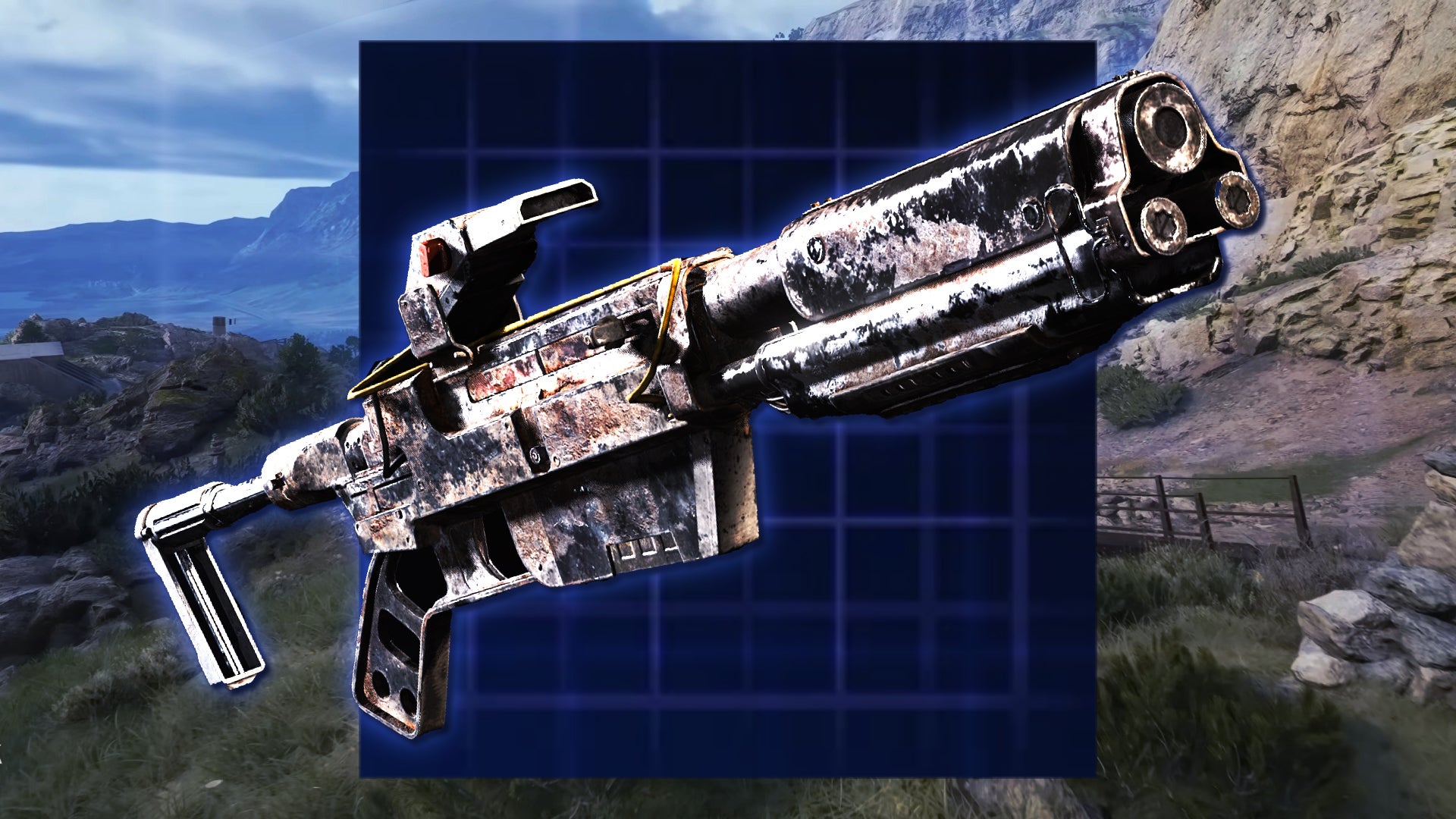
Image credit:Rock Paper Shotgun/Embark Studios

Looking for more Arc Raiders Blueprints? It’s a special day when you find a Blueprint, as they’re among the most valuable items in Arc Raiders. If you find a Blueprint that you haven’t already found, then you must make sure you hold onto it at all costs, because Blueprints are the key to one of the most important and powerful systems of meta-progression in the game.
This guide aims to be the very best guide on Blueprints you can find, starting with a primer on what exactly they are and how they work in Arc Raiders, before delving into exactly where to get Blueprints and the very best farming spots for you to take in your search.
We’ll also go over how to get Blueprints from other unlikely activities, such as destroying Surveyors and completing specific quests. And you’ll also find the full list of all 75 Blueprints in Arc Raiders on this page (including the newest Blueprints added with the Cold Snap update , such as the Deadline Blueprint and Firework Box Blueprint), giving you all the information you need to expand your own crafting repertoire.
In this guide:
- What are Blueprints in Arc Raiders?
- Full Blueprint list: All crafting recipes
- Where to find Blueprints in Arc Raiders Blueprints obtained from quests Blueprints obtained from Trials Best Blueprint farming locations

What are Blueprints in Arc Raiders?
Blueprints in Arc Raiders are special items which, if you manage to extract with them, you can expend to permanently unlock a new crafting recipe in your Workshop. If you manage to extract from a raid with an Anvil Blueprint, for example, you can unlock the ability to craft your very own Anvil Pistol, as many times as you like (as long as you have the crafting materials).
To use a Blueprint, simply open your Inventory while in the lobby, then right-click on the Blueprint and click “Learn And Consume” . This will permanently unlock the recipe for that item in your Workshop. As of the Stella Montis update, there are allegedly 75 different Blueprints to unlock - although only 68 are confirmed to be in the game so far. You can see all the Blueprints you’ve found and unlocked by going to the Workshop menu, and hitting “R” to bring up the Blueprint screen.
It’s possible to find duplicates of past Blueprints you’ve already unlocked. If you find these, then you can either sell them, or - if you like to play with friends - you can take it into a match and gift it to your friend so they can unlock that recipe for themselves. Another option is to keep hold of them until the time comes to donate them to the Expedition.
Full Blueprint list: All crafting recipes
Below is the full list of all the Blueprints that are currently available to find in Arc Raiders, and the crafting recipe required for each item:
| Blueprint | Type | Recipe | Crafted At |
|---|---|---|---|
| Bettina | Weapon | 3x Advanced Mechanical Components 3x Heavy Gun Parts 3x Canister | Gunsmith 3 |
| Blue Light Stick | Quick Use | 3x Chemicals | Utility Station 1 |
| Aphelion | Weapon | 3x Magnetic Accelerator 3x Complex Gun Parts 1x Matriarch Reactor | Gunsmith 3 |
| Combat Mk. 3 (Flanking) | Augment | 2x Advanced Electrical Components 3x Processor | Gear Bench 3 |
| Combat Mk. 3 (Aggressive) | Augment | 2x Advanced Electrical Components 3x Processor | Gear Bench 3 |
| Complex Gun Parts | Material | 2x Light Gun Parts 2x Medium Gun Parts 2x Heavy Gun Parts | Refiner 3 |
| Fireworks Box | Quick Use | 1x Explosive Compound 3x Pop Trigger | Explosives Station 2 |
| Gas Mine | Mine | 4x Chemicals 2x Rubber Parts | Explosives Station 1 |
| Green Light Stick | Quick Use | 3x Chemicals | Utility Station 1 |
| Pulse Mine | Mine | 1x Crude Explosives 1x Wires | Explosives Station 1 |
| Seeker Grenade | Grenade | 1x Crude Explosives 2x ARC Alloy | Explosives Station 1 |
| Looting Mk. 3 (Survivor) | Augment | 2x Advanced Electrical Components 3x Processor | Gear Bench 3 |
| Angled Grip II | Mod | 2x Mechanical Components 3x Duct Tape | Gunsmith 2 |
| Angled Grip III | Mod | 2x Mod Components 5x Duct Tape | Gunsmith 3 |
| Hullcracker | Weapon | 1x Magnetic Accelerator 3x Heavy Gun Parts 1x Exodus Modules | Gunsmith 3 |
| Launcher Ammo | Ammo | 5x Metal Parts 1x Crude Explosives | Workbench 1 |
| Anvil | Weapon | 5x Mechanical Components 5x Simple Gun Parts | Gunsmith 2 |
| Anvil Splitter | Mod | 2x Mod Components 3x Processor | Gunsmith 3 |
| ??? | ??? | ??? | ??? |
| Barricade Kit | Quick Use | 1x Mechanical Components | Utility Station 2 |
| Blaze Grenade | Grenade | 1x Explosive Compound 2x Oil | Explosives Station 3 |
| Bobcat | Weapon | 3x Advanced Mechanical Components 3x Light Gun Parts | Gunsmith 3 |
| Osprey | Weapon | 2x Advanced Mechanical Components 3x Medium Gun Parts 7x Wires | Gunsmith 3 |
| Burletta | Weapon | 3x Mechanical Components 3x Simple Gun Parts | Gunsmith 1 |
| Compensator II | Mod | 2x Mechanical Components 4x Wires | Gunsmith 2 |
| Compensator III | Mod | 2x Mod Components 8x Wires | Gunsmith 3 |
| Defibrillator | Quick Use | 9x Plastic Parts 1x Moss | Medical Lab 2 |
| ??? | ??? | ??? | ??? |
| Equalizer | Weapon | 3x Magnetic Accelerator 3x Complex Gun Parts 1x Queen Reactor | Gunsmith 3 |
| Extended Barrel | Mod | 2x Mod Components 8x Wires | Gunsmith 3 |
| Extended Light Mag II | Mod | 2x Mechanical Components 3x Steel Spring | Gunsmith 2 |
| Extended Light Mag III | Mod | 2x Mod Components 5x Steel Spring | Gunsmith 3 |
| Extended Medium Mag II | Mod | 2x Mechanical Components 3x Steel Spring | Gunsmith 2 |
| Extended Medium Mag III | Mod | 2x Mod Components 5x Steel Spring | Gunsmith 3 |
| Extended Shotgun Mag II | Mod | 2x Mechanical Components 3x Steel Spring | Gunsmith 2 |
| Extended Shotgun Mag III | Mod | 2x Mod Components 5x Steel Spring | Gunsmith 3 |
| Remote Raider Flare | Quick Use | 2x Chemicals 4x Rubber Parts | Utility Station 1 |
| Heavy Gun Parts | Material | 4x Simple Gun Parts | Refiner 2 |
| Venator | Weapon | 2x Advanced Mechanical Components 3x Medium Gun Parts 5x Magnet | Gunsmith 3 |
| Il Toro | Weapon | 5x Mechanical Components 6x Simple Gun Parts | Gunsmith 1 |
| Jolt Mine | Mine | 1x Electrical Components 1x Battery | Explosives Station 2 |
| Explosive Mine | Mine | 1x Explosive Compound 1x Sensors | Explosives Station 3 |
| Jupiter | Weapon | 3x Magnetic Accelerator 3x Complex Gun Parts 1x Queen Reactor | Gunsmith 3 |
| Light Gun Parts | Material | 4x Simple Gun Parts | Refiner 2 |
| Lightweight Stock | Mod | 2x Mod Components 5x Duct Tape | Gunsmith 3 |
| Lure Grenade | Grenade | 1x Speaker Component 1x Electrical Components | Utility Station 2 |
| Medium Gun Parts | Material | 4x Simple Gun Parts | Refiner 2 |
| Torrente | Weapon | 2x Advanced Mechanical Components 3x Medium Gun Parts 6x Steel Spring | Gunsmith 3 |
| Muzzle Brake II | Mod | 2x Mechanical Components 4x Wires | Gunsmith 2 |
| Muzzle Brake III | Mod | 2x Mod Components 8x Wires | Gunsmith 3 |
| Padded Stock | Mod | 2x Mod Components 5x Duct Tape | Gunsmith 3 |
| Shotgun Choke II | Mod | 2x Mechanical Components 4x Wires | Gunsmith 2 |
| Shotgun Choke III | Mod | 2x Mod Components 8x Wires | Gunsmith 3 |
| Shotgun Silencer | Mod | 2x Mod Components 8x Wires | Gunsmith 3 |
| Showstopper | Grenade | 1x Advanced Electrical Components 1x Voltage Converter | Explosives Station 3 |
| Silencer I | Mod | 2x Mechanical Components 4x Wires | Gunsmith 2 |
| Silencer II | Mod | 2x Mod Components 8x Wires | Gunsmith 3 |
| Snap Hook | Quick Use | 2x Power Rod 3x Rope 1x Exodus Modules | Utility Station 3 |
| Stable Stock II | Mod | 2x Mechanical Components 3x Duct Tape | Gunsmith 2 |
| Stable Stock III | Mod | 2x Mod Components 5x Duct Tape | Gunsmith 3 |
| Tagging Grenade | Grenade | 1x Electrical Components 1x Sensors | Utility Station 3 |
| Tempest | Weapon | 3x Advanced Mechanical Components 3x Medium Gun Parts 3x Canister | Gunsmith 3 |
| Trigger Nade | Grenade | 2x Crude Explosives 1x Processor | Explosives Station 2 |
| Vertical Grip II | Mod | 2x Mechanical Components 3x Duct Tape | Gunsmith 2 |
| Vertical Grip III | Mod | 2x Mod Components 5x Duct Tape | Gunsmith 3 |
| Vita Shot | Quick Use | 2x Antiseptic 1x Syringe | Medical Lab 3 |
| Vita Spray | Quick Use | 3x Antiseptic 1x Canister | Medical Lab 3 |
| Vulcano | Weapon | 1x Magnetic Accelerator 3x Heavy Gun Parts 1x Exodus Modules | Gunsmith 3 |
| Wolfpack | Grenade | 2x Explosive Compound 2x Sensors | Explosives Station 3 |
| Red Light Stick | Quick Use | 3x Chemicals | Utility Station 1 |
| Smoke Grenade | Grenade | 14x Chemicals 1x Canister | Utility Station 2 |
| Deadline | Mine | 3x Explosive Compound 2x ARC Circuitry | Explosives Station 3 |
| Trailblazer | Grenade | 1x Explosive Compound 1x Synthesized Fuel | Explosives Station 3 |
| Tactical Mk. 3 (Defensive) | Augment | 2x Advanced Electrical Components 3x Processor | Gear Bench 3 |
| Tactical Mk. 3 (Healing) | Augment | 2x Advanced Electrical Components 3x Processor | Gear Bench 3 |
| Yellow Light Stick | Quick Use | 3x Chemicals | Utility Station 1 |
Note: The missing Blueprints in this list likely have not actually been added to the game at the time of writing, because none of the playerbase has managed to find any of them. As they are added to the game, I will update this page with the most relevant information so you know exactly how to get all 75 Arc Raiders Blueprints.
Where to find Blueprints in Arc Raiders
Below is a list of all containers, modifiers, and events which maximise your chances of finding Blueprints:
- Certain quests reward you with specific Blueprints .
- Completing Trials has a high chance of offering Blueprints as rewards.
- Surveyors have a decent chance of dropping Blueprints on death.
- High loot value areas tend to have a greater chance of spawning Blueprints.
- Night Raids and Storms may increase rare Blueprint spawn chances in containers.
- Containers with higher numbers of items may have a higher tendency to spawn Blueprints. As a result, Blue Gate (which has many “large” containers containing multiple items) may give you a higher chance of spawning Blueprints.
- Raider containers (Raider Caches, Weapon Boxes, Medical Bags, Grenade Tubes) have increased Blueprint drop rates. As a result, the Uncovered Caches event gives you a high chance of finding Blueprints.
- Security Lockers have a higher than average chance of containing Blueprints.
- Certain Blueprints only seem to spawn under specific circumstances: Tempest Blueprint only spawns during Night Raid events. Vulcano Blueprint only spawns during Hidden Bunker events. Jupiter and Equaliser Blueprints only spawn during Harvester events.
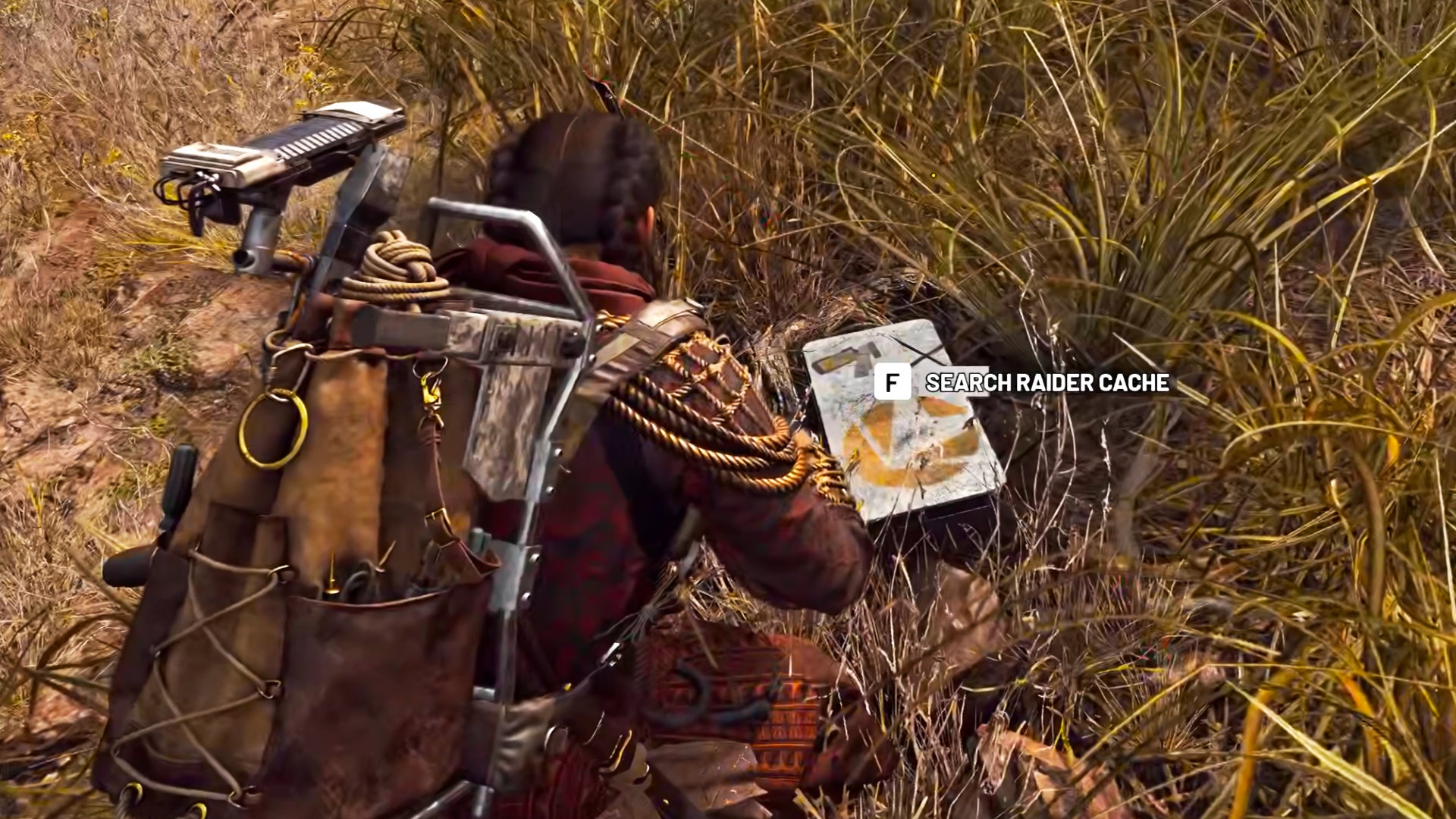
Raider Caches, Weapon Boxes, and other raider-oriented container types have a good chance of offering Blueprints. |Image credit:Rock Paper Shotgun/Embark Studios
Blueprints have a very low chance of spawning in any container in Arc Raiders, around 1-2% on average. However, there is a higher chance of finding Blueprints in particular container types. Specifically, you can find more Blueprints in Raider containers and security lockers.
Beyond this, if you’re looking for Blueprints you should focus on regions of the map which are marked as having particularly high-value loot. Areas such as the Control Tower in Dam Battlegrounds, the Arrival and Departure Buildings in Spaceport, and Pilgrim’s Peak in Blue Gate all have a better-than-average chance of spawning Blueprints somewhere amongst all their containers. Night Raids and Electromagnetic Storm events also increase the drop chances of certain Blueprints .
In addition to these containers, you can often loot Blueprints from destroyed Surveyors - the largest of the rolling ball ARC. Surveyors are more commonly found on the later maps - Spaceport and Blue Gate - and if one spawns in your match, you’ll likely see it by the blue laser beam that it casts into the sky while “surveying”.
Surveyors are quite well-armoured and will very speedily run away from you once it notices you, but if you can take one down then make sure you loot all its parts for a chance of obtaining certain unusual Blueprints.
Blueprints obtained from quests
One way in which you can get Blueprints is by completing certain quests for the vendors in Speranza. Some quests will reward you with a specific item Blueprint upon completion, so as long as you work through all the quests in Arc Raiders, you are guaranteed those Blueprints.
Here is the full list of all Blueprints you can get from quest rewards:
- Trigger Nade Blueprint: Rewarded after completing “Sparks Fly”.
- Lure Grenade Blueprint: Rewarded after completing “Greasing Her Palms”.
- Burletta Blueprint: Rewarded after completing “Industrial Espionage”.
- Hullcracker Blueprint (and Launcher Ammo Blueprint): Rewarded after completing “The Major’s Footlocker”.
Alas, that’s only 4 Blueprints out of a total of 75 to unlock, so for the vast majority you will need to find them yourself during a raid. If you’re intent on farming Blueprints, then it’s best to equip yourself with cheap gear in case you lose it, but don’t use a free loadout because then you won’t get a safe pocket to stash any new Blueprint you find. No pain in Arc Raiders is sharper than failing to extract with a new Blueprint you’ve been after for a dozen hours already.
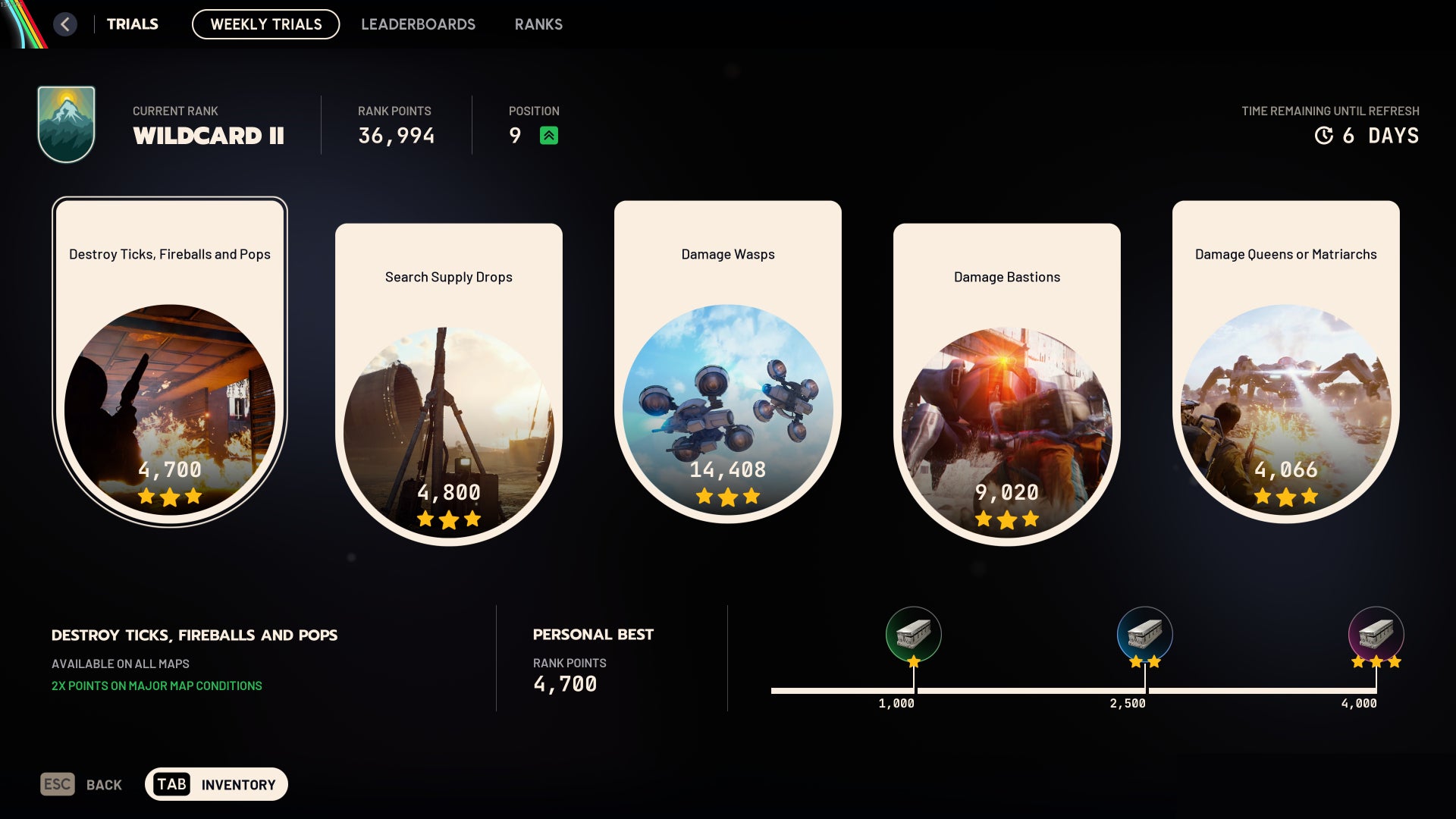
One of the best ways to get Blueprints is by hitting three stars on all five Trials every week. |Image credit:Rock Paper Shotgun/Embark Studios
Blueprints obtained from Trials
One of the very best ways to get Blueprints is as rewards for completing Trials in Arc Raiders. Trials are unlocked from Level 15 onwards, and allow you to earn rewards by focusing on certain tasks over the course of several raids. For example, one Trial might task you with dealing damage to Hornets, while another might challenge you to loot Supply Drops.
Trials refresh on a weekly basis, with a new week bringing five new Trials. Each Trial can offer up to three rewards after passing certain score milestones, and it’s possible to receive very high level loot from these reward crates - including Blueprints. So if you want to unlock as many Blueprints as possible, you should make a point of completing as many Trials as possible each week.
Best Blueprint farming locations
The very best way to get Blueprints is to frequent specific areas of the maps which combine high-tier loot pools with the right types of containers to search. Here are my recommendations for where to find Blueprints on every map, so you can always keep the search going for new crafting recipes to unlock.
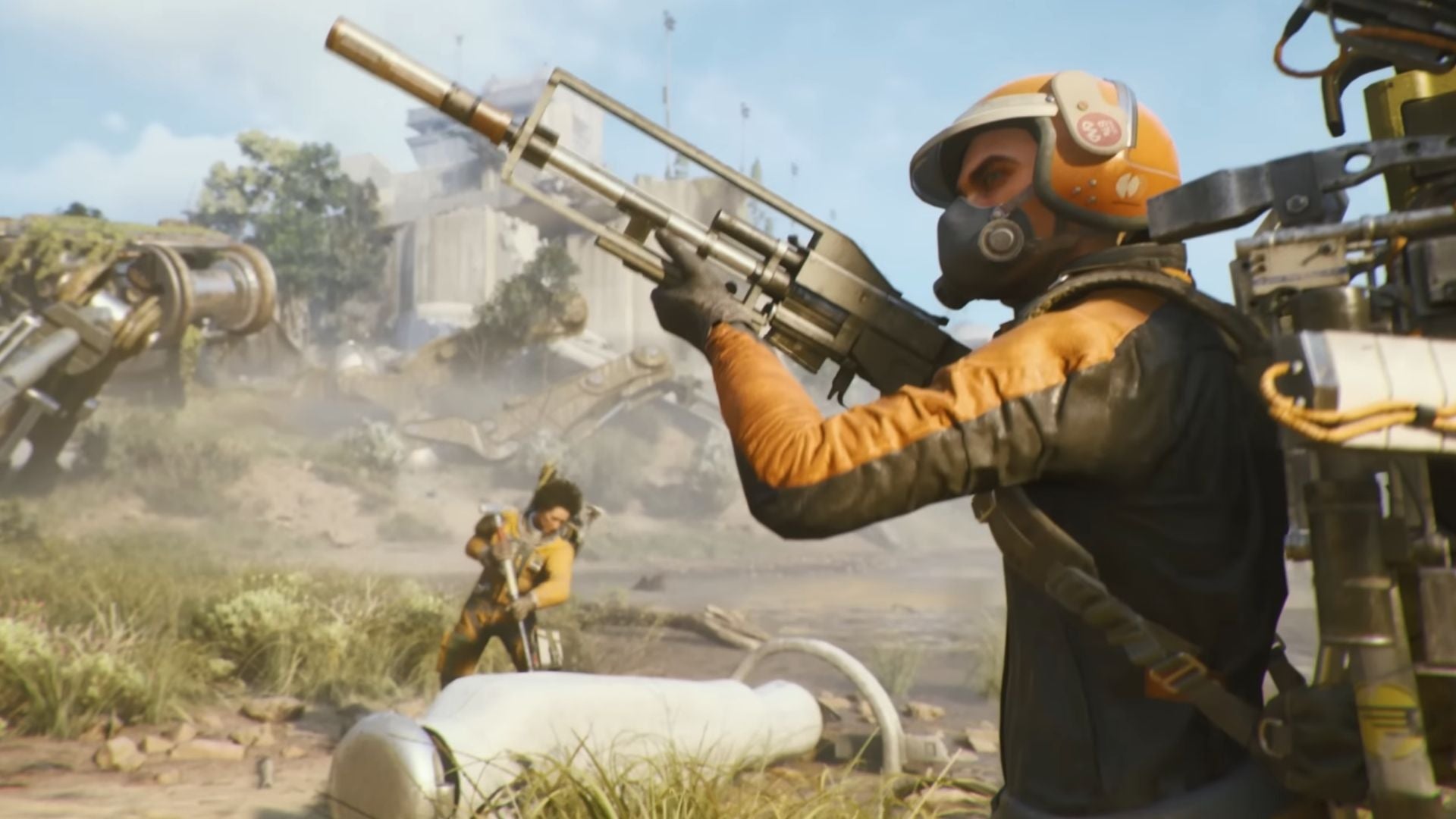
Image credit:Rock Paper Shotgun/Embark Studios
Dam Battlegrounds
The best places to farm Blueprints on Dam Battlegrounds are the Control Tower, Power Generation Complex, Ruby Residence, and Pale Apartments . The first two regions, despite only being marked on the map as mid-tier loot, contain a phenomenal number of containers to loot. The Control Tower can also contain a couple of high-tier Security Lockers - though of course, you’ll need to have unlocked the Security Breach skill at the end of the Survival tree.
There’s also a lot of reporting amongst the playerbase that the Residential areas in the top-left of the map - Pale Apartments and Ruby Residence - give you a comparatively strong chance of finding Blueprints. Considering their size, there’s a high density of containers to loot in both locations, and they also have the benefit of being fairly out of the way. So you’re more likely to have all the containers to yourself.
Buried City
The best Blueprint farming locations on Buried City are the Santa Maria Houses, Grandioso Apartments, Town Hall, and the various buildings of the New District . Grandioso Apartments has a lower number of containers than the rest, but a high chance of spawning weapon cases - which have good Blueprint drop rates. The others are high-tier loot areas, with plenty of lootable containers - including Security Lockers.
Spaceport
The best places to find Blueprints on Spaceport are the Arrival and Departure Buildings, as well as Control Tower A6 and the Launch Towers . All these areas are labelled as high-value loot regions, and many of them are also very handily connected to one another by the Spaceport wall, which you can use to quickly run from one area to the next. At the tops of most of these buildings you’ll find at least one Security Locker, so this is an excellent farming route for players looking to find Blueprints.
The downside to looting Blueprints on Spaceport is that all these areas are hotly contested, particularly in Duos and Squads. You’ll need to be very focused and fast in order to complete the full farming route.
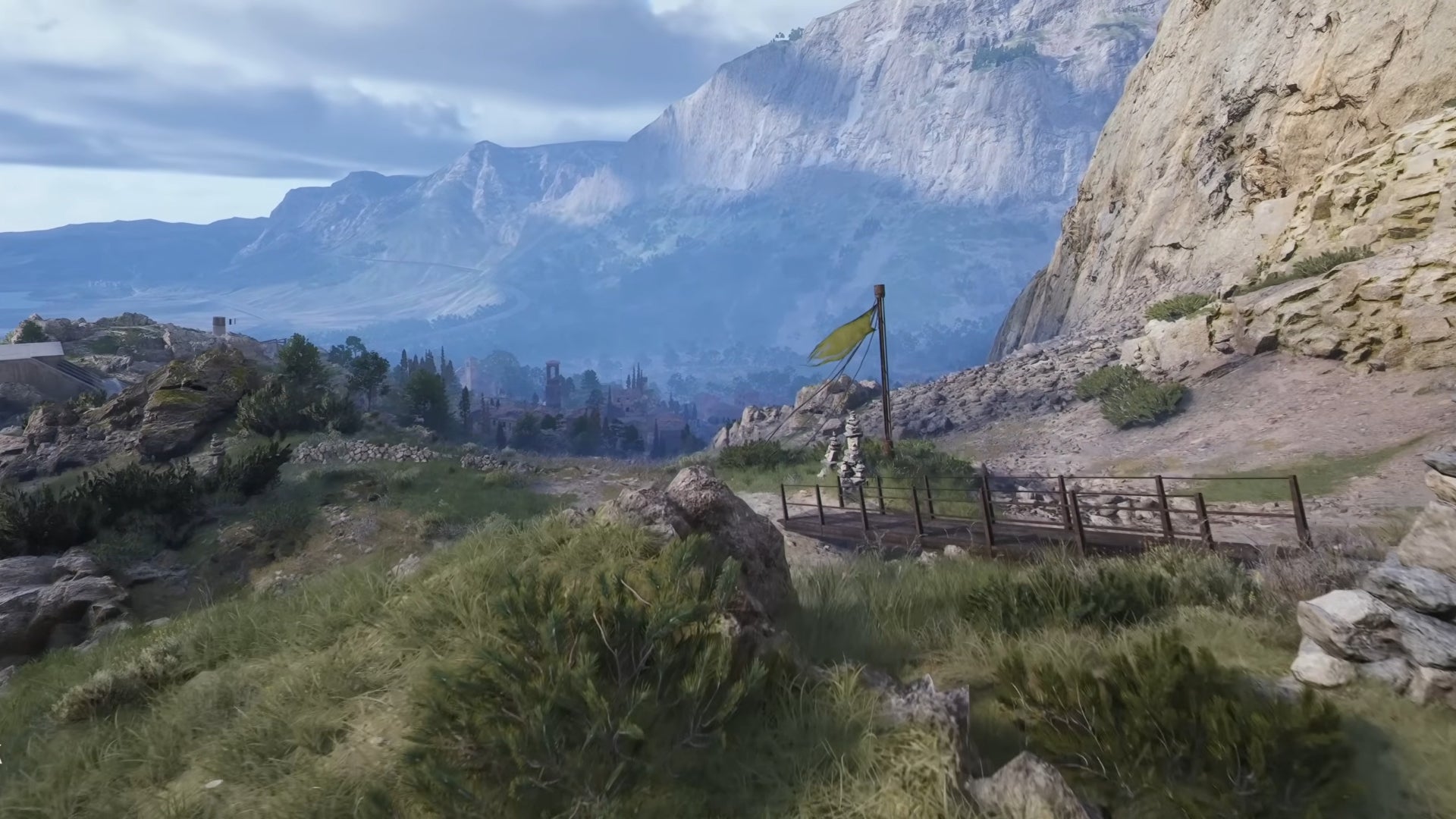
Image credit:Rock Paper Shotgun/Embark Studios
Blue Gate
Blue Gate tends to have a good chance of dropping Blueprints, potentially because it generally has a high number of containers which can hold lots of items; so there’s a higher chance of a Blueprint spawning in each container. In my experience, the best Blueprint farming spots on Blue Gate are Pilgrim’s Peak, Raider’s Refuge, the Ancient Fort, and the Underground Complex beneath the Warehouse .
All of these areas contain a wealth of containers to loot. Raider’s Refuge has less to loot, but the majority of the containers in and around the Refuge are raider containers, which have a high chance of containing Blueprints - particularly during major events.
Stella Montis
On the whole, Stella Montis seems to have a very low drop rate for Blueprints (though a high chance of dropping other high-tier loot). If you do want to try farming Blueprints on this map, the best places to find Blueprints in Stella Montis are Medical Research, Assembly Workshop, and the Business Center . These areas have the highest density of containers to loot on the map.
In addition to this, the Western Tunnel has a few different Security Lockers to loot, so while there’s very little to loot elsewhere in this area of the map, it’s worth hitting those Security Lockers if you spawn there at the start of a match.
That wraps up this primer on how to get all the Blueprints in Arc Raiders as quickly as possible. With the Expedition system constantly resetting a large number of players’ Blueprints, it’s more important than ever to have the most up-to-date information on where to find all these Blueprints.
While you’re here, be sure to check out our Arc Raiders best guns tier list , as well as our primers on the best skills to unlock and all the different Field Depot locations on every map.
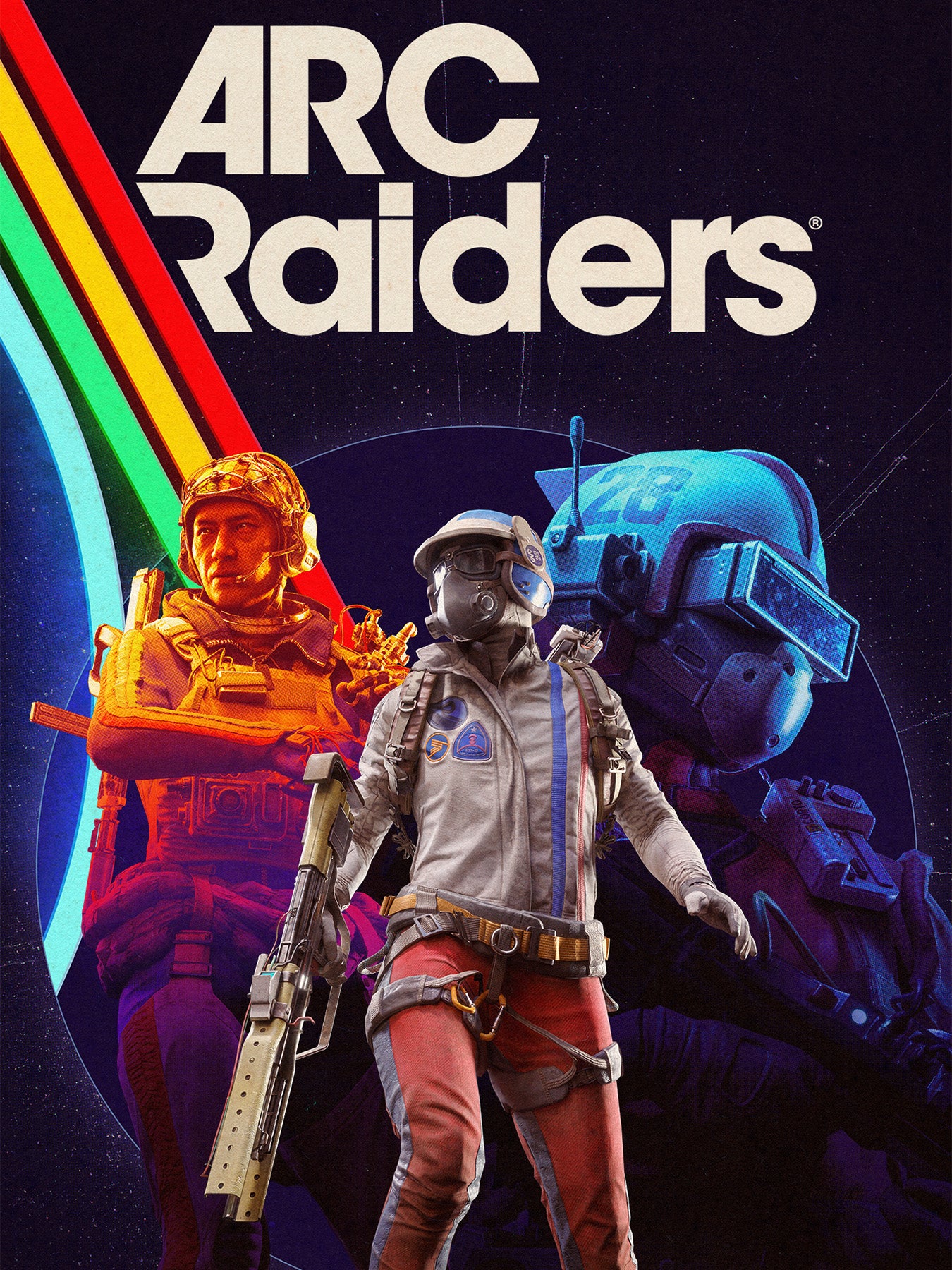
ARC Raiders
PS5 , Xbox Series X/S , PC
Rock Paper Shotgun is better when you sign in
Sign in and join us on our journey to discover strange and compelling PC games.
