PlayerUnknown’s Prologue: Go Wayback is an enchanting exploration sim tossed on a sea of metaverse imagineering
Less “3D internet”, more directional tree moss please
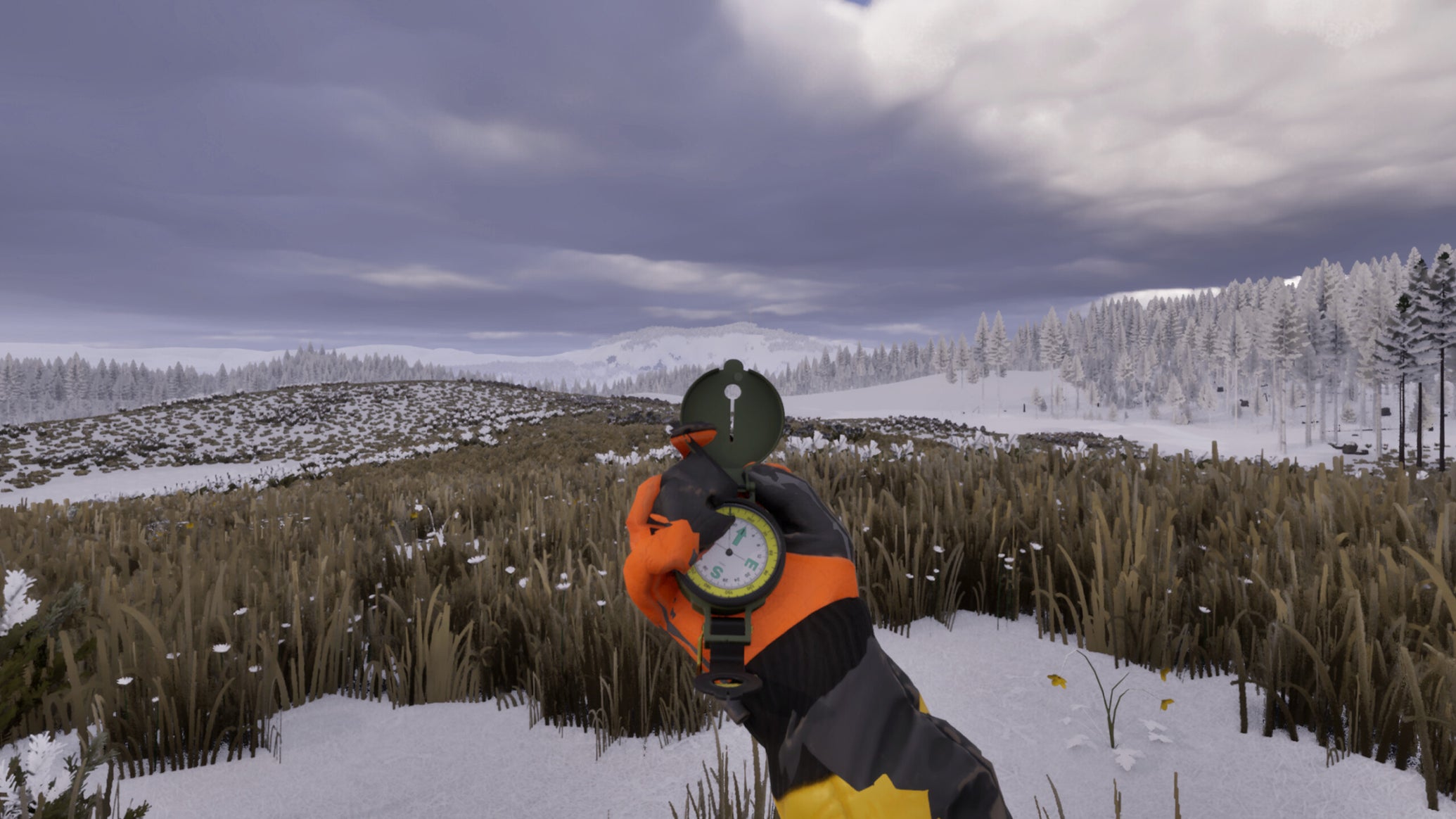
Image credit:PlayerUnknown Productions

Buried in Brendan Greene and PlayerUnknown Productions’ billowing, three-part, decade-long effort to build some kind of “3D internet” there is a ramshackle but thoughtful Unreal Engine game about wilderness survival and orienteering. Catchily titled Prologue: Go Wayback! and due for Early Access launch this spring, it’s a game about finding a radio tower on a 64km2 map, generated based on a mix of in-house art and public access landscape data fed through the developer’s in-house machine learning technology.
I had a chance to try a WIP build earlier this month, and came away quite beguiled. The trouble is, whatever pleasure Go Wayback has to offer floats on the rapids of an alternately incoherent and obnoxious desire to create a platter of connected gameworlds based on machine learning, which Greene - once the developer of pioneering battle royale PlayerUnknown’s Battlegrounds - variously and giddily compares to Steam, Ready Player One, holodecks, Rust and Minecraft .

The first cabin presents you with a bunch of tools for navigation and survival, some of which have several uses to discover through creative play. These include a torch, ferro rods for kindling fires, binoculars, a physical map, and a compass. There’s a thick padded coat hanging on the door, and you’ll definitely need that when the game’s weather simulation takes a turn for the worst.
The initial challenge is fitting all the kit into your Resident Evil-style grid inventory alongside food and water (and also, dealing with the current inventory system’s unwieldiness, when trying to swap objects into and out of your item hotbar). The default inventory size means that you’ll likely need to leave at least one navigational instrument behind, which essentially means choosing a handicap - perhaps you’ll try to memorise the paper map, or even trace it on actual paper, so you can free up some inventory blocks for tinned food. Again, I like the unassuming deftness of all this.
Having readied yourself for the elements, you amble through the door and find yourself in a wilderness of leafmulch, wildflowers, and boulders modelled on the “Bohemian Switzerland” parklands of the Czech Republic. If you’re me, you head for the nearest hilltop to see if you can spy the radio tower. Then you pick a likely direction and start trudging, doing your best not to get turned around by the intervening geography. Slight deviations to, say, avoid boggy areas often prove perilous, because it’s so easy to lose your bearings: there’s no minimap and no waypointing system to keep you sailing true.
Little environmental clues tally up in your head, stockpiling themselves for subsequent runs. One thing I noticed early is that moss grows on the northern flanks of tree trunks. Armed with that woodland lore, I felt empowered to leave my compass behind on my second and third attempts - my first having ended with a trip over a cliffedge in darkness. Night in the game can be impenetrable even if you do have a torch, but given a clear sky, you might scry your way by starlight. During nocturnal thunderstorms, lightning bolts reveal the landscape in stop-motion bursts.

Other cabins found enroute to the radio tower harbour warmth, food and water, but might need to be repaired before they’ll provide shelter. |Image credit:PlayerUnknown Productions
In amongst all these things, there’s some gentle mystery, though the choice of scenery is a bit arbitrary. I don’t think PUP have any particular opinion on the Czech countryside, other than that the landscape and latitude fit their requirements for a game of hardy, picturesque exploration. There’s a stock-footage feel to some of Go Wayback, perhaps a touch of Center Parcs. But then you turn on a transistor radio while walking and are treated to some curiously specific electronica that synchs to your footsteps, and you start to wonder about the grand design.
There is certainly a grand design here, but it’s more about the role Go Wayback will play in the aforesaid “3D internet” stuff, which I find pretty draining to describe. To recap, Go Wayback is the first of three games that are sort of one big rolling exercise in cultivating the technology for a bunch of “interoperable” gameworlds. As Brendan Greene explained to me after my hands-on, it paves the way for Artemis , which will run on the studio’s own Melba engine, with the promise of much larger generated maps and “millions” of players per session. As for the eventual “Game Three” - this, seemingly, will be the capstone for an open-ended network of holodecky fantasies in which people can generate, modify, share and monetise worlds or bits of worlds via means yet to be fully described.
Inasmuch as these projects have a social or political dimension, it’s all apparently to do with helping people talk to each other. “I do believe that the world’s getting more isolated,” Greene told me. “I think, like most people, live in small boxes with noise all day. And I think having a shared space where you can go and together or alone, and do all the things you can do in the real world in this virtual space - I think that’s an important thing to have, because we are getting more and more isolated, you know, with the ravages of climate change on the horizon.
“I think at the start of every disaster movie, there’s some scientist telling you there’s problems coming, and everyone ignores them,” he continued. “There’s a bunch of scientists now going, ‘Guys, wake the fuck up’, and everyone’s going, ‘Oh, don’t look up’. It just worries me a little bit. So I think having a shared space that’s like a 3D internet, where we can come together if we are more isolated - I think it’s important, but that’s more the grand vision than having a political opinion.”
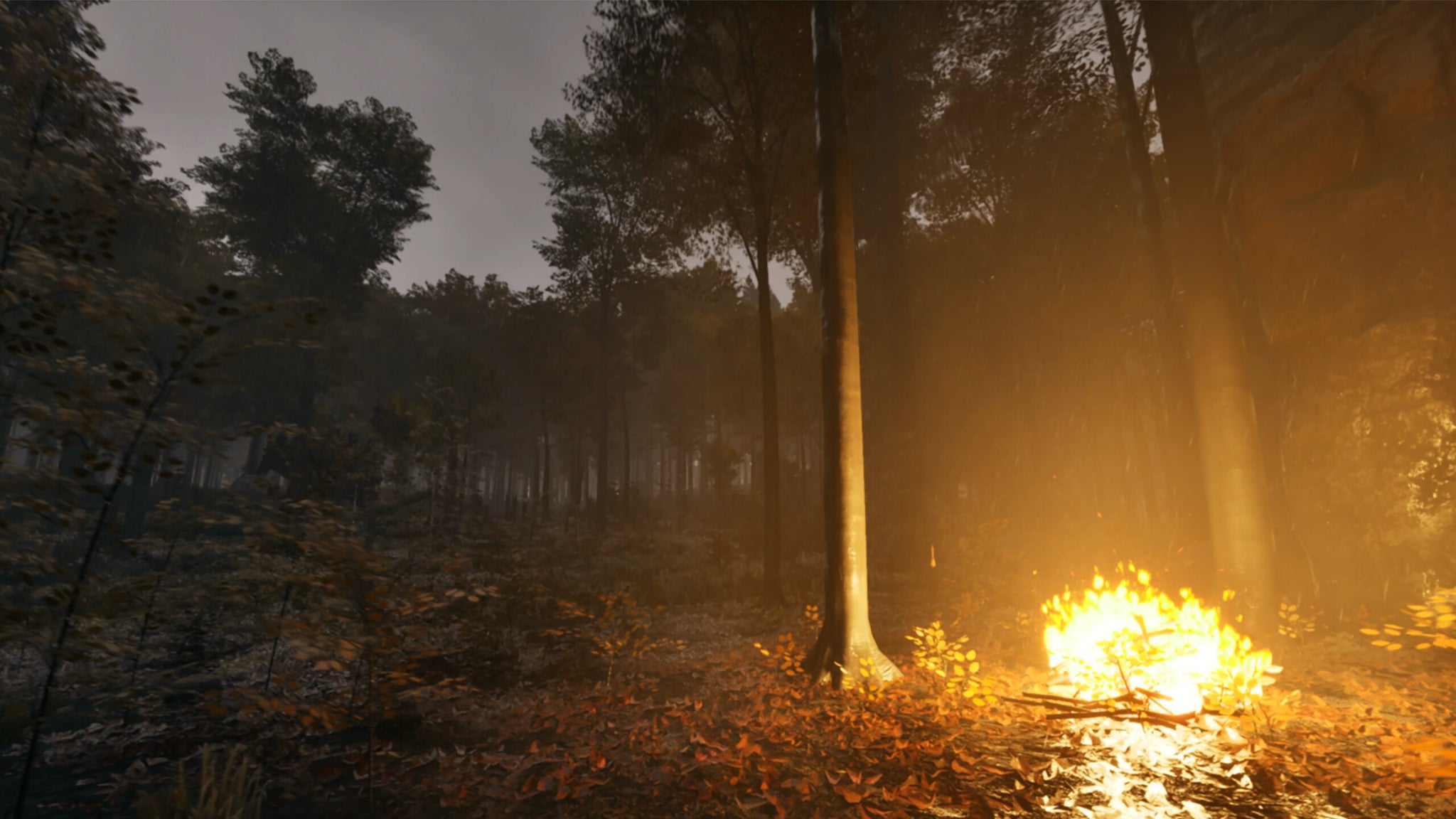
You’ll be able to build fires by placing bits of kindling under stacks of longer-burning wood, though I never managed this in the demo. |Image credit:PlayerUnknown Productions
Greene estimates that the journey from Go Wayback to Game Three will take 10 years, or around three years per project. As for business models, he’s thinking about free-to-play with microtransactions, but also regards the blockchain as “an interesting financial layer that we might use in the future at some stage, if it makes sense”. Among the elephants in the room here are the game’s players, who will get a chance to vote on features for Go Wayback as it evolves through early access. During our interview, Greene cited the development of survival game Rust as a key influence, in that the developers will broadly consider these player votes non-binding.
Greene also cited Ready Player One, a cloying male nerd fantasy popular among web3 enthusiasts , as an influence both on the studio’s metaversal ambitions and (more positively) his mistrust of how other corporations view the much billy-banged metaverse concept as an excuse to set up another generation of proprietary walled gardens. His “3D internet” will be different. “That book warns you of the corporation that controls it all, which, you know, can’t anyone see that?” he told me, “And all these corporations are trying to create these bubbles.”
Greene wants people to do as they please with whatever technologies and tools emerges from Go Wayback and Artemis. Melba will be open source, and Greene suggests that people could tinker with the engine using familiar tools such as Blender, though he also thinks that a lot of the relevant gadgetry has yet to be invented. “Ultimately, you know, I want the public to build the rest, but I’m not going to force it to do it - it’s not a content creation platform,” Greene went on. “We’re giving you examples of what’s possible with experiences that we hope you enjoy. And if you want to use our tech to build other experiences, great, and they’ll all talk to each other, and you’ll be able to transfer stuff between them.”
Which brings us to the possibility of PUP’s games letting you buy and sell things with cryptocurrency. Greene seems quite keen on the blockchain, but also mindful that many people aren’t, given the technology’s association with snake oil merchants and ruinous energy consumption . “Should we go down that route? Even with the current plan we have, I don’t plan on opening the economy up to the outer world probably till Game Three,” he told me. “We have to make sure it’s robust enough to deal with what we have in game initially, without opening it up to the wider public, right? I’m not going to be tokenizing it from the start, because that’s just not the right way to do it.”
Is that the kind of addition Go Wayback’s players might be invited to vote on, I asked?
“Oh, they have to have input,” Greene said. “But it depends on who they’re looking at it for, if they’re looking at it for the wider public, or for themselves. But I think, like for me, it has to be fair and equitable. Everyone has to have the same start, and have the same opportunity to get reward out of the system for the same amount of work. So that means, like, a stable currency, that’s the way it has to be. So I will take feedback from the community, probably from the marketplace, but that’s all in the scope of the plan that we’ll work with them on, every step of the way.”
OK then.

Image credit:PlayerUnknown Productions
I confess, the more I hear the sourer I feel about PlayerUnknown Productions’ grand ambitions. Let’s start with some familiar topline objections to the metaverse concept. I don’t think we need a “3D internet”. I think the internet has enough dimensions. Have you ever gone beyond page 3 of Google? It’s an absolute bloody circus down there.
If there are problems with corporations owning huge chunks of the territory, the obvious way to address that is by lessening the power of corporations, not adding a disruptive new technology to the pile. Blockchain tech in particular is often offered as a kind of vehicle for public ownership, side-stepping traditional monetary institutions. In practice, it has proven time and again to be an enabler for the most cut-throat of pyramid schemers. And if people are stuck “in small boxes with noise all day”, unable to work collectively in the face of an existential terror like climate change, the solution perhaps isn’t to increase the connectivity and immersiveness of the box.
The key question, I guess, is how “open” the Melba tech will prove in practice, and if it’s successful, whether it will remain “open” or end up being distorted and enshittified by monetisation, as has happened to social media. PlayerUnknown Productions apparently have plenty of seed funding, so clearly a bunch of investors think this funky group holodeck approach is a lucrative venture, rather than a charitable donation to the architecture of online discourse.
You might be wondering what’s happened to that nice survival exploration game we were talking about, around 700 words ago. The problem with Go Wayback forming part of a wider metaverse project is that Go Wayback itself starts to feel kind of irrelevant. Or worse, like a Trojan horse for the above web3 initiatives. I’m still trying to decide how much the survival game format really matters to Greene, the former Arma modder who is among the few people who can half-credibly claim to have created an entire genre . He talks enthusiastically about additions such as flammability for cabins, and hints at lore he’s writing that justifies the awkward name. Still, it feels like the overarching tech and vision come first.
“I first thought, OK, I want to do 100 kilometre maps - this was back when I was at Krafton [before August 2021],” Greene explained to me. “We discovered the way to do one over 100 kilometres was to do it generatively, rather than hand-created. So then I thought, OK, well, if I can generate a new map every time you press play, what’s the easiest way to test this? I thought: a survival game.”
“I wasn’t thinking of anything other than what is the simplest way to test our tech,” he commented. “And that’s really where it came from, right? We’re not trying to reinvent the wheel here, the survival loop. The survival mechanics are pretty much industry standard, what most people use, because the aim is not to reinvent the survival genre. It’s having a new world every time you press play.”

Image credit:PlayerUnknown Productions
Again, I quite like Go Wayback in itself, though I’m suspicious of its machine learning. This calls upon a mixture of in-house art, publicly available GIS (geographic information system) data, and satellite photography sourced from agencies such as NASA. The developers have confirmed with me that they have the legal rights to all the data they’re using to “train” the terrain generator. I’ve got a separate feature in the works about how they’re doing it, which will make connections to what I am tempted to call the “lost magic” of “pre-gen-AI” procedurally generated worlds.
Among the things PUP have added recently are rivers, which are very useful landmarks. I had the chance to swim in one at the close of my demo - a midnight crossing that would have been pretty unwise if the developers had managed to implement temperature loss from wet clothes in the build at hand. I could barely see anything as I paddled, but then a thunderstorm set in, and the opposite shore appeared to me in flashes of rainswept canopy and hillside. I was reminded, very distantly, of swimming in a lake once during a shower, and finding myself adrift in a seethe of erupting droplets, as though every particle of water had decided to jump for joy simultaneously. I hope that, in amongst all the metaversing, Go Wayback can find its way to something of the same joy.
Prologue: Go Wayback!
Video Game
Rock Paper Shotgun is better when you sign in
Sign in and join us on our journey to discover strange and compelling PC games.

All 75 Arc Raiders Blueprints and where to get them
These areas have the highest chance of giving you Blueprints
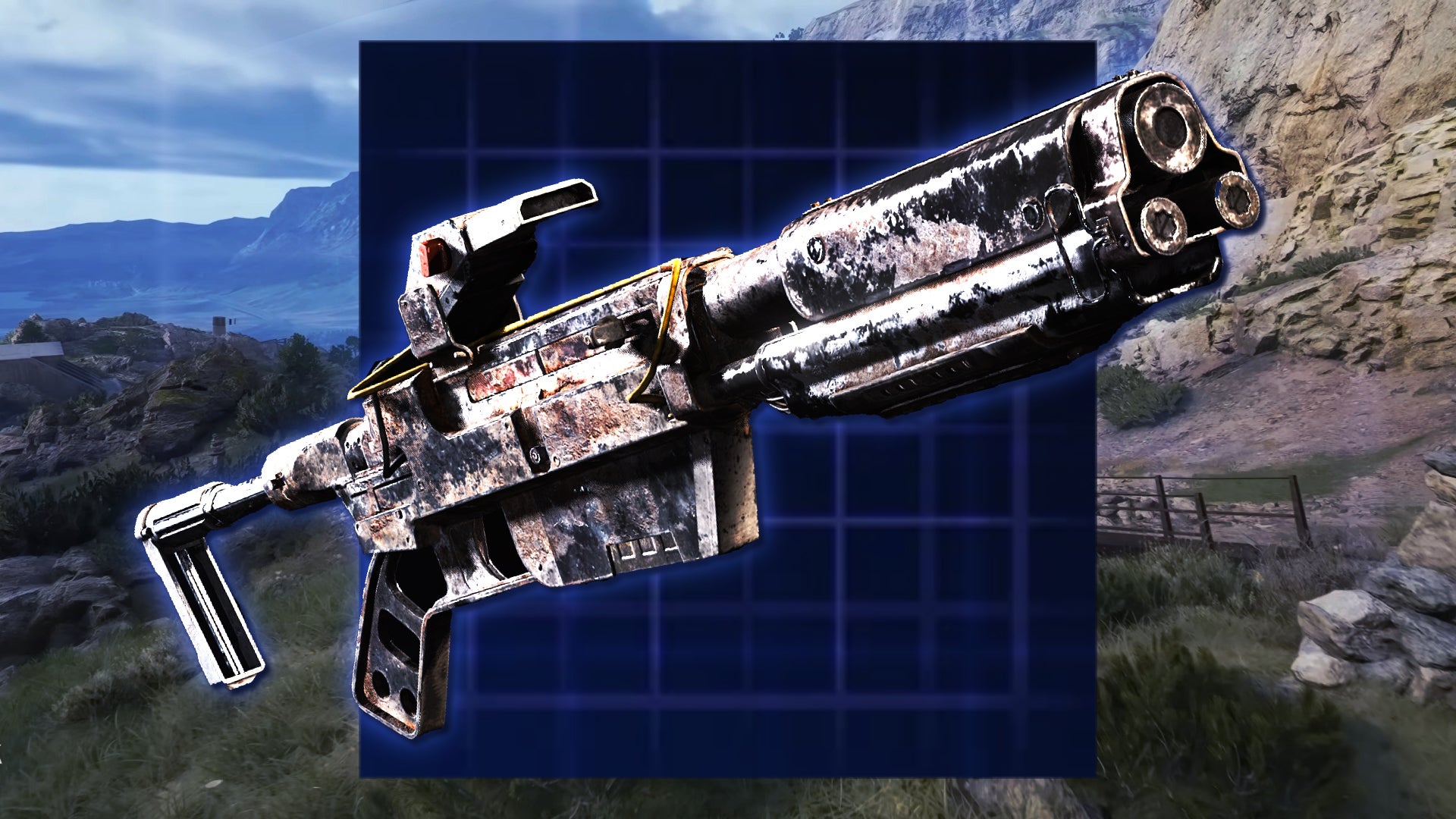
Image credit:Rock Paper Shotgun/Embark Studios

Looking for more Arc Raiders Blueprints? It’s a special day when you find a Blueprint, as they’re among the most valuable items in Arc Raiders. If you find a Blueprint that you haven’t already found, then you must make sure you hold onto it at all costs, because Blueprints are the key to one of the most important and powerful systems of meta-progression in the game.
This guide aims to be the very best guide on Blueprints you can find, starting with a primer on what exactly they are and how they work in Arc Raiders, before delving into exactly where to get Blueprints and the very best farming spots for you to take in your search.
We’ll also go over how to get Blueprints from other unlikely activities, such as destroying Surveyors and completing specific quests. And you’ll also find the full list of all 75 Blueprints in Arc Raiders on this page (including the newest Blueprints added with the Cold Snap update , such as the Deadline Blueprint and Firework Box Blueprint), giving you all the information you need to expand your own crafting repertoire.
In this guide:
- What are Blueprints in Arc Raiders?
- Full Blueprint list: All crafting recipes
- Where to find Blueprints in Arc Raiders Blueprints obtained from quests Blueprints obtained from Trials Best Blueprint farming locations

What are Blueprints in Arc Raiders?
Blueprints in Arc Raiders are special items which, if you manage to extract with them, you can expend to permanently unlock a new crafting recipe in your Workshop. If you manage to extract from a raid with an Anvil Blueprint, for example, you can unlock the ability to craft your very own Anvil Pistol, as many times as you like (as long as you have the crafting materials).
To use a Blueprint, simply open your Inventory while in the lobby, then right-click on the Blueprint and click “Learn And Consume” . This will permanently unlock the recipe for that item in your Workshop. As of the Stella Montis update, there are allegedly 75 different Blueprints to unlock - although only 68 are confirmed to be in the game so far. You can see all the Blueprints you’ve found and unlocked by going to the Workshop menu, and hitting “R” to bring up the Blueprint screen.
It’s possible to find duplicates of past Blueprints you’ve already unlocked. If you find these, then you can either sell them, or - if you like to play with friends - you can take it into a match and gift it to your friend so they can unlock that recipe for themselves. Another option is to keep hold of them until the time comes to donate them to the Expedition.
Full Blueprint list: All crafting recipes
Below is the full list of all the Blueprints that are currently available to find in Arc Raiders, and the crafting recipe required for each item:
| Blueprint | Type | Recipe | Crafted At |
|---|---|---|---|
| Bettina | Weapon | 3x Advanced Mechanical Components 3x Heavy Gun Parts 3x Canister | Gunsmith 3 |
| Blue Light Stick | Quick Use | 3x Chemicals | Utility Station 1 |
| Aphelion | Weapon | 3x Magnetic Accelerator 3x Complex Gun Parts 1x Matriarch Reactor | Gunsmith 3 |
| Combat Mk. 3 (Flanking) | Augment | 2x Advanced Electrical Components 3x Processor | Gear Bench 3 |
| Combat Mk. 3 (Aggressive) | Augment | 2x Advanced Electrical Components 3x Processor | Gear Bench 3 |
| Complex Gun Parts | Material | 2x Light Gun Parts 2x Medium Gun Parts 2x Heavy Gun Parts | Refiner 3 |
| Fireworks Box | Quick Use | 1x Explosive Compound 3x Pop Trigger | Explosives Station 2 |
| Gas Mine | Mine | 4x Chemicals 2x Rubber Parts | Explosives Station 1 |
| Green Light Stick | Quick Use | 3x Chemicals | Utility Station 1 |
| Pulse Mine | Mine | 1x Crude Explosives 1x Wires | Explosives Station 1 |
| Seeker Grenade | Grenade | 1x Crude Explosives 2x ARC Alloy | Explosives Station 1 |
| Looting Mk. 3 (Survivor) | Augment | 2x Advanced Electrical Components 3x Processor | Gear Bench 3 |
| Angled Grip II | Mod | 2x Mechanical Components 3x Duct Tape | Gunsmith 2 |
| Angled Grip III | Mod | 2x Mod Components 5x Duct Tape | Gunsmith 3 |
| Hullcracker | Weapon | 1x Magnetic Accelerator 3x Heavy Gun Parts 1x Exodus Modules | Gunsmith 3 |
| Launcher Ammo | Ammo | 5x Metal Parts 1x Crude Explosives | Workbench 1 |
| Anvil | Weapon | 5x Mechanical Components 5x Simple Gun Parts | Gunsmith 2 |
| Anvil Splitter | Mod | 2x Mod Components 3x Processor | Gunsmith 3 |
| ??? | ??? | ??? | ??? |
| Barricade Kit | Quick Use | 1x Mechanical Components | Utility Station 2 |
| Blaze Grenade | Grenade | 1x Explosive Compound 2x Oil | Explosives Station 3 |
| Bobcat | Weapon | 3x Advanced Mechanical Components 3x Light Gun Parts | Gunsmith 3 |
| Osprey | Weapon | 2x Advanced Mechanical Components 3x Medium Gun Parts 7x Wires | Gunsmith 3 |
| Burletta | Weapon | 3x Mechanical Components 3x Simple Gun Parts | Gunsmith 1 |
| Compensator II | Mod | 2x Mechanical Components 4x Wires | Gunsmith 2 |
| Compensator III | Mod | 2x Mod Components 8x Wires | Gunsmith 3 |
| Defibrillator | Quick Use | 9x Plastic Parts 1x Moss | Medical Lab 2 |
| ??? | ??? | ??? | ??? |
| Equalizer | Weapon | 3x Magnetic Accelerator 3x Complex Gun Parts 1x Queen Reactor | Gunsmith 3 |
| Extended Barrel | Mod | 2x Mod Components 8x Wires | Gunsmith 3 |
| Extended Light Mag II | Mod | 2x Mechanical Components 3x Steel Spring | Gunsmith 2 |
| Extended Light Mag III | Mod | 2x Mod Components 5x Steel Spring | Gunsmith 3 |
| Extended Medium Mag II | Mod | 2x Mechanical Components 3x Steel Spring | Gunsmith 2 |
| Extended Medium Mag III | Mod | 2x Mod Components 5x Steel Spring | Gunsmith 3 |
| Extended Shotgun Mag II | Mod | 2x Mechanical Components 3x Steel Spring | Gunsmith 2 |
| Extended Shotgun Mag III | Mod | 2x Mod Components 5x Steel Spring | Gunsmith 3 |
| Remote Raider Flare | Quick Use | 2x Chemicals 4x Rubber Parts | Utility Station 1 |
| Heavy Gun Parts | Material | 4x Simple Gun Parts | Refiner 2 |
| Venator | Weapon | 2x Advanced Mechanical Components 3x Medium Gun Parts 5x Magnet | Gunsmith 3 |
| Il Toro | Weapon | 5x Mechanical Components 6x Simple Gun Parts | Gunsmith 1 |
| Jolt Mine | Mine | 1x Electrical Components 1x Battery | Explosives Station 2 |
| Explosive Mine | Mine | 1x Explosive Compound 1x Sensors | Explosives Station 3 |
| Jupiter | Weapon | 3x Magnetic Accelerator 3x Complex Gun Parts 1x Queen Reactor | Gunsmith 3 |
| Light Gun Parts | Material | 4x Simple Gun Parts | Refiner 2 |
| Lightweight Stock | Mod | 2x Mod Components 5x Duct Tape | Gunsmith 3 |
| Lure Grenade | Grenade | 1x Speaker Component 1x Electrical Components | Utility Station 2 |
| Medium Gun Parts | Material | 4x Simple Gun Parts | Refiner 2 |
| Torrente | Weapon | 2x Advanced Mechanical Components 3x Medium Gun Parts 6x Steel Spring | Gunsmith 3 |
| Muzzle Brake II | Mod | 2x Mechanical Components 4x Wires | Gunsmith 2 |
| Muzzle Brake III | Mod | 2x Mod Components 8x Wires | Gunsmith 3 |
| Padded Stock | Mod | 2x Mod Components 5x Duct Tape | Gunsmith 3 |
| Shotgun Choke II | Mod | 2x Mechanical Components 4x Wires | Gunsmith 2 |
| Shotgun Choke III | Mod | 2x Mod Components 8x Wires | Gunsmith 3 |
| Shotgun Silencer | Mod | 2x Mod Components 8x Wires | Gunsmith 3 |
| Showstopper | Grenade | 1x Advanced Electrical Components 1x Voltage Converter | Explosives Station 3 |
| Silencer I | Mod | 2x Mechanical Components 4x Wires | Gunsmith 2 |
| Silencer II | Mod | 2x Mod Components 8x Wires | Gunsmith 3 |
| Snap Hook | Quick Use | 2x Power Rod 3x Rope 1x Exodus Modules | Utility Station 3 |
| Stable Stock II | Mod | 2x Mechanical Components 3x Duct Tape | Gunsmith 2 |
| Stable Stock III | Mod | 2x Mod Components 5x Duct Tape | Gunsmith 3 |
| Tagging Grenade | Grenade | 1x Electrical Components 1x Sensors | Utility Station 3 |
| Tempest | Weapon | 3x Advanced Mechanical Components 3x Medium Gun Parts 3x Canister | Gunsmith 3 |
| Trigger Nade | Grenade | 2x Crude Explosives 1x Processor | Explosives Station 2 |
| Vertical Grip II | Mod | 2x Mechanical Components 3x Duct Tape | Gunsmith 2 |
| Vertical Grip III | Mod | 2x Mod Components 5x Duct Tape | Gunsmith 3 |
| Vita Shot | Quick Use | 2x Antiseptic 1x Syringe | Medical Lab 3 |
| Vita Spray | Quick Use | 3x Antiseptic 1x Canister | Medical Lab 3 |
| Vulcano | Weapon | 1x Magnetic Accelerator 3x Heavy Gun Parts 1x Exodus Modules | Gunsmith 3 |
| Wolfpack | Grenade | 2x Explosive Compound 2x Sensors | Explosives Station 3 |
| Red Light Stick | Quick Use | 3x Chemicals | Utility Station 1 |
| Smoke Grenade | Grenade | 14x Chemicals 1x Canister | Utility Station 2 |
| Deadline | Mine | 3x Explosive Compound 2x ARC Circuitry | Explosives Station 3 |
| Trailblazer | Grenade | 1x Explosive Compound 1x Synthesized Fuel | Explosives Station 3 |
| Tactical Mk. 3 (Defensive) | Augment | 2x Advanced Electrical Components 3x Processor | Gear Bench 3 |
| Tactical Mk. 3 (Healing) | Augment | 2x Advanced Electrical Components 3x Processor | Gear Bench 3 |
| Yellow Light Stick | Quick Use | 3x Chemicals | Utility Station 1 |
Note: The missing Blueprints in this list likely have not actually been added to the game at the time of writing, because none of the playerbase has managed to find any of them. As they are added to the game, I will update this page with the most relevant information so you know exactly how to get all 75 Arc Raiders Blueprints.
Where to find Blueprints in Arc Raiders
Below is a list of all containers, modifiers, and events which maximise your chances of finding Blueprints:
- Certain quests reward you with specific Blueprints .
- Completing Trials has a high chance of offering Blueprints as rewards.
- Surveyors have a decent chance of dropping Blueprints on death.
- High loot value areas tend to have a greater chance of spawning Blueprints.
- Night Raids and Storms may increase rare Blueprint spawn chances in containers.
- Containers with higher numbers of items may have a higher tendency to spawn Blueprints. As a result, Blue Gate (which has many “large” containers containing multiple items) may give you a higher chance of spawning Blueprints.
- Raider containers (Raider Caches, Weapon Boxes, Medical Bags, Grenade Tubes) have increased Blueprint drop rates. As a result, the Uncovered Caches event gives you a high chance of finding Blueprints.
- Security Lockers have a higher than average chance of containing Blueprints.
- Certain Blueprints only seem to spawn under specific circumstances: Tempest Blueprint only spawns during Night Raid events. Vulcano Blueprint only spawns during Hidden Bunker events. Jupiter and Equaliser Blueprints only spawn during Harvester events.
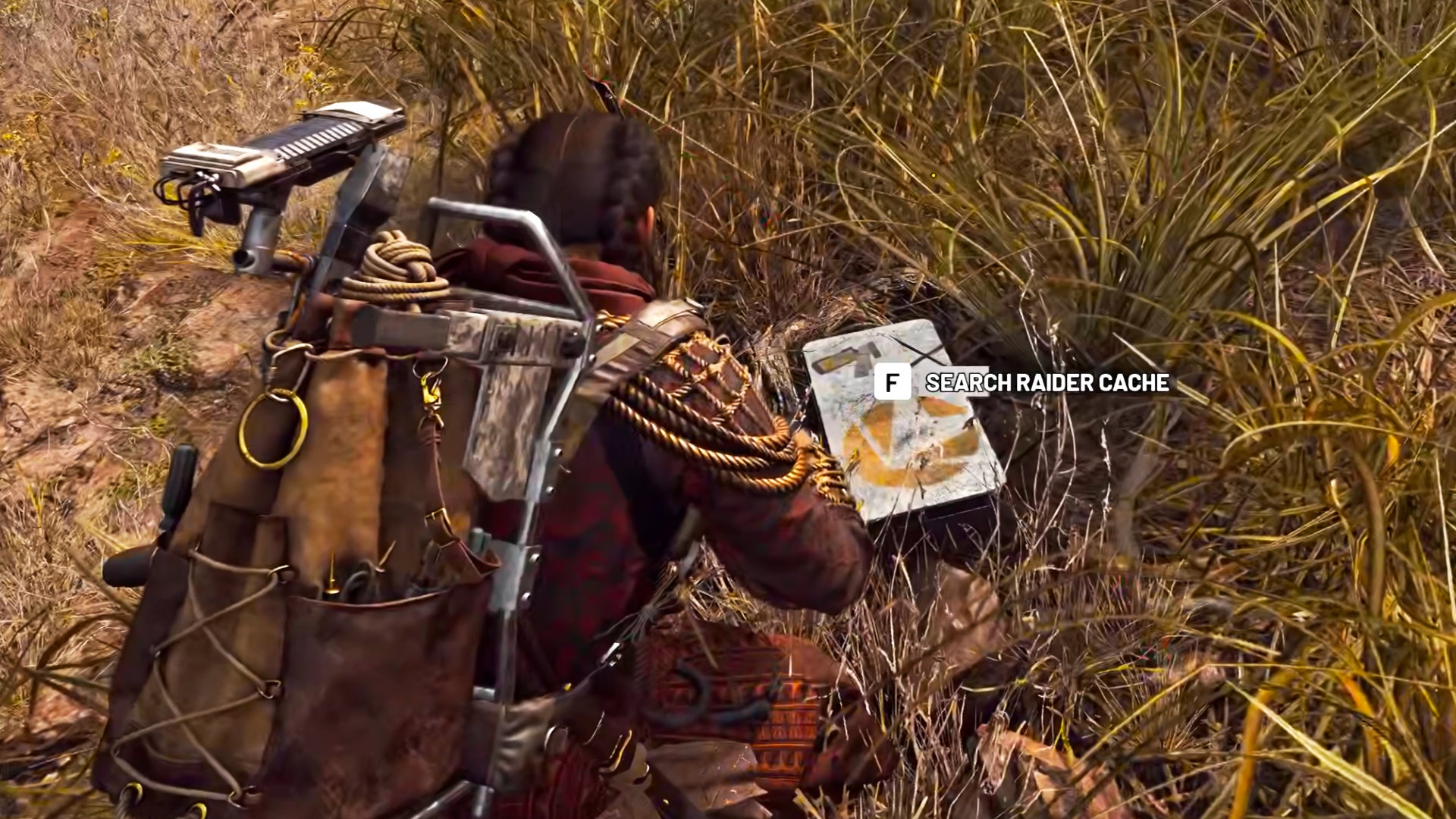
Raider Caches, Weapon Boxes, and other raider-oriented container types have a good chance of offering Blueprints. |Image credit:Rock Paper Shotgun/Embark Studios
Blueprints have a very low chance of spawning in any container in Arc Raiders, around 1-2% on average. However, there is a higher chance of finding Blueprints in particular container types. Specifically, you can find more Blueprints in Raider containers and security lockers.
Beyond this, if you’re looking for Blueprints you should focus on regions of the map which are marked as having particularly high-value loot. Areas such as the Control Tower in Dam Battlegrounds, the Arrival and Departure Buildings in Spaceport, and Pilgrim’s Peak in Blue Gate all have a better-than-average chance of spawning Blueprints somewhere amongst all their containers. Night Raids and Electromagnetic Storm events also increase the drop chances of certain Blueprints .
In addition to these containers, you can often loot Blueprints from destroyed Surveyors - the largest of the rolling ball ARC. Surveyors are more commonly found on the later maps - Spaceport and Blue Gate - and if one spawns in your match, you’ll likely see it by the blue laser beam that it casts into the sky while “surveying”.
Surveyors are quite well-armoured and will very speedily run away from you once it notices you, but if you can take one down then make sure you loot all its parts for a chance of obtaining certain unusual Blueprints.
Blueprints obtained from quests
One way in which you can get Blueprints is by completing certain quests for the vendors in Speranza. Some quests will reward you with a specific item Blueprint upon completion, so as long as you work through all the quests in Arc Raiders, you are guaranteed those Blueprints.
Here is the full list of all Blueprints you can get from quest rewards:
- Trigger Nade Blueprint: Rewarded after completing “Sparks Fly”.
- Lure Grenade Blueprint: Rewarded after completing “Greasing Her Palms”.
- Burletta Blueprint: Rewarded after completing “Industrial Espionage”.
- Hullcracker Blueprint (and Launcher Ammo Blueprint): Rewarded after completing “The Major’s Footlocker”.
Alas, that’s only 4 Blueprints out of a total of 75 to unlock, so for the vast majority you will need to find them yourself during a raid. If you’re intent on farming Blueprints, then it’s best to equip yourself with cheap gear in case you lose it, but don’t use a free loadout because then you won’t get a safe pocket to stash any new Blueprint you find. No pain in Arc Raiders is sharper than failing to extract with a new Blueprint you’ve been after for a dozen hours already.
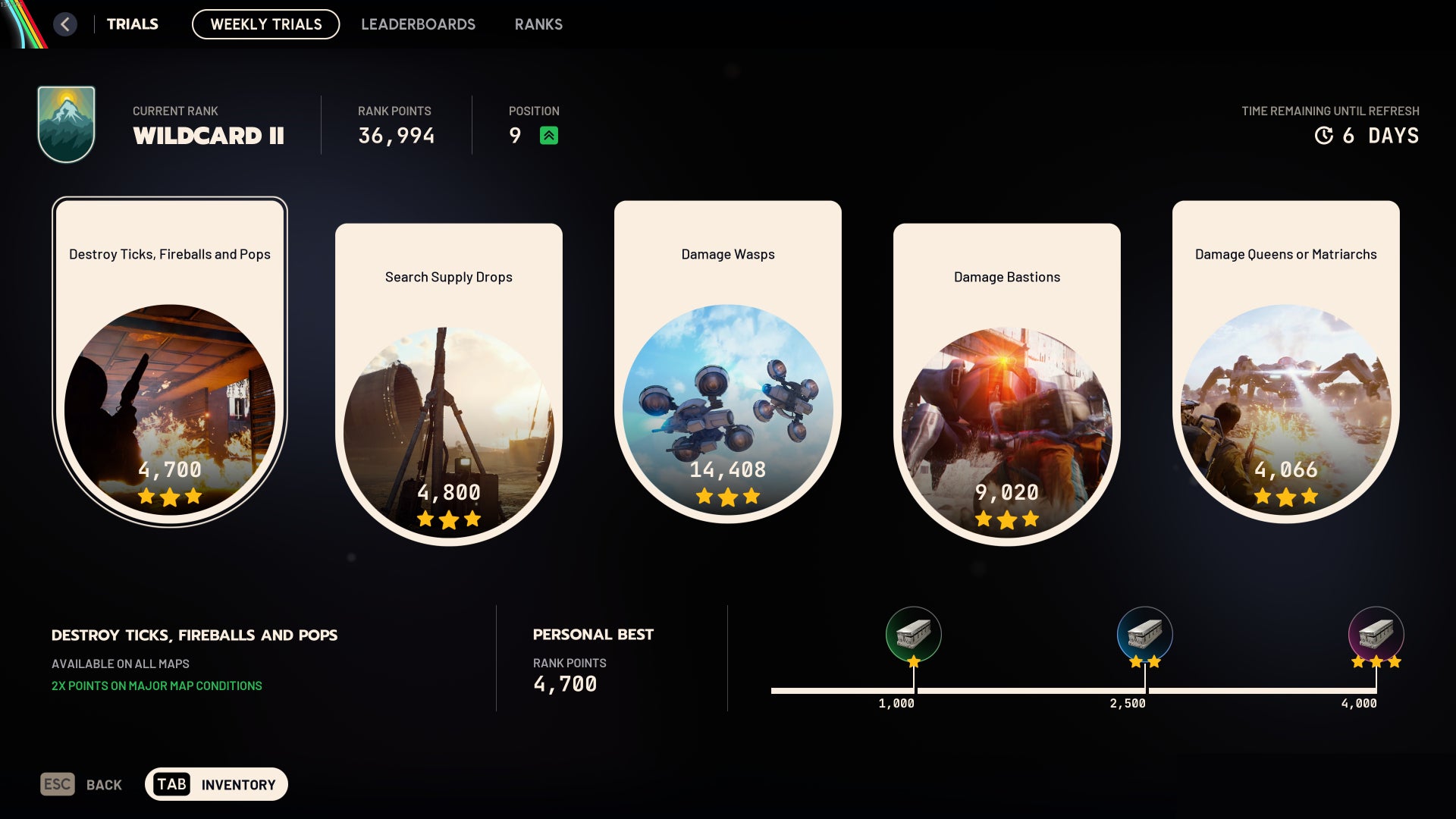
One of the best ways to get Blueprints is by hitting three stars on all five Trials every week. |Image credit:Rock Paper Shotgun/Embark Studios
Blueprints obtained from Trials
One of the very best ways to get Blueprints is as rewards for completing Trials in Arc Raiders. Trials are unlocked from Level 15 onwards, and allow you to earn rewards by focusing on certain tasks over the course of several raids. For example, one Trial might task you with dealing damage to Hornets, while another might challenge you to loot Supply Drops.
Trials refresh on a weekly basis, with a new week bringing five new Trials. Each Trial can offer up to three rewards after passing certain score milestones, and it’s possible to receive very high level loot from these reward crates - including Blueprints. So if you want to unlock as many Blueprints as possible, you should make a point of completing as many Trials as possible each week.
Best Blueprint farming locations
The very best way to get Blueprints is to frequent specific areas of the maps which combine high-tier loot pools with the right types of containers to search. Here are my recommendations for where to find Blueprints on every map, so you can always keep the search going for new crafting recipes to unlock.
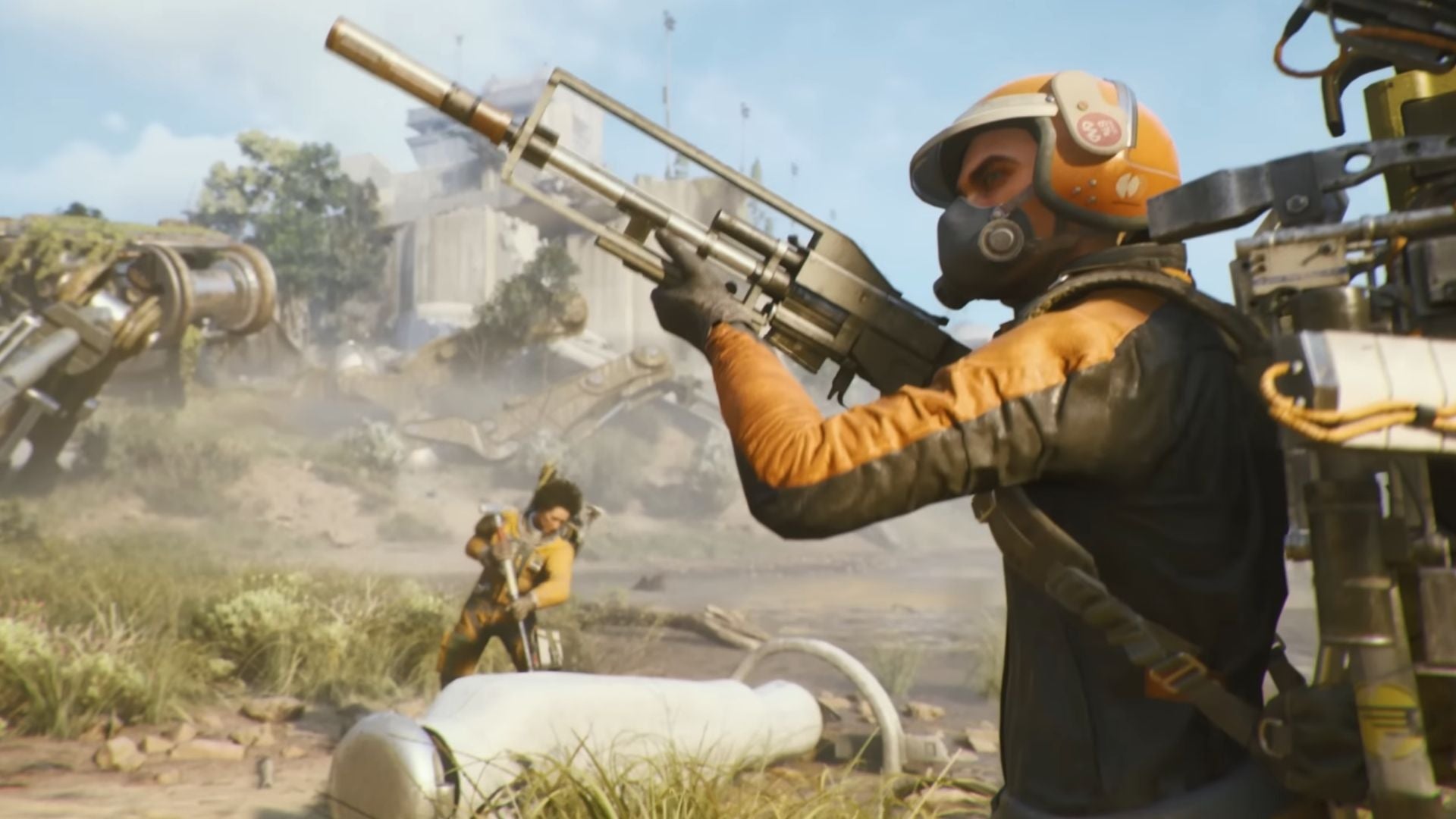
Image credit:Rock Paper Shotgun/Embark Studios
Dam Battlegrounds
The best places to farm Blueprints on Dam Battlegrounds are the Control Tower, Power Generation Complex, Ruby Residence, and Pale Apartments . The first two regions, despite only being marked on the map as mid-tier loot, contain a phenomenal number of containers to loot. The Control Tower can also contain a couple of high-tier Security Lockers - though of course, you’ll need to have unlocked the Security Breach skill at the end of the Survival tree.
There’s also a lot of reporting amongst the playerbase that the Residential areas in the top-left of the map - Pale Apartments and Ruby Residence - give you a comparatively strong chance of finding Blueprints. Considering their size, there’s a high density of containers to loot in both locations, and they also have the benefit of being fairly out of the way. So you’re more likely to have all the containers to yourself.
Buried City
The best Blueprint farming locations on Buried City are the Santa Maria Houses, Grandioso Apartments, Town Hall, and the various buildings of the New District . Grandioso Apartments has a lower number of containers than the rest, but a high chance of spawning weapon cases - which have good Blueprint drop rates. The others are high-tier loot areas, with plenty of lootable containers - including Security Lockers.
Spaceport
The best places to find Blueprints on Spaceport are the Arrival and Departure Buildings, as well as Control Tower A6 and the Launch Towers . All these areas are labelled as high-value loot regions, and many of them are also very handily connected to one another by the Spaceport wall, which you can use to quickly run from one area to the next. At the tops of most of these buildings you’ll find at least one Security Locker, so this is an excellent farming route for players looking to find Blueprints.
The downside to looting Blueprints on Spaceport is that all these areas are hotly contested, particularly in Duos and Squads. You’ll need to be very focused and fast in order to complete the full farming route.
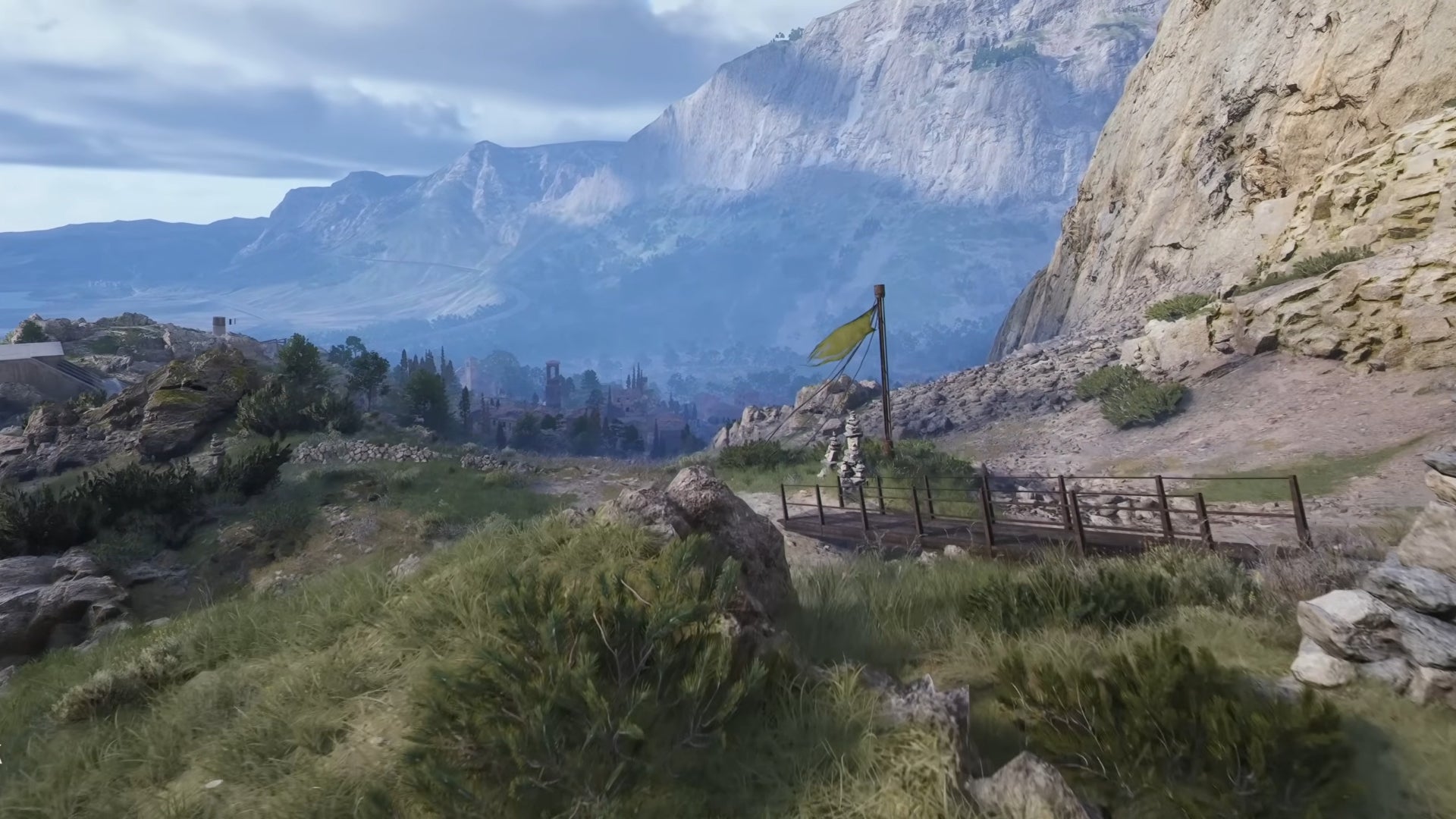
Image credit:Rock Paper Shotgun/Embark Studios
Blue Gate
Blue Gate tends to have a good chance of dropping Blueprints, potentially because it generally has a high number of containers which can hold lots of items; so there’s a higher chance of a Blueprint spawning in each container. In my experience, the best Blueprint farming spots on Blue Gate are Pilgrim’s Peak, Raider’s Refuge, the Ancient Fort, and the Underground Complex beneath the Warehouse .
All of these areas contain a wealth of containers to loot. Raider’s Refuge has less to loot, but the majority of the containers in and around the Refuge are raider containers, which have a high chance of containing Blueprints - particularly during major events.
Stella Montis
On the whole, Stella Montis seems to have a very low drop rate for Blueprints (though a high chance of dropping other high-tier loot). If you do want to try farming Blueprints on this map, the best places to find Blueprints in Stella Montis are Medical Research, Assembly Workshop, and the Business Center . These areas have the highest density of containers to loot on the map.
In addition to this, the Western Tunnel has a few different Security Lockers to loot, so while there’s very little to loot elsewhere in this area of the map, it’s worth hitting those Security Lockers if you spawn there at the start of a match.
That wraps up this primer on how to get all the Blueprints in Arc Raiders as quickly as possible. With the Expedition system constantly resetting a large number of players’ Blueprints, it’s more important than ever to have the most up-to-date information on where to find all these Blueprints.
While you’re here, be sure to check out our Arc Raiders best guns tier list , as well as our primers on the best skills to unlock and all the different Field Depot locations on every map.
ARC Raiders
PS5 , Xbox Series X/S , PC
Rock Paper Shotgun is better when you sign in
Sign in and join us on our journey to discover strange and compelling PC games.
