How space strategy sim Nebulous channels eight years in the US Navy
Through a radar, darkly

Image credit:Hooded Horse

“Greebling” is George Lucas’s term for the decoration of spacecraft models with showy, superfluous details - clumps of antennae, bulky rivets, bulging pipes, anything that whiffs of function. Speaking as the human grown from the ashes of a child who once built the Death Star out of LEGO, I do enjoy a good greeble now and then, but it very easily becomes a parody of itself - like turning a machine inside out, but none of the exposed parts are meaningfully connected. Liliana, founder of Eridanus Industries and lead developer of space tactics sim Nebulous: Fleet Command , has more practical objections to greebling, based on her eight years in the US Navy: excess surface details are an absolute dust trap for radar waves.
“Every greeble on the surface of a ship is a radar cross-section magnifier,” Liliana tells me over videocall. “So you look at a real-life warship and they are flat surfaces. There’s no bevelling. The two edges come together at the perfect angle that they’re supposed to, and you limit the amount of stuff on the deck, because your RCS is a factor in how you live or die.” Hence the meticulously clean and faceted, utilitarian design of Fleet Command’s warships: if there’s anything mounted on the hull, it’s there for a purpose.

Radar operation is a complicated affair in Nebulous, extending far beyond the idea of “fog of war”. You think about it every time you set a heading. Turn a ship side-on to the other fleet (assuming you know its position) and you’re offering their radar waves a larger area to bounce off, while reflecting them directly back at the scanner. Fly ships close together and they’ll amplify each other’s radar signatures. Different types of internal radar module have different ranges, scanning aperture widths and power levels, to be weighed up gingerly against your points cap in the game’s fleet editor. And then you start to think about electronic warfare: jammers that spew a cone of interference, and conversely, burn-through sweeps that overclock a radar module to conquer that interference.
Nebulous doesn’t literally recreate the physics of all this, though I get the sense Liliana has given the idea serious consideration. It would be “prohibitive”, she says, to simulate actual radar waves in a “CPU-bound game” that is already trying to handle everything from the operation of individual, damageable components inside ships, to the antics of fighter craft and missiles. Rather, the game knows where every ship signature is at all times, then works out whether other craft can detect them through the cosmic white noise based on a bunch of competing factors.
“That includes things like checking if there is an asteroid in the way,” Liliana goes on. “Or measuring the distance and figuring out the attenuation of the signal there and back, multiplied by the cross section of the ship, depending on how it’s facing, and then the sensitivity of the radar, and then the noise floor of the map, which jammers raise.”

Image credit:Hooded Horse
In short: “it simulates all of the physics of the wave travel, without having to process every single point in space that it could want to shoot away from”. The result is “as realistic as I think I can make it while still being performant.” It certainly feels very high fidelity in-game. I suck at radar tactics in Nebulous - I suck at most things in Nebulous, though I’m rapidly getting better at reading damage reports under pressure. But I’m in love with the idea that the slightest tweak to my ship’s heading could shrink my radar footprint a fraction and buy me an extra second or so to discreetly lock cannons on an approaching destroyer.
Liliana began making Nebulous partly just to hone what she’d learned during her earlier, academic career in hardware design, field robotics, and computer science. “Starting game development was kind of just a way for me to keep my skills sharp, because programming is a perishable skill,” she notes. But she also saw an opportunity to make a contribution to the real-time tactics genre, drawing on her military naval experience - in particular, the 3D space sim epitomised by Homeworld.
The latter’s influence on Nebulous can be traced from the abstract tactical view, which opens up a spherical hologram with distance measurements and icons, to the contours of the ships themselves, which evoke the designs of Rob Cunningham as much as Liliana’s understanding of radar reconnaissance. Still, her appreciation has limits. “I love Homeworld,” she says. “But one of the things that always got to me about it was that was how faceless everything was, and having served on a ship and seen how much goes into it, how much goes into everything, from keeping it running to getting it from point A to point B - there’s just so much that the games don’t capture, that I really wanted to capture.”
Take missiles. “When you take your missile ship in Homeworld and you right-click the enemy, they just dump all their missiles, and then they magically replenish them a little bit later,” Liliana goes on. “But in the real world, with the contents of our [vertical launching system] - when we would do briefings with the captains every day, we would put up a chart showing every missile in every VLS, and what their status was, which ones we could fire it and at what time, what was a casualty, that kind of stuff.
“Because every individual missile is so important, and the details of how to use them are so important. When I would train young ensigns, I would spend days and days and days going through the details of like, how the missiles launch, what their guidance systems look like, how we illuminate targets, that kind of stuff, because there’s just so much complexity, and I really wanted to capture that.”

Image credit:Hooded Horse
You could spend days picking over the intricacies of missiles in Nebulous. Should they launch “hot”, immediately igniting their engines to reach the target as soon as possible, or “cold”, manoeuvring around the launching ship to acquire an unobstructed line of flight? Should they corkscrew or weave to avoid point defenses, and what should they do if they’re jammed and the target is lost?
The greatest feat of missile warfare in Nebulous is perhaps using “cruise” functionality to send missiles on circuitous routes toward enemy fleets. The multiplayer community’s best players will tee up several of these cruise patrols, timing them so that the missiles materialise all at once from different angles and overwhelm the target’s point defences. You can also build your own missiles in the editor, thickening their armour to withstand turret fire, and making trade-offs between range, main speed, acceleration and payload.
Another example is the user interface. While influenced by Homeworld, it shies away from contemporary software orthodoxy in consisting heavily of on-screen acronyms. “One of the things that really gets to me in a lot of UIs is picture buttons,” Liliana says. “For things like editors, they can work. Or like things where timeliness doesn’t matter. But everything that’s important in the Neb UI that you need to take action on, like the buttons at the bottom bar, for example, it’s all text, because I don’t want to [spend time] translating an image through my head into what it means. That’s not the way military interfaces work. They’re just words, words, words, words.”
While some parts of the interface feel directly inspired, others are more obviously fantastical. Take the damage control screen, which shows repair teams moving between ship compartments in real-time, dealing with problems in order of severity. Those repair staff can be killed by armour-piercing fire, so do try to rotate damaged components away from the fusillade.
“We didn’t have, like, a real time damage display [in the Navy],” Liliana says. “The way that we would do damage control is we basically have plates showing every level of the ship, and a full diagram of where everything is, and we draw on them with grease pencil as the team move around. And we get reports for like, this compartment has three inches of water on deck, this compartment has a fire in it, that kind of stuff. And so I translated that into a more visual, real-time kind of display in a way that was interesting.”
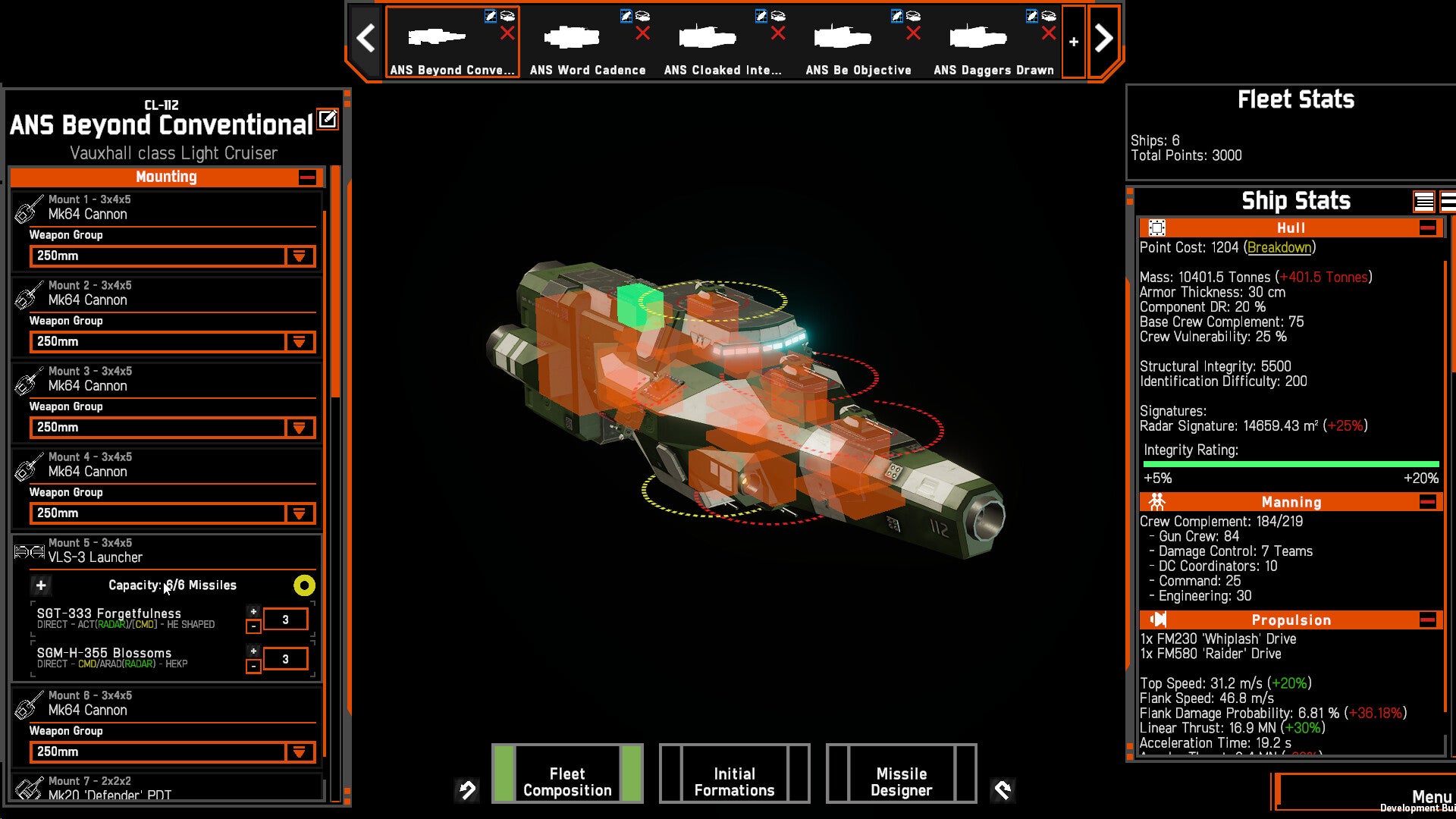
Image credit:Hooded Horse
Liliana has found it intriguing and at times, alarming to see her ideas about naval warfare mutate even further in the hands of Fleet Command’s early access players. “There were assumptions that I made about how people would play the game based on my own expectations that just were not true of how the game’s mechanics incentivised play,” she says. One example is how players have favoured strength in numbers. “I view ships, for obvious reasons, as these extremely valuable assets. And so to me, obviously, anyone who played the game would fully build up their ship with damage control and as many weapons as possible, or what they could fit in the point costs.
“And then I gave it to a couple of experienced RTS players, and they just looked at the mechanics, and they went, well, it takes a lot more time to kill 10 empty ships than it does to kill two or three really well built-up ships. So I’m just going to do that. And so they basically made a bunch of expendable units, which is exactly what I didn’t want to happen. And so we tweaked mechanics to get around that. I learned a lot about incentivising the type of play that I want to see through mechanics.”
The game’s upcoming single player campaign will play a huge role here. Nebulous is currently a PvP-focussed experience with an AI skirmish mode. It offers an elegant and engaging set of tutorial missions, based on Liliana’s memories of training cadets, which are voiced by her wife. But as Liliana acknowledges, the current multiplayer scene is a rough ride for newcomers. “There are plenty of people who bounce off the game because they get into their first multiplayer battle and they just get annihilated by 100 missiles.”
The campaign will provide more of an on-ramp, though it sounds like PvP will remain the soul of Nebulous. “Now that all of the mechanics are in place, now that the carrier update is out, we can design a campaign which utilizes all of those things and provides like a nice, curated experience to get someone into the game experience.”
Another important consideration for solo players is, of course, fleshing out the AI. While working on the carriers update, Liliana made sweeping, secret adjustments to how non-player ships behave. The AI now groups ships into tactical archetypes based on factors such as hull type, armament and damage control configuration, then assigns a “captain” with a complementary behaviour. There’s also an “admiral” AI layer that picks a strategy based on the game mode, gives the captains orders, and switches things up depending on the fortunes of the match.
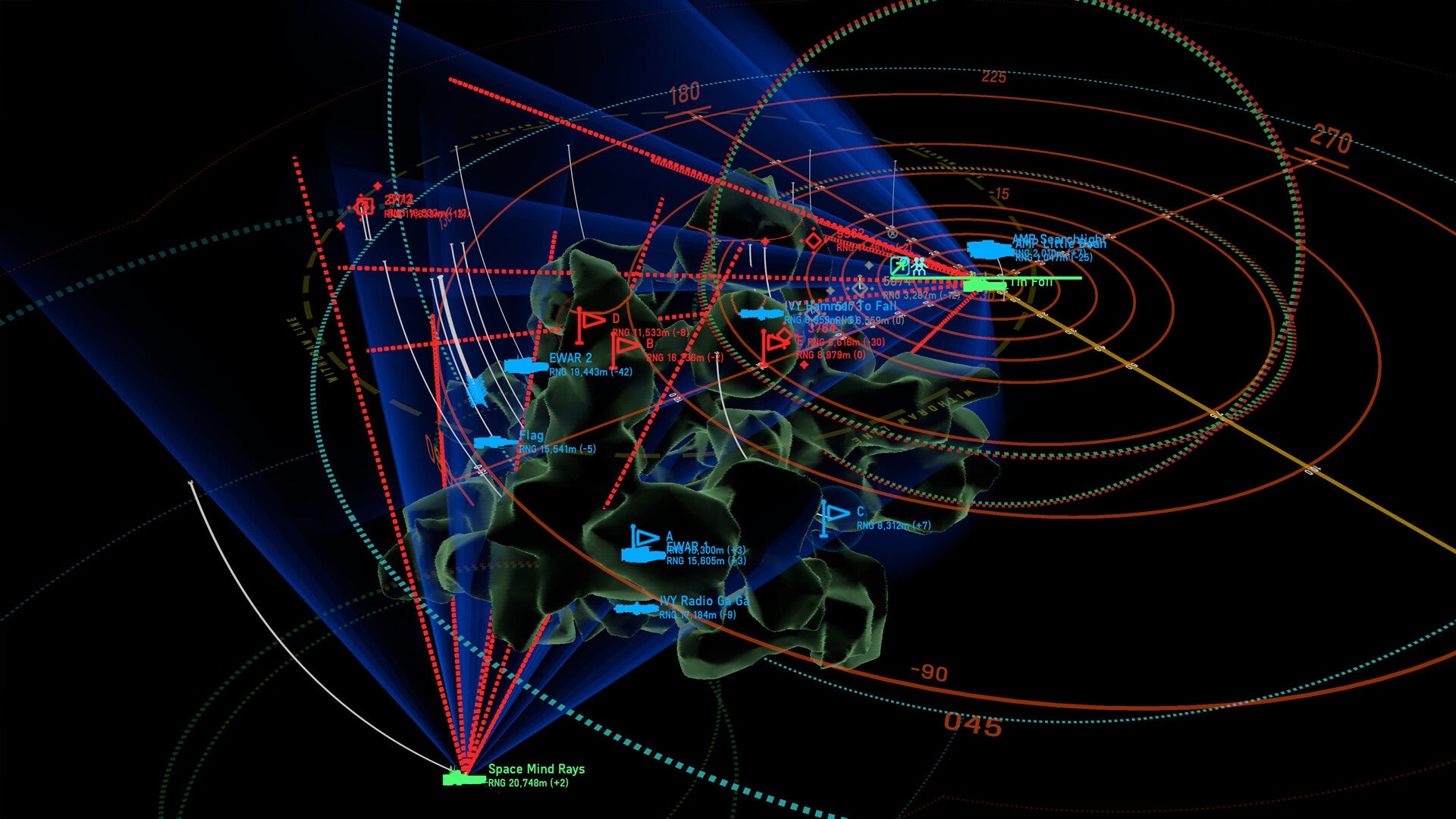
Image credit:Hooded Horse
“There’s certainly some weird builds that it’s not optimized for, but [the AI] can, in general, look at the build of the ship, figure out the best way to use it, give it a captain that’s appropriate for how it’s supposed to fight,” Liliana says. “And then, at a strategic level, looking at the map, it can calculate based on how many points it controls, how long till the game ends, and whether it’s going to win or lose.” The new AI also has proper spatial awareness, which is enormously hard to accomplish in a 3D volume: it can use asteroids for cover without blocking its own shots.
Much as I disdain greebling above, I do worry that my enthusiasm for Nebulous is rather “greebly”. I’m fascinated by the complexity and gravitas Liliana’s knowledge brings to gambits I recognise from Homeworld. Coordinating a missile strike, step by step, is a wonderful piece of theatre. But the reframing of those moving parts as sci-fi fixtures also helps me forget that I am peering into the heart of a real-life war machine. The US Navy is not a box of LEGO, but an apparatus of power projection and control that spans the Earth and maintains a particular economic and social status quo. Given its frequent recourse to realism, I would like Fleet Command to explore that context, somehow.
I’m not expecting a storyline that offers a critique of the Navy, but I would like Nebulous to at least gesture toward the cultural histories and affordances of the technologies it asks you to fight with. What does it mean to interpret the world through radar? And conversely, what sort of community forms around the baroque, multiple-stage operation of such weapons?

As her frequent anecdotes about shipboard life illustrate, Liliana seems keen to give some sense of warships as little floating societies, rather than just elaborate, “faceless” killing machines. Nebulous does simulate crew morale, with plans for warships to lose capability when their occupants panic. However adapted, its systems also retain something of their origins in the quotidian bustle of naval hierarchy and protocol. Radar operation is, as Liliana observes in passing, a work of many hands: it involves a division of roles, with some personnel searching for and others, tracking objects identified as potential threats.
Still, it’s hard to access that idea of a warship as a human collective through the format of a real-time tactics game that centralises the agency of one person - this being the kind of unity I imagine a living admiral would expect of their staff, for better and worse. I’m hopeful that, somewhere along the line, Nebulous will acquire a social texture on par with the abstract cleverness of its warfare. Part of what makes the tutorial effective is that feeling of having Liliana right at your elbow, showing you the ropes.
Nebulous: Fleet Command
PC
Rock Paper Shotgun is better when you sign in
Sign in and join us on our journey to discover strange and compelling PC games.

All 75 Arc Raiders Blueprints and where to get them
These areas have the highest chance of giving you Blueprints
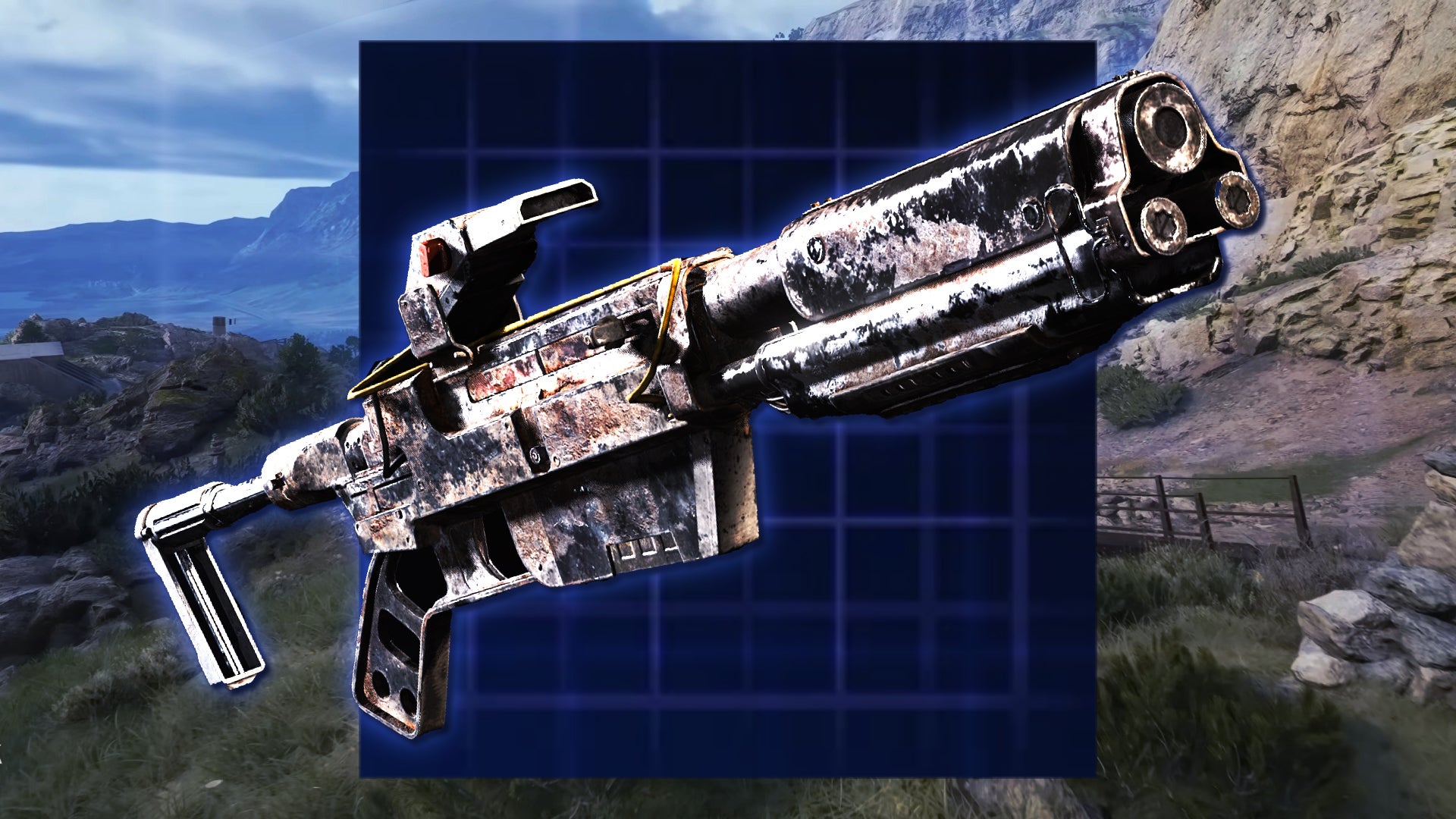
Image credit:Rock Paper Shotgun/Embark Studios

Looking for more Arc Raiders Blueprints? It’s a special day when you find a Blueprint, as they’re among the most valuable items in Arc Raiders. If you find a Blueprint that you haven’t already found, then you must make sure you hold onto it at all costs, because Blueprints are the key to one of the most important and powerful systems of meta-progression in the game.
This guide aims to be the very best guide on Blueprints you can find, starting with a primer on what exactly they are and how they work in Arc Raiders, before delving into exactly where to get Blueprints and the very best farming spots for you to take in your search.
We’ll also go over how to get Blueprints from other unlikely activities, such as destroying Surveyors and completing specific quests. And you’ll also find the full list of all 75 Blueprints in Arc Raiders on this page (including the newest Blueprints added with the Cold Snap update , such as the Deadline Blueprint and Firework Box Blueprint), giving you all the information you need to expand your own crafting repertoire.
In this guide:
- What are Blueprints in Arc Raiders?
- Full Blueprint list: All crafting recipes
- Where to find Blueprints in Arc Raiders Blueprints obtained from quests Blueprints obtained from Trials Best Blueprint farming locations

What are Blueprints in Arc Raiders?
Blueprints in Arc Raiders are special items which, if you manage to extract with them, you can expend to permanently unlock a new crafting recipe in your Workshop. If you manage to extract from a raid with an Anvil Blueprint, for example, you can unlock the ability to craft your very own Anvil Pistol, as many times as you like (as long as you have the crafting materials).
To use a Blueprint, simply open your Inventory while in the lobby, then right-click on the Blueprint and click “Learn And Consume” . This will permanently unlock the recipe for that item in your Workshop. As of the Stella Montis update, there are allegedly 75 different Blueprints to unlock - although only 68 are confirmed to be in the game so far. You can see all the Blueprints you’ve found and unlocked by going to the Workshop menu, and hitting “R” to bring up the Blueprint screen.
It’s possible to find duplicates of past Blueprints you’ve already unlocked. If you find these, then you can either sell them, or - if you like to play with friends - you can take it into a match and gift it to your friend so they can unlock that recipe for themselves. Another option is to keep hold of them until the time comes to donate them to the Expedition.
Full Blueprint list: All crafting recipes
Below is the full list of all the Blueprints that are currently available to find in Arc Raiders, and the crafting recipe required for each item:
| Blueprint | Type | Recipe | Crafted At |
|---|---|---|---|
| Bettina | Weapon | 3x Advanced Mechanical Components 3x Heavy Gun Parts 3x Canister | Gunsmith 3 |
| Blue Light Stick | Quick Use | 3x Chemicals | Utility Station 1 |
| Aphelion | Weapon | 3x Magnetic Accelerator 3x Complex Gun Parts 1x Matriarch Reactor | Gunsmith 3 |
| Combat Mk. 3 (Flanking) | Augment | 2x Advanced Electrical Components 3x Processor | Gear Bench 3 |
| Combat Mk. 3 (Aggressive) | Augment | 2x Advanced Electrical Components 3x Processor | Gear Bench 3 |
| Complex Gun Parts | Material | 2x Light Gun Parts 2x Medium Gun Parts 2x Heavy Gun Parts | Refiner 3 |
| Fireworks Box | Quick Use | 1x Explosive Compound 3x Pop Trigger | Explosives Station 2 |
| Gas Mine | Mine | 4x Chemicals 2x Rubber Parts | Explosives Station 1 |
| Green Light Stick | Quick Use | 3x Chemicals | Utility Station 1 |
| Pulse Mine | Mine | 1x Crude Explosives 1x Wires | Explosives Station 1 |
| Seeker Grenade | Grenade | 1x Crude Explosives 2x ARC Alloy | Explosives Station 1 |
| Looting Mk. 3 (Survivor) | Augment | 2x Advanced Electrical Components 3x Processor | Gear Bench 3 |
| Angled Grip II | Mod | 2x Mechanical Components 3x Duct Tape | Gunsmith 2 |
| Angled Grip III | Mod | 2x Mod Components 5x Duct Tape | Gunsmith 3 |
| Hullcracker | Weapon | 1x Magnetic Accelerator 3x Heavy Gun Parts 1x Exodus Modules | Gunsmith 3 |
| Launcher Ammo | Ammo | 5x Metal Parts 1x Crude Explosives | Workbench 1 |
| Anvil | Weapon | 5x Mechanical Components 5x Simple Gun Parts | Gunsmith 2 |
| Anvil Splitter | Mod | 2x Mod Components 3x Processor | Gunsmith 3 |
| ??? | ??? | ??? | ??? |
| Barricade Kit | Quick Use | 1x Mechanical Components | Utility Station 2 |
| Blaze Grenade | Grenade | 1x Explosive Compound 2x Oil | Explosives Station 3 |
| Bobcat | Weapon | 3x Advanced Mechanical Components 3x Light Gun Parts | Gunsmith 3 |
| Osprey | Weapon | 2x Advanced Mechanical Components 3x Medium Gun Parts 7x Wires | Gunsmith 3 |
| Burletta | Weapon | 3x Mechanical Components 3x Simple Gun Parts | Gunsmith 1 |
| Compensator II | Mod | 2x Mechanical Components 4x Wires | Gunsmith 2 |
| Compensator III | Mod | 2x Mod Components 8x Wires | Gunsmith 3 |
| Defibrillator | Quick Use | 9x Plastic Parts 1x Moss | Medical Lab 2 |
| ??? | ??? | ??? | ??? |
| Equalizer | Weapon | 3x Magnetic Accelerator 3x Complex Gun Parts 1x Queen Reactor | Gunsmith 3 |
| Extended Barrel | Mod | 2x Mod Components 8x Wires | Gunsmith 3 |
| Extended Light Mag II | Mod | 2x Mechanical Components 3x Steel Spring | Gunsmith 2 |
| Extended Light Mag III | Mod | 2x Mod Components 5x Steel Spring | Gunsmith 3 |
| Extended Medium Mag II | Mod | 2x Mechanical Components 3x Steel Spring | Gunsmith 2 |
| Extended Medium Mag III | Mod | 2x Mod Components 5x Steel Spring | Gunsmith 3 |
| Extended Shotgun Mag II | Mod | 2x Mechanical Components 3x Steel Spring | Gunsmith 2 |
| Extended Shotgun Mag III | Mod | 2x Mod Components 5x Steel Spring | Gunsmith 3 |
| Remote Raider Flare | Quick Use | 2x Chemicals 4x Rubber Parts | Utility Station 1 |
| Heavy Gun Parts | Material | 4x Simple Gun Parts | Refiner 2 |
| Venator | Weapon | 2x Advanced Mechanical Components 3x Medium Gun Parts 5x Magnet | Gunsmith 3 |
| Il Toro | Weapon | 5x Mechanical Components 6x Simple Gun Parts | Gunsmith 1 |
| Jolt Mine | Mine | 1x Electrical Components 1x Battery | Explosives Station 2 |
| Explosive Mine | Mine | 1x Explosive Compound 1x Sensors | Explosives Station 3 |
| Jupiter | Weapon | 3x Magnetic Accelerator 3x Complex Gun Parts 1x Queen Reactor | Gunsmith 3 |
| Light Gun Parts | Material | 4x Simple Gun Parts | Refiner 2 |
| Lightweight Stock | Mod | 2x Mod Components 5x Duct Tape | Gunsmith 3 |
| Lure Grenade | Grenade | 1x Speaker Component 1x Electrical Components | Utility Station 2 |
| Medium Gun Parts | Material | 4x Simple Gun Parts | Refiner 2 |
| Torrente | Weapon | 2x Advanced Mechanical Components 3x Medium Gun Parts 6x Steel Spring | Gunsmith 3 |
| Muzzle Brake II | Mod | 2x Mechanical Components 4x Wires | Gunsmith 2 |
| Muzzle Brake III | Mod | 2x Mod Components 8x Wires | Gunsmith 3 |
| Padded Stock | Mod | 2x Mod Components 5x Duct Tape | Gunsmith 3 |
| Shotgun Choke II | Mod | 2x Mechanical Components 4x Wires | Gunsmith 2 |
| Shotgun Choke III | Mod | 2x Mod Components 8x Wires | Gunsmith 3 |
| Shotgun Silencer | Mod | 2x Mod Components 8x Wires | Gunsmith 3 |
| Showstopper | Grenade | 1x Advanced Electrical Components 1x Voltage Converter | Explosives Station 3 |
| Silencer I | Mod | 2x Mechanical Components 4x Wires | Gunsmith 2 |
| Silencer II | Mod | 2x Mod Components 8x Wires | Gunsmith 3 |
| Snap Hook | Quick Use | 2x Power Rod 3x Rope 1x Exodus Modules | Utility Station 3 |
| Stable Stock II | Mod | 2x Mechanical Components 3x Duct Tape | Gunsmith 2 |
| Stable Stock III | Mod | 2x Mod Components 5x Duct Tape | Gunsmith 3 |
| Tagging Grenade | Grenade | 1x Electrical Components 1x Sensors | Utility Station 3 |
| Tempest | Weapon | 3x Advanced Mechanical Components 3x Medium Gun Parts 3x Canister | Gunsmith 3 |
| Trigger Nade | Grenade | 2x Crude Explosives 1x Processor | Explosives Station 2 |
| Vertical Grip II | Mod | 2x Mechanical Components 3x Duct Tape | Gunsmith 2 |
| Vertical Grip III | Mod | 2x Mod Components 5x Duct Tape | Gunsmith 3 |
| Vita Shot | Quick Use | 2x Antiseptic 1x Syringe | Medical Lab 3 |
| Vita Spray | Quick Use | 3x Antiseptic 1x Canister | Medical Lab 3 |
| Vulcano | Weapon | 1x Magnetic Accelerator 3x Heavy Gun Parts 1x Exodus Modules | Gunsmith 3 |
| Wolfpack | Grenade | 2x Explosive Compound 2x Sensors | Explosives Station 3 |
| Red Light Stick | Quick Use | 3x Chemicals | Utility Station 1 |
| Smoke Grenade | Grenade | 14x Chemicals 1x Canister | Utility Station 2 |
| Deadline | Mine | 3x Explosive Compound 2x ARC Circuitry | Explosives Station 3 |
| Trailblazer | Grenade | 1x Explosive Compound 1x Synthesized Fuel | Explosives Station 3 |
| Tactical Mk. 3 (Defensive) | Augment | 2x Advanced Electrical Components 3x Processor | Gear Bench 3 |
| Tactical Mk. 3 (Healing) | Augment | 2x Advanced Electrical Components 3x Processor | Gear Bench 3 |
| Yellow Light Stick | Quick Use | 3x Chemicals | Utility Station 1 |
Note: The missing Blueprints in this list likely have not actually been added to the game at the time of writing, because none of the playerbase has managed to find any of them. As they are added to the game, I will update this page with the most relevant information so you know exactly how to get all 75 Arc Raiders Blueprints.
Where to find Blueprints in Arc Raiders
Below is a list of all containers, modifiers, and events which maximise your chances of finding Blueprints:
- Certain quests reward you with specific Blueprints .
- Completing Trials has a high chance of offering Blueprints as rewards.
- Surveyors have a decent chance of dropping Blueprints on death.
- High loot value areas tend to have a greater chance of spawning Blueprints.
- Night Raids and Storms may increase rare Blueprint spawn chances in containers.
- Containers with higher numbers of items may have a higher tendency to spawn Blueprints. As a result, Blue Gate (which has many “large” containers containing multiple items) may give you a higher chance of spawning Blueprints.
- Raider containers (Raider Caches, Weapon Boxes, Medical Bags, Grenade Tubes) have increased Blueprint drop rates. As a result, the Uncovered Caches event gives you a high chance of finding Blueprints.
- Security Lockers have a higher than average chance of containing Blueprints.
- Certain Blueprints only seem to spawn under specific circumstances: Tempest Blueprint only spawns during Night Raid events. Vulcano Blueprint only spawns during Hidden Bunker events. Jupiter and Equaliser Blueprints only spawn during Harvester events.
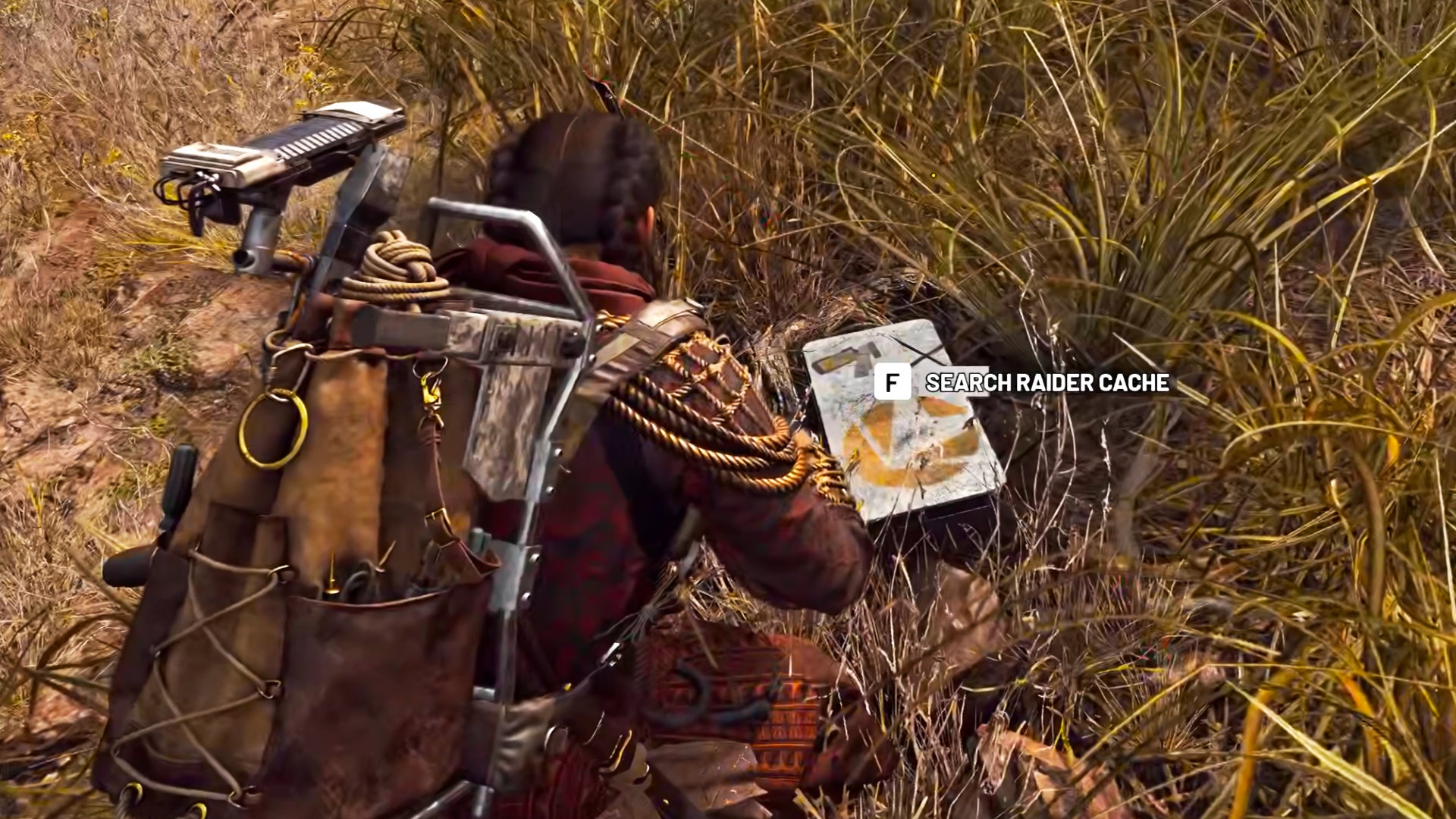
Raider Caches, Weapon Boxes, and other raider-oriented container types have a good chance of offering Blueprints. |Image credit:Rock Paper Shotgun/Embark Studios
Blueprints have a very low chance of spawning in any container in Arc Raiders, around 1-2% on average. However, there is a higher chance of finding Blueprints in particular container types. Specifically, you can find more Blueprints in Raider containers and security lockers.
Beyond this, if you’re looking for Blueprints you should focus on regions of the map which are marked as having particularly high-value loot. Areas such as the Control Tower in Dam Battlegrounds, the Arrival and Departure Buildings in Spaceport, and Pilgrim’s Peak in Blue Gate all have a better-than-average chance of spawning Blueprints somewhere amongst all their containers. Night Raids and Electromagnetic Storm events also increase the drop chances of certain Blueprints .
In addition to these containers, you can often loot Blueprints from destroyed Surveyors - the largest of the rolling ball ARC. Surveyors are more commonly found on the later maps - Spaceport and Blue Gate - and if one spawns in your match, you’ll likely see it by the blue laser beam that it casts into the sky while “surveying”.
Surveyors are quite well-armoured and will very speedily run away from you once it notices you, but if you can take one down then make sure you loot all its parts for a chance of obtaining certain unusual Blueprints.
Blueprints obtained from quests
One way in which you can get Blueprints is by completing certain quests for the vendors in Speranza. Some quests will reward you with a specific item Blueprint upon completion, so as long as you work through all the quests in Arc Raiders, you are guaranteed those Blueprints.
Here is the full list of all Blueprints you can get from quest rewards:
- Trigger Nade Blueprint: Rewarded after completing “Sparks Fly”.
- Lure Grenade Blueprint: Rewarded after completing “Greasing Her Palms”.
- Burletta Blueprint: Rewarded after completing “Industrial Espionage”.
- Hullcracker Blueprint (and Launcher Ammo Blueprint): Rewarded after completing “The Major’s Footlocker”.
Alas, that’s only 4 Blueprints out of a total of 75 to unlock, so for the vast majority you will need to find them yourself during a raid. If you’re intent on farming Blueprints, then it’s best to equip yourself with cheap gear in case you lose it, but don’t use a free loadout because then you won’t get a safe pocket to stash any new Blueprint you find. No pain in Arc Raiders is sharper than failing to extract with a new Blueprint you’ve been after for a dozen hours already.
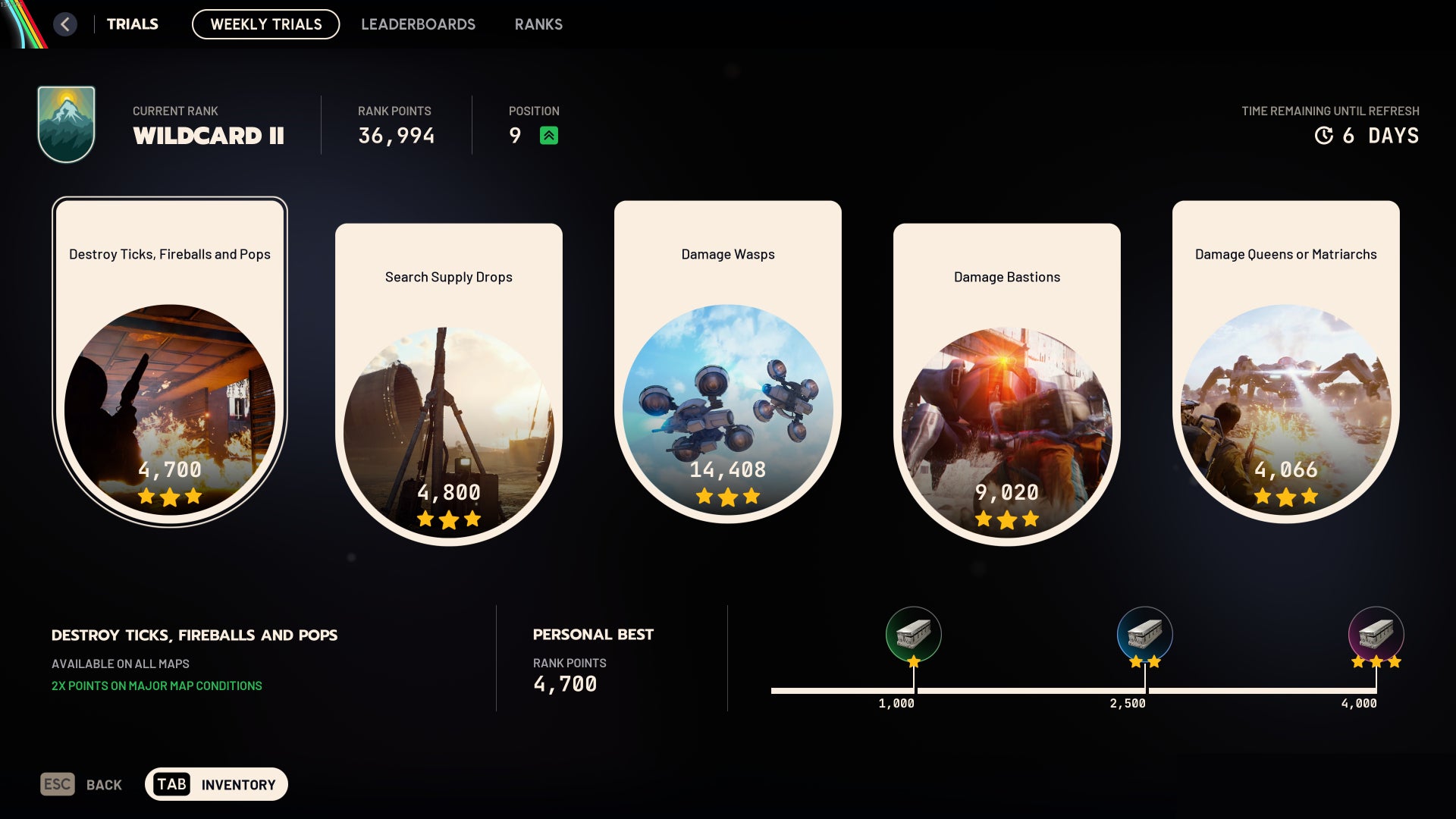
One of the best ways to get Blueprints is by hitting three stars on all five Trials every week. |Image credit:Rock Paper Shotgun/Embark Studios
Blueprints obtained from Trials
One of the very best ways to get Blueprints is as rewards for completing Trials in Arc Raiders. Trials are unlocked from Level 15 onwards, and allow you to earn rewards by focusing on certain tasks over the course of several raids. For example, one Trial might task you with dealing damage to Hornets, while another might challenge you to loot Supply Drops.
Trials refresh on a weekly basis, with a new week bringing five new Trials. Each Trial can offer up to three rewards after passing certain score milestones, and it’s possible to receive very high level loot from these reward crates - including Blueprints. So if you want to unlock as many Blueprints as possible, you should make a point of completing as many Trials as possible each week.
Best Blueprint farming locations
The very best way to get Blueprints is to frequent specific areas of the maps which combine high-tier loot pools with the right types of containers to search. Here are my recommendations for where to find Blueprints on every map, so you can always keep the search going for new crafting recipes to unlock.
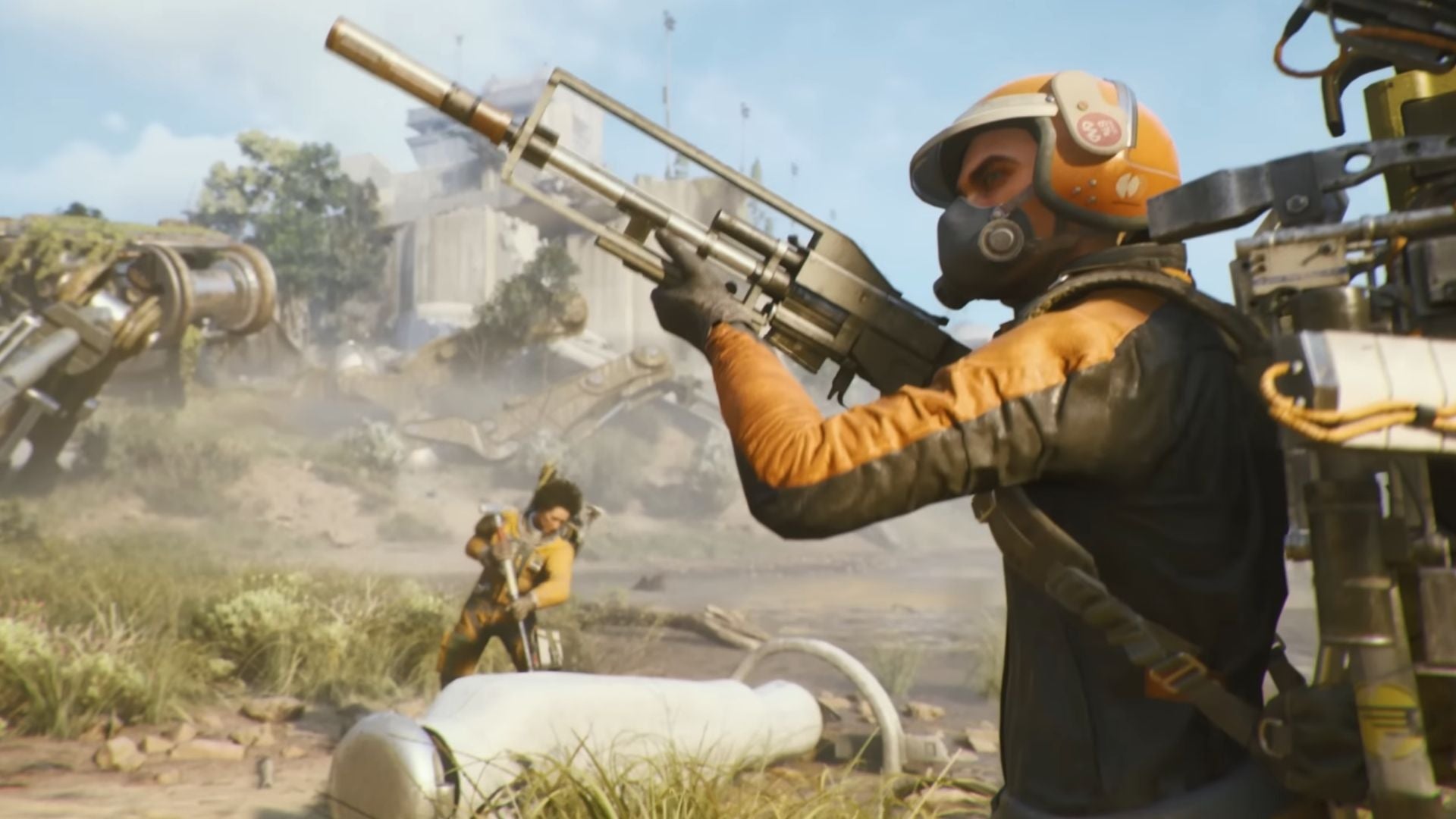
Image credit:Rock Paper Shotgun/Embark Studios
Dam Battlegrounds
The best places to farm Blueprints on Dam Battlegrounds are the Control Tower, Power Generation Complex, Ruby Residence, and Pale Apartments . The first two regions, despite only being marked on the map as mid-tier loot, contain a phenomenal number of containers to loot. The Control Tower can also contain a couple of high-tier Security Lockers - though of course, you’ll need to have unlocked the Security Breach skill at the end of the Survival tree.
There’s also a lot of reporting amongst the playerbase that the Residential areas in the top-left of the map - Pale Apartments and Ruby Residence - give you a comparatively strong chance of finding Blueprints. Considering their size, there’s a high density of containers to loot in both locations, and they also have the benefit of being fairly out of the way. So you’re more likely to have all the containers to yourself.
Buried City
The best Blueprint farming locations on Buried City are the Santa Maria Houses, Grandioso Apartments, Town Hall, and the various buildings of the New District . Grandioso Apartments has a lower number of containers than the rest, but a high chance of spawning weapon cases - which have good Blueprint drop rates. The others are high-tier loot areas, with plenty of lootable containers - including Security Lockers.
Spaceport
The best places to find Blueprints on Spaceport are the Arrival and Departure Buildings, as well as Control Tower A6 and the Launch Towers . All these areas are labelled as high-value loot regions, and many of them are also very handily connected to one another by the Spaceport wall, which you can use to quickly run from one area to the next. At the tops of most of these buildings you’ll find at least one Security Locker, so this is an excellent farming route for players looking to find Blueprints.
The downside to looting Blueprints on Spaceport is that all these areas are hotly contested, particularly in Duos and Squads. You’ll need to be very focused and fast in order to complete the full farming route.
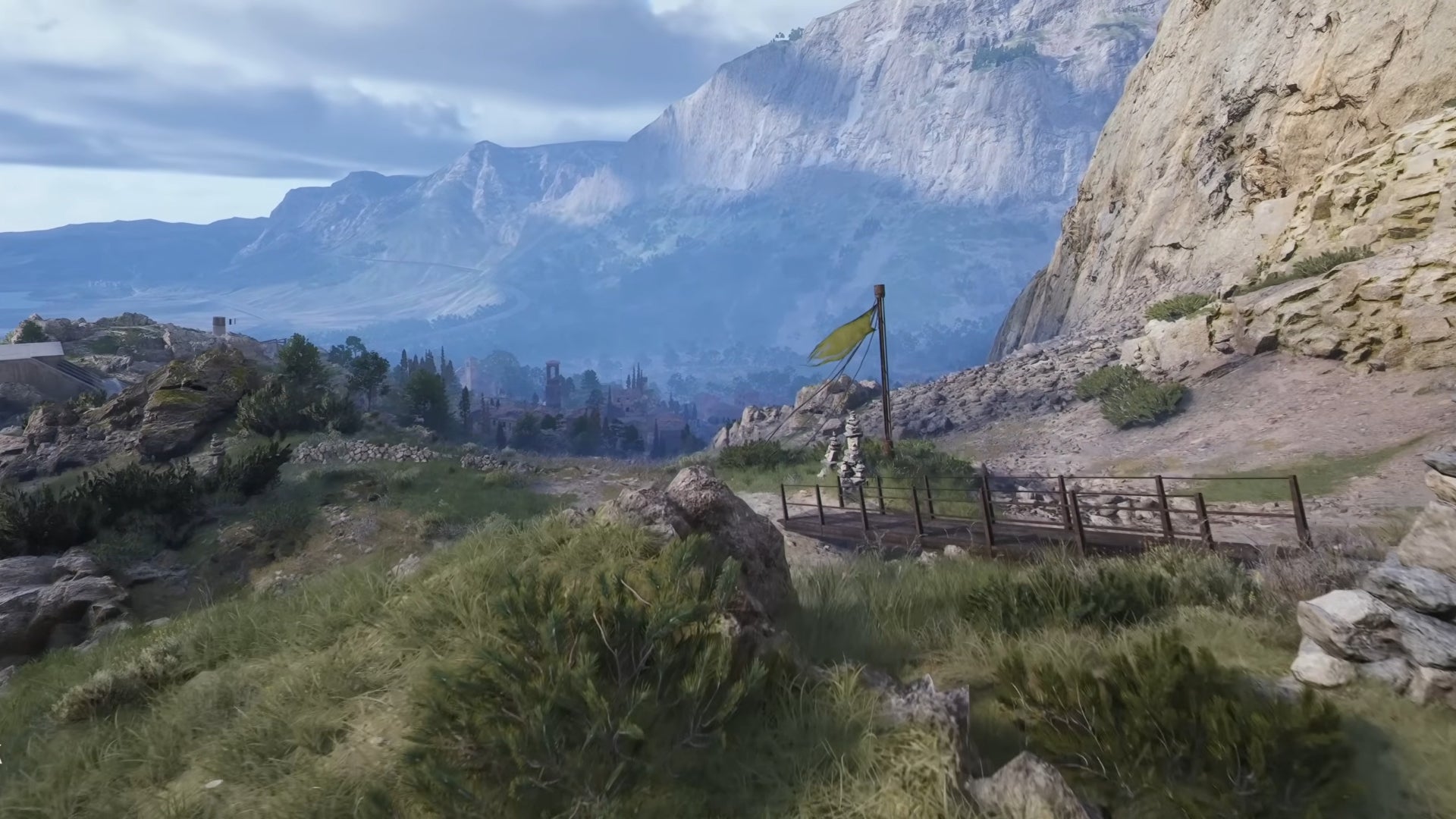
Image credit:Rock Paper Shotgun/Embark Studios
Blue Gate
Blue Gate tends to have a good chance of dropping Blueprints, potentially because it generally has a high number of containers which can hold lots of items; so there’s a higher chance of a Blueprint spawning in each container. In my experience, the best Blueprint farming spots on Blue Gate are Pilgrim’s Peak, Raider’s Refuge, the Ancient Fort, and the Underground Complex beneath the Warehouse .
All of these areas contain a wealth of containers to loot. Raider’s Refuge has less to loot, but the majority of the containers in and around the Refuge are raider containers, which have a high chance of containing Blueprints - particularly during major events.
Stella Montis
On the whole, Stella Montis seems to have a very low drop rate for Blueprints (though a high chance of dropping other high-tier loot). If you do want to try farming Blueprints on this map, the best places to find Blueprints in Stella Montis are Medical Research, Assembly Workshop, and the Business Center . These areas have the highest density of containers to loot on the map.
In addition to this, the Western Tunnel has a few different Security Lockers to loot, so while there’s very little to loot elsewhere in this area of the map, it’s worth hitting those Security Lockers if you spawn there at the start of a match.
That wraps up this primer on how to get all the Blueprints in Arc Raiders as quickly as possible. With the Expedition system constantly resetting a large number of players’ Blueprints, it’s more important than ever to have the most up-to-date information on where to find all these Blueprints.
While you’re here, be sure to check out our Arc Raiders best guns tier list , as well as our primers on the best skills to unlock and all the different Field Depot locations on every map.
ARC Raiders
PS5 , Xbox Series X/S , PC
Rock Paper Shotgun is better when you sign in
Sign in and join us on our journey to discover strange and compelling PC games.
