How a nod to Nietzsche in Soma got me thinking twice about that suffocating buzzword, immersion
Apollo ebb

Image credit:Frictional Games

I can’t remember the first time I felt “immersed” in a videogame, but I can remember the first time I got stuck under a swimming pool float as a kid, scratching at a scabby foam ceiling roamed by mocking silver jellyfish of air. I can remember the first few times I drowned in videogames, fighting the waterlogged handling in Sonic’s Labyrinth Zone, or operating the agile sarcophagus that is Lara Croft in Aztec print grottos of antiseptic blue.
I find the continuing use of “immersive” to describe believable videogame worlds weird and a bit alarming. Partial immersion would be one thing - the videogame as nice hot bath at the end of the day, the videogame as splashing around in a stream of thought, the videogame as a kind of apple-bobbing. The “immersion” of the “immersive sim” is a different matter entirely: it’s a box of clockwork you’re invited to tease apart, not some hyperreal enclosure. But the “full” or “total” sensory immersion repeatedly offered by big-budget, photoreal 3D games seems a lot like suffocation.
Even divorced from the idea of dying in the depths, and taken seriously as a psychological state rather than a marketing buzzword, the promise of complete “immersion” sounds like a threat. It entails self loss, time loss, inability to recognise a simulation for itself, susceptibility to whatever that simulation imposes on you. Publishers and developers throw this idea around in press releases, then act all hurt and surprised when enterprising quacks start making wild claims about dissociation and addiction.
I’ve been thinking lately, however, about how immersion could be reconfigured as a critical tool, about whether the idea of play as a plunge beneath the surface doesn’t capture something vital, after all. This journey begins with a plastic paperweight of a famous thinker I found while replaying Frictional’s horror game Soma, which appears to be on the verge of getting a sequel . Beware moderate Soma spoilers from this point on.
<img loading=“lazy” src=“https://assetsio.gnwcdn.com/3_B06khLO.jpg?width=2048&height=2048&fit=bounds&quality=85&format=jpg&auto=webp" onerror=“this.onerror=null;this.src=‘https://blogger.googleusercontent.com/img/a/AVvXsEhe7F7TRXHtjiKvHb5vS7DmnxvpHiDyoYyYvm1nHB3Qp2_w3BnM6A2eq4v7FYxCC9bfZt3a9vIMtAYEKUiaDQbHMg-ViyGmRIj39MLp0bGFfgfYw1Dc9q_H-T0wiTm3l0Uq42dETrN9eC8aGJ9_IORZsxST1AcLR7np1koOfcc7tnHa4S8Mwz_xD9d0=s16000';" alt=“A ball-shaped aquatic robot approaching an ocean bunker overgrown by coral and weeds with “Delta” on the door in glowing green letters, from the horror game SOMA. - 3”>
Image credit:New Game Network / Frictional
Soma takes “immersion” back to its older etymological association with baptism. It is about the wonder and dread of being reborn underwater. It casts you as Simon, a grieving man who drops by the doc’s for a scan one day, and wakes seconds later in a collapsing artificial habitat on the deep ocean floor. Stalked and, at times, aided by cybernetic creatures, Simon becomes embroiled in a search for the Ark - a simulated full-body VR paradise that is designed to shelter the digitised minds of the surviving PATHOS-II crew.
Soma is an existential thought experiment that sometimes wears its bibliography on its sleeve. In one failing outpost, you stumble into a scientist’s quarters that harbours works from Rene Descartes, Carl Jung and Ludwig Wittgenstein. There’s also a statue of Qieci, the 9th century Chinese monk latterly known as the “Laughing Buddha”, and on a desk against the hull, a bobblehead of 19th century German philosopher Friedrich Nietzsche. I’ve been trying to work out how Nietzsche would feel about being reincarnated as an abyssal Funko Pop. Given the comic indignities he inflicts on his own authorial proxy in Thus Spake Zarathustra - a kind of spoof New Testament - I like to think he would have been pleased.
.png?width=2048&height=2048&fit=bounds&quality=85&format=jpg&auto=webp)
Image credit:seljca / Frictional Games
I’m no real Nietzsche scholar, but I’ve studied a couple of his books in depth, and find him to be an engrossing, complex, anguished monster: a lyrical and endlessly quotable despiser of false morality; a cleric’s son who notoriously declared (again, via Zarathustra) that God Is Dead; a lifelong convalescent who sought to shuck off religious shame and find joy in the body; a tedious sexist and a knowing megalomaniac who prankishly characterised himself as the Anti-Christ.
Nietzsche’s legacy is hard to disentangle from his posthumous co-option by the Nazis , who cherry-picked and misrepresented such ideas as “will to power” and the “ubermensch”. In life, he scorned anti-Semites and demagogic nationalists at large, but his writing is full nonetheless of contemporary racial and ethnic caricatures. You could argue that there is a proto-fascist drift to his account of civilization as a struggle for transcendence carried out by “peoples” with different proportions of virility and effeminacy, aristocracy and slavishness. As such, I find it difficult to draw straightforwardly from his work, but Nietzsche has at least one idea I love sharing and trying to get my head around. I was happy to discover his likeness submerged in a videogame you can redefine as an investigation of what he calls the Dionysian.
Dionysus is the ancient Greek god of wine, fertility and festivity. In Nietzsche’s first major publication, The Birth of Tragedy , this god becomes a cosmic social force of intoxication and dissolution - a violent creative, artistic, communal urge. Nietzsche describes the Dionysian as a rapture in which human beings rupture and mingle with the chaos of nature, in which selves flow like liquor and bodies are revealed for transformable matter - “here the noblest clay, the most expensive marble, man, is kneaded and hewn”.
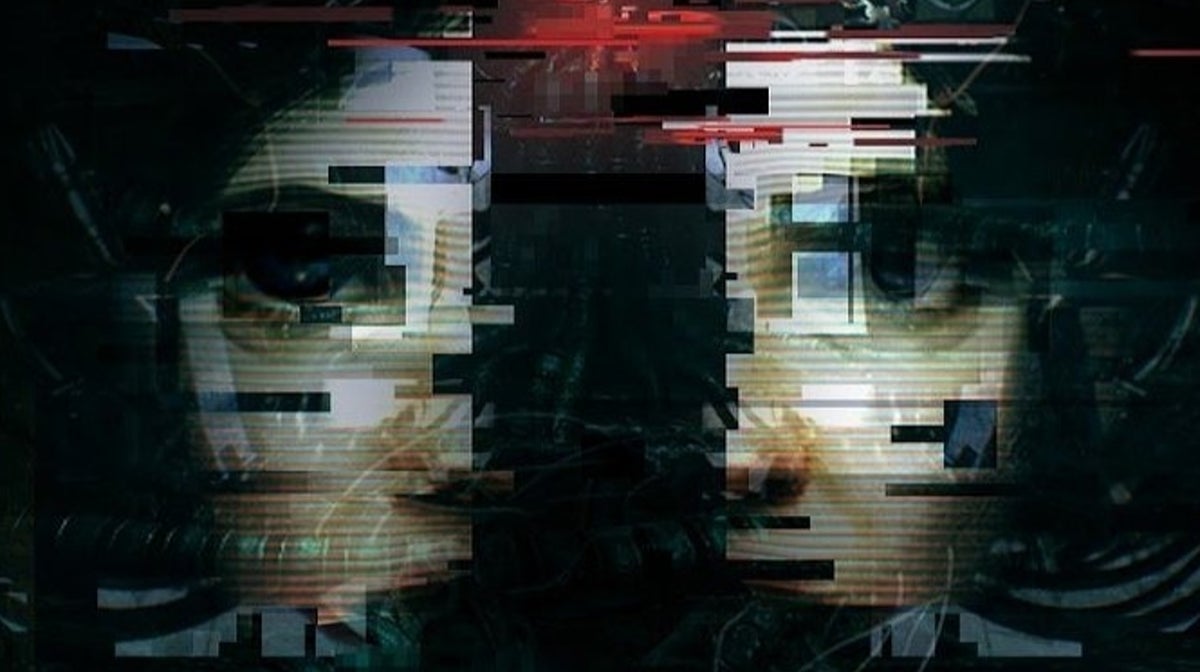
Image credit:Frictional Games
Dionysus is an invigorating molten darkness, a “glowing life” in the veins of the ancient Greeks, but if he is left unchecked, his mad dance becomes “an abominable mixture of sensuality and cruelty”. As such, he requires a symbiotic counterpoint - Apollo, god of light and of the image. Where the Dionysian engulfs the brain in a drunken, bloody twirl, Apollo deals in lucid dreams, a radiant realm of beautifully distinguished and ordered representations. He is the god of individuation, and thereby of structures comprised of individuals, including the edifice of the state.
Apollo is needed to prevent Dionysus from reducing everything to formless agony and ecstasy, but if he is too strong, his images grow “cadaverous” and oppressive. He becomes an instrument of segregation and alienation. Nietzsche summarises the relationship between these primordial drives in Schopenhauerian terms as that of a heaving ocean surrounding a voyager. To approach the Dionysian is to lean over the side of the boat, plunge your head under.
Nietzsche proposes that all healthy cultures need both the pristine Apollonian world of images and its mad Dionysian dissolution, and that the making and experience of art is best understood as a mechanism for managing this godly alchemy. Art alters the balance of power between Apollo and Dionysus, and thus provides a basis for various kinds of society. In the case of the Ancient Greek theatrical tragedy, for example, Apollo is present as the named characters of the story - shining figures out of legend. But in amongst these towering personae moves a Dionysian multitude, the Chorus, who lack a straightforward equivalent in today’s secular dramaturgy, serving by turns as ritual elements, narrators and onlookers.
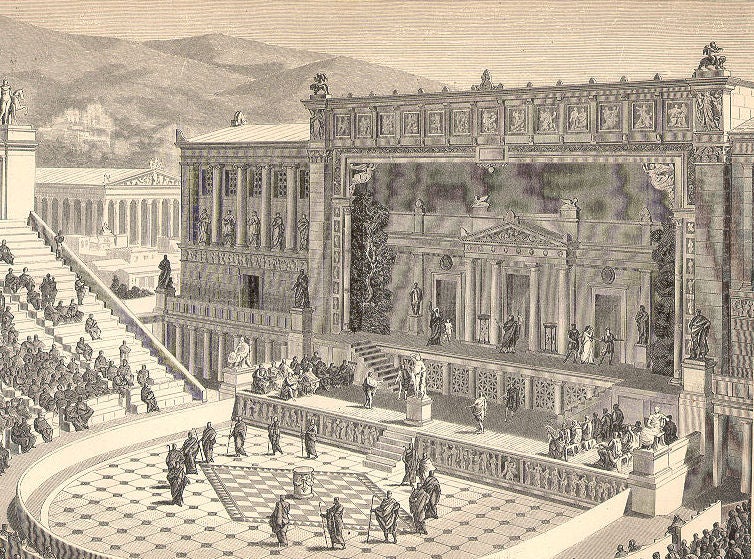
Image credit:Joseph Kürschner
In Nietzsche’s analysis, the Chorus form a shifting, sunlit layer between the violence of any classical tragedy - the collapse of the hero’s story into orgiastic ruin - and the spectating crowds. The Chorus are both a “living wall erected against the pounding storm” of the individual’s destruction, and a double of the spectators that allows us to picture ourselves as Dionysian revellers, swept up in the storm. The theatrical tragedy serves as a precarious middle world between the Apollonian dream and the tidal force of Dionysus - a middle world between illusion and intoxication, which extends its workings outward into the conduct of Athenian politics and law. The tragedy is where Dionysus is repeatedly tempered and made concrete as an Apollonian image: it is a crackling reactor chamber, a holy dynamo for a culture oscillating between liquefaction and petrifaction.
Compare that wonderful idea of art with the prevailing marketplace definition of art as a glossy ornament, spawned and transacted by the alienated entrepreneur; a handsome dead object, granted its floor in the economy’s wobbling skyscraper, which has no serious outputs, and can only be justified by devoutly reciting the dollar value and petty topicality of The Creative Industries. Compare Nietzsche’s idea of the tragedy as a process of partial, artful subsumption in a furious ritual of creation with the videogame marketing rhetoric of “immersion” as the leaden increase of “realness” until it feels as though you are “really there”. Still, it’s possible to talk about today’s artforms, even videogames, in Apollonian-Dionysian terms - to think about them as fraught sacred artefacts that are part-drunk and part-dreaming.
Videogames aren’t live public performances, but I think they express something of Nietzsche’s theatrical admixture of blood and sunlight. They are, you could argue, Apollonian in being thrall to images with clear rules for interaction, especially in the case of blockbuster photorealistic games that most often attract the designation of “immersive”. And they are Dionysian in terms of the secret minglings of the code producing those Apollonian images: the ocean of invisible operations that surround and pervade the crisp on-screen representations, relating the visible pieces unpredictably and slyly extending their cadences outward to the player.
The “immersion” of the big budget shooter might conjure Apollo, in its appeal to the exponentially beautiful image, but perhaps this immersiveness is better defined as Dionysian intoxication, because it aims to capsize the difference between player and simulation, swamping the Apollonian beholder in time loss, self loss, while trying to persuade us that we are dreaming, not drowning.
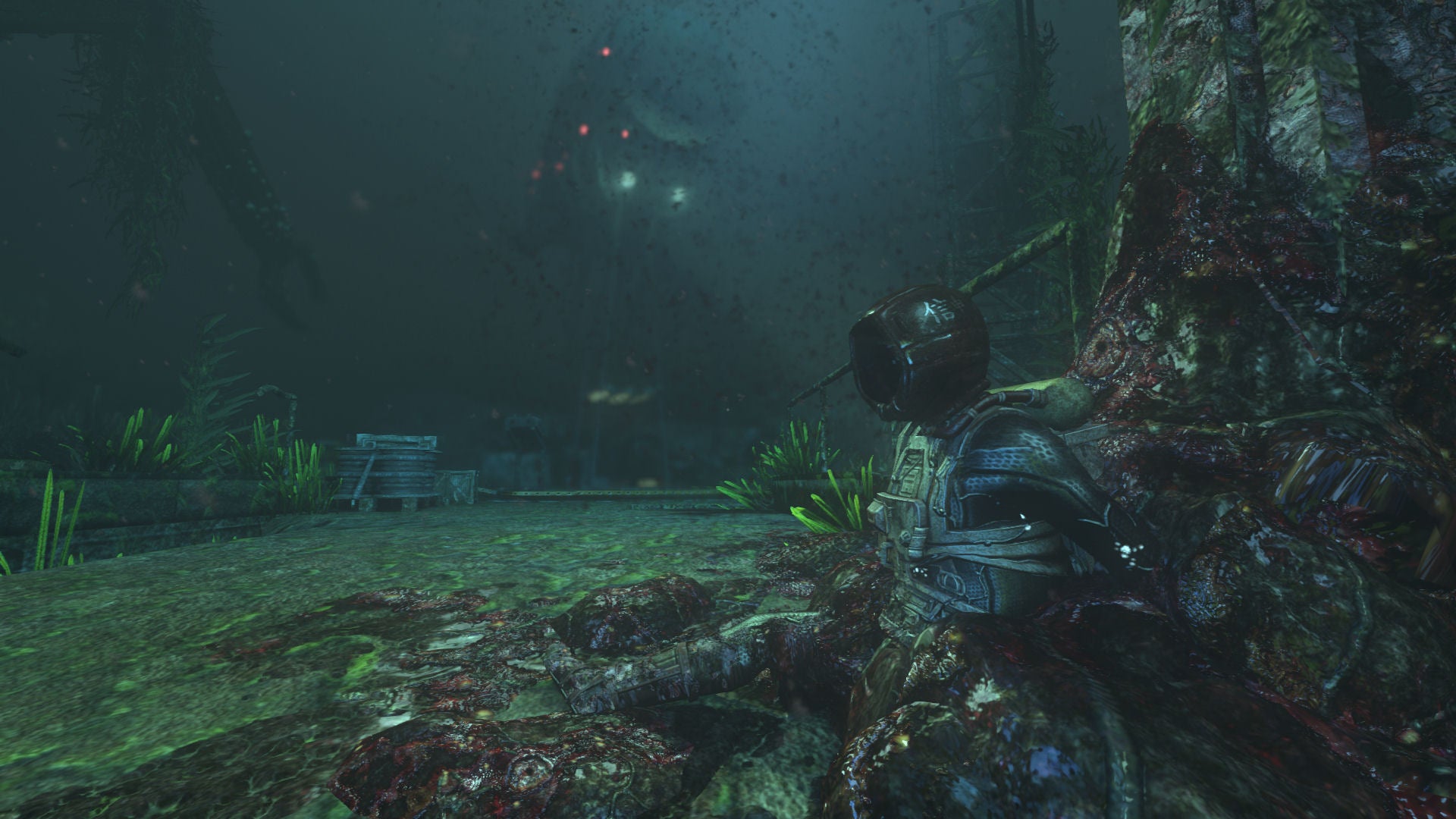
Image credit:New Game Network / Frictional Games
Horror games could be the antidote to such “immersion”, because they echo the Nietzschean tragedy in treating “immersion” with revulsion. The last thing you want, in a horror game, is to feel as though you’re “really there”. Every horror game character is something akin to the Chorus, a “living wall” and a suffering self-image that allows us to witness and enjoy our own, displaced mutilation by monstrous energies.
Part of the thrill, of course, is the fear that the membrane between player and character might somehow collapse, that the “pounding storm” might expand and swallow you too. This is particularly true of Frictional’s horror games, whose protagonists are dogged by a forgotten Dionysian unity with the creatures they hide from, and whose “sanity” effects carry that anxiety to the player, with sensory distortions and even blackouts that interfere with your control - sometimes jumping you forward to the next milestone, in strange echo of everyday bug-spotter complaints about “lost progress”.
Soma, in particular, often plays like a critique or even a parody of videogame “immersion”, though I haven’t read anything by Frictional to indicate that it was actively conceived with this goal. Over the course of the story, the game works through its own peculiar alchemy of Apollo and Dionysus. At the heart of that inquiry is the Ark, a golden and enveloping solarpunk Eden. It’s the only part of Soma’s navigable world that still harbours any sunshine, however ‘fake’ - the last remaining slice of dry land, where human bodies still appear untainted by sunken machines. And yet, the Ark’s wholesome paradise can only be accessed by dissolving ’the’ body, abjuring the meat, and embracing life as one among many spectres haunting a very sophisticated storage drive.
The Ark is therefore both an Apollonian and a Dionysian artwork, and it is Apollonian and Dionysian in both vital and abominable ways. It is Dionysian because it promises communion with other surviving humans, and Dionysian, too, because this unity requires terrifying liquefaction and transformation: Soma’s plot is a series of thresholds in your understanding of this, facilitated by ‘upgrades’ of a sort. The Ark is Apollonian in the beauty of its gilded snowglobe world - and Apollonian, too, in the sense that this realm is a calculated representation, perhaps a misrepresentation. It’s a dream with decidedly non-innocent origins (I am trying not to spoil too much) that may serve as a mechanism of extraction and manipulation.
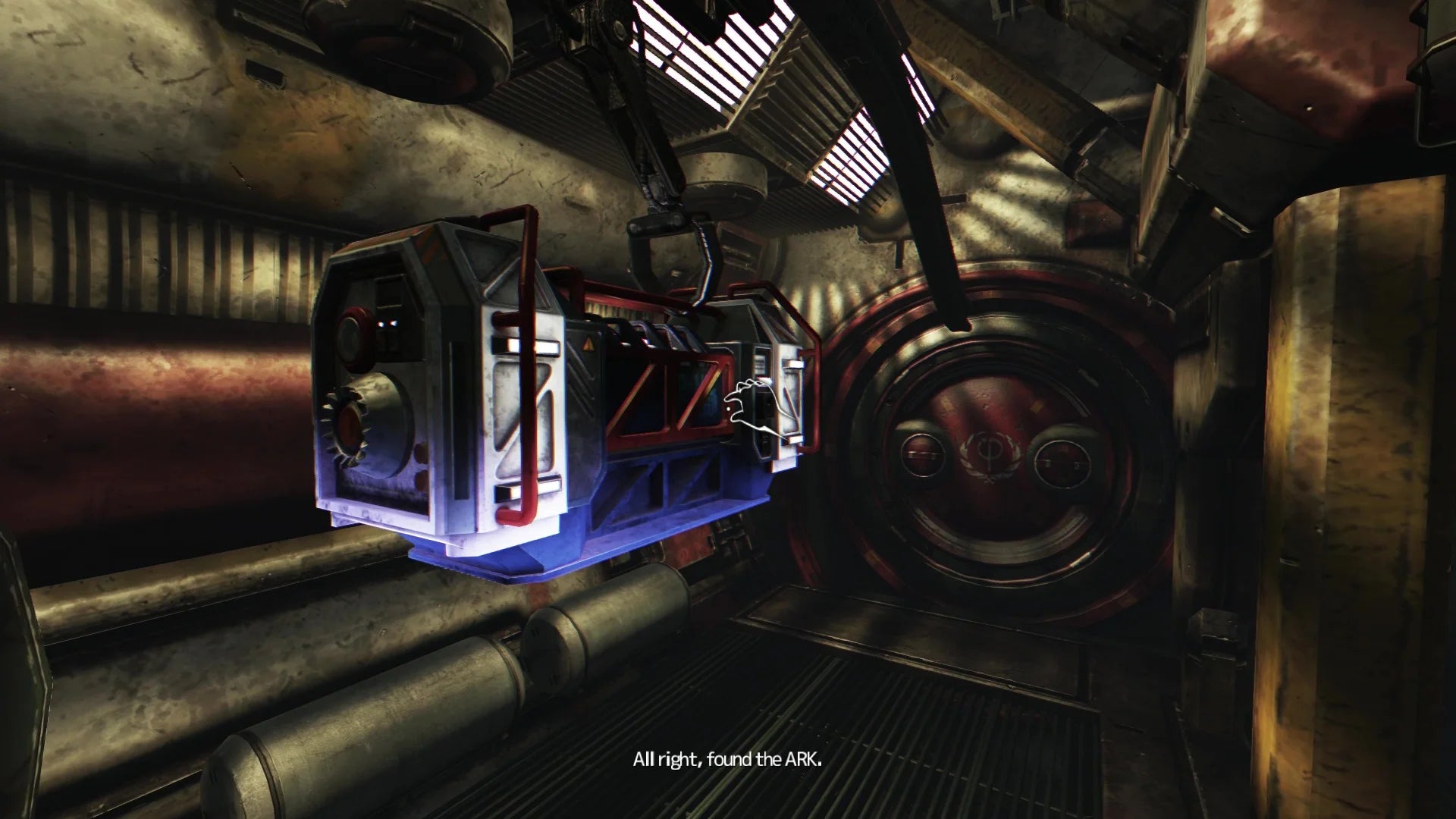
Image credit:IGN / Frictional Games
Nietzsche writes that the person swept up in the spectacle of Apollonian art always knows that they are dreaming. Unlike the Dionysian reveller, they remain only part-immersed, and can distinguish themselves from the illusion. Soma bluntly enforces this lucidity by having you actively build the Ark, or at least, various prototypes, in the course of your descent. Certain puzzles involve selecting assets to fit a scenario and memory budget, as though configuring the game’s own graphics settings. In one of these puzzles, the aim is to devise a sufficiently convincing virtual environment for a non-player character who knows something you need. Fail to establish the right conditions, and the subject will panic and force a reset.
The panic of that unfortunate subject, contending with the suspicion that what they sense is a fabrication, can be read as an absurd exaggeration of the spiralling disbelief of the videogame player wrestling with the appalling truth that their immersive videogame might ‘only’ be fiction. As Oliver Hargrave wrote in 2010 , the cult of “immersion” invites a certain over-sensitivity and narrowness of mind. It aims to render the player intolerant to anything fractious, inconsistent, strange or ‘artificial’, anything that defies particular expectations for fluid habitation of a virtual world. “If videogames ever highlight their artificiality or require concentration or the learning of new rules, then these videogames will be undervalued for not fitting in with the immersion concept,” he notes.
The rhetoric of immersion sabotages the player’s analytical capacity by insisting that there should never be space or pause for thought about the simulation as a simulation - how it operates, how it was made. The thoughtlessness of this immersiveness has wider import. As Adam Stoneman summarises in a much more recent piece on Mark Zuckerberg’s ambitions for the metaverse - that latter-day online Ark of commerce where the kingpins of massive tech corporations once hoped to enjoy another lease of profitability - “the immersive precludes the discursive by collapsing the distance needed for critique.” Immersion is how simulations teach us to forget what simulations are for. Again, intoxication feels like the more appropriate term.
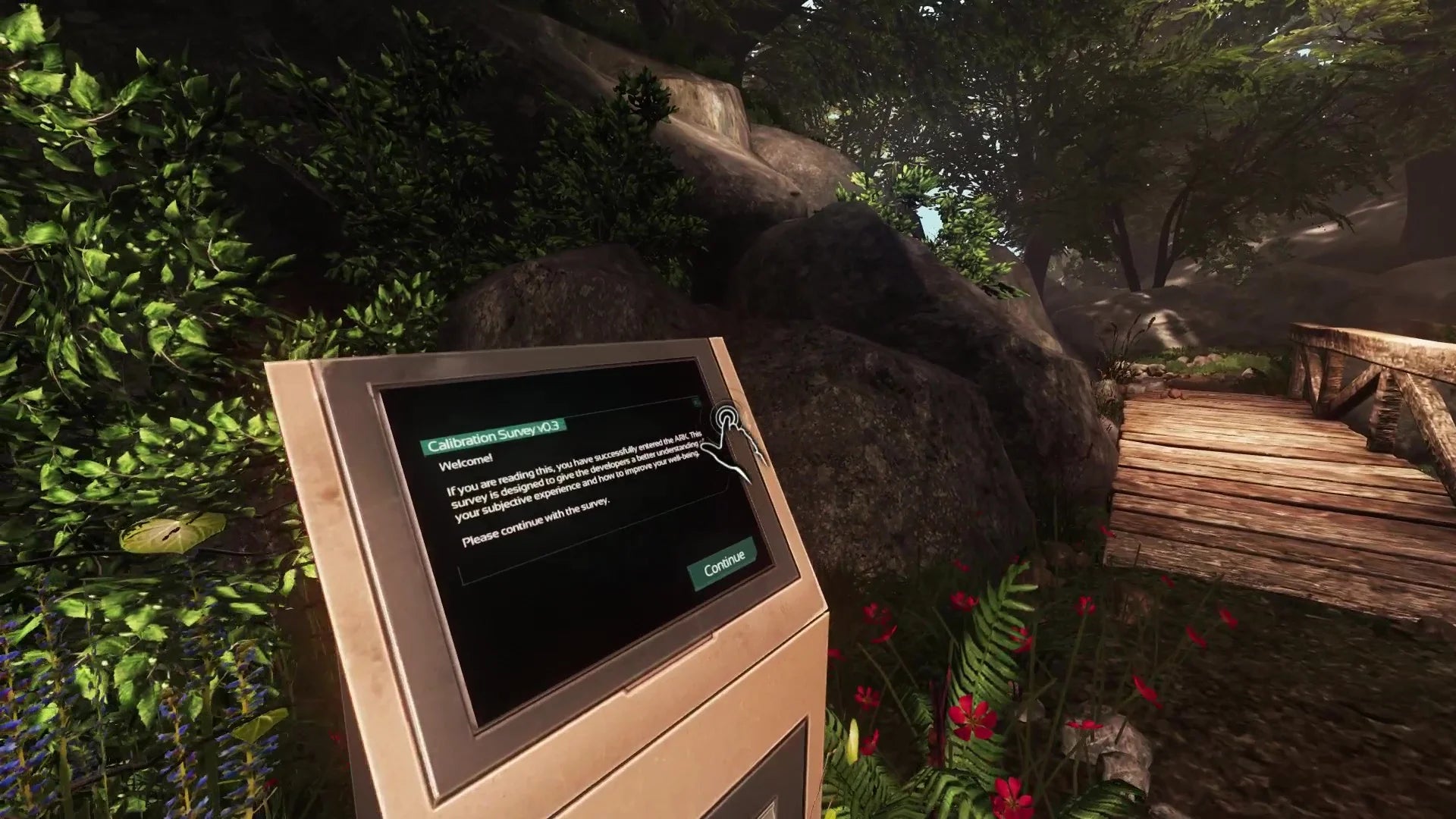
Image credit:IGN / Frictional Games
Later in The Birth of Tragedy, Nietzsche argues that the divine alchemy of earlier Greek theatre has been subverted and diffused by the rise of theatrical naturalism and rational discourse represented by Euripides and Socrates. In Nietzsche’s view, the major artworks of his day had become entirely secular, their “mythical bulwarks” smashed apart and their ritual function dispersed. It’s tempting to carry this idea forward and argue that in videogames, even horror games, what remains of the Apollonian-Dionysian ratio has become part of the sclerotic mirror play of capital, a new god that will perhaps never fully possess and immerse its victims, in that it can’t help enshittifying itself, dragging you back to the surface.
Soma
PS4 , Xbox One , PC , Mac
Rock Paper Shotgun is better when you sign in
Sign in and join us on our journey to discover strange and compelling PC games.

All 75 Arc Raiders Blueprints and where to get them
These areas have the highest chance of giving you Blueprints
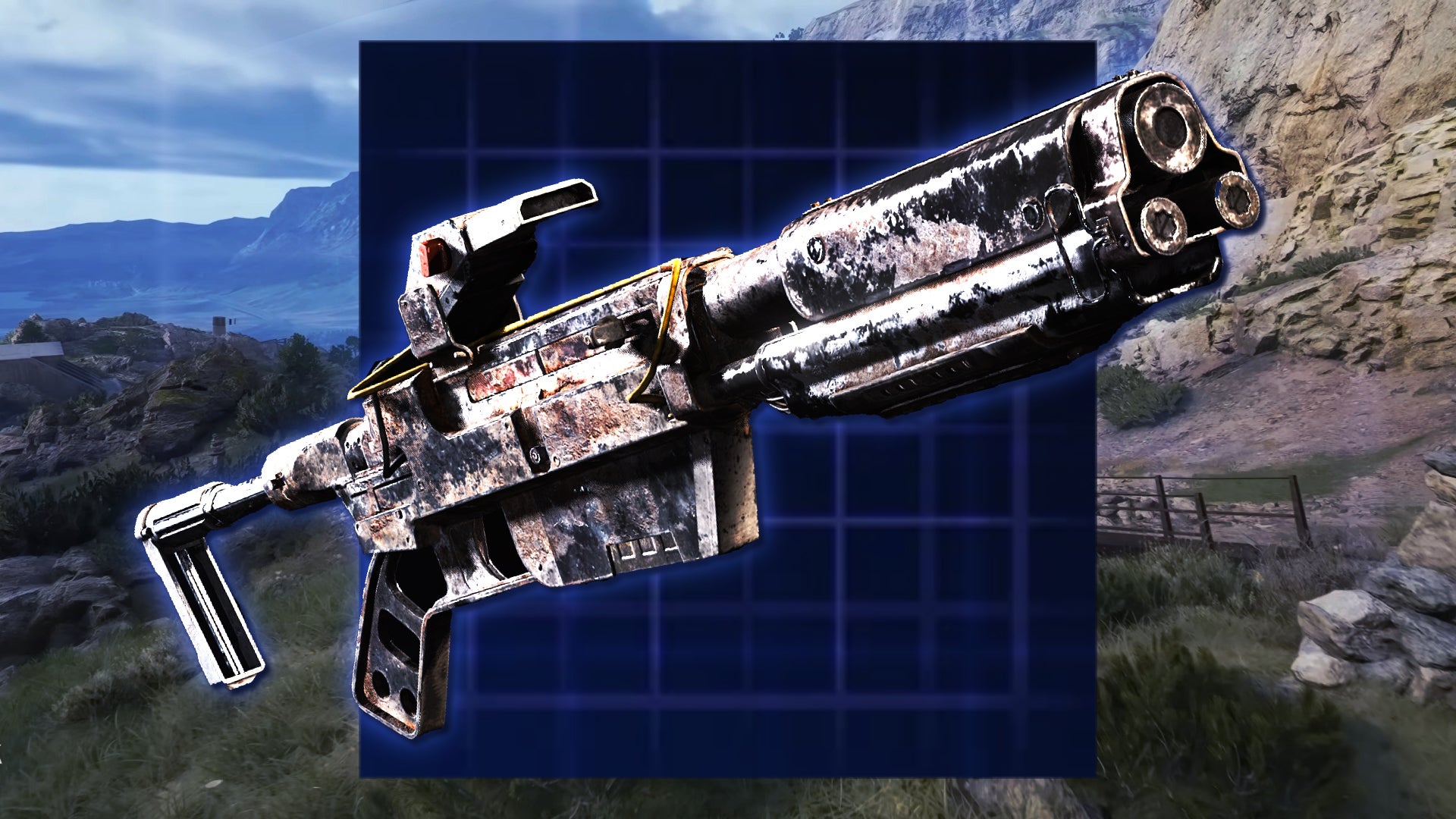
Image credit:Rock Paper Shotgun/Embark Studios

Looking for more Arc Raiders Blueprints? It’s a special day when you find a Blueprint, as they’re among the most valuable items in Arc Raiders. If you find a Blueprint that you haven’t already found, then you must make sure you hold onto it at all costs, because Blueprints are the key to one of the most important and powerful systems of meta-progression in the game.
This guide aims to be the very best guide on Blueprints you can find, starting with a primer on what exactly they are and how they work in Arc Raiders, before delving into exactly where to get Blueprints and the very best farming spots for you to take in your search.
We’ll also go over how to get Blueprints from other unlikely activities, such as destroying Surveyors and completing specific quests. And you’ll also find the full list of all 75 Blueprints in Arc Raiders on this page (including the newest Blueprints added with the Cold Snap update , such as the Deadline Blueprint and Firework Box Blueprint), giving you all the information you need to expand your own crafting repertoire.
In this guide:
- What are Blueprints in Arc Raiders?
- Full Blueprint list: All crafting recipes
- Where to find Blueprints in Arc Raiders Blueprints obtained from quests Blueprints obtained from Trials Best Blueprint farming locations

What are Blueprints in Arc Raiders?
Blueprints in Arc Raiders are special items which, if you manage to extract with them, you can expend to permanently unlock a new crafting recipe in your Workshop. If you manage to extract from a raid with an Anvil Blueprint, for example, you can unlock the ability to craft your very own Anvil Pistol, as many times as you like (as long as you have the crafting materials).
To use a Blueprint, simply open your Inventory while in the lobby, then right-click on the Blueprint and click “Learn And Consume” . This will permanently unlock the recipe for that item in your Workshop. As of the Stella Montis update, there are allegedly 75 different Blueprints to unlock - although only 68 are confirmed to be in the game so far. You can see all the Blueprints you’ve found and unlocked by going to the Workshop menu, and hitting “R” to bring up the Blueprint screen.
It’s possible to find duplicates of past Blueprints you’ve already unlocked. If you find these, then you can either sell them, or - if you like to play with friends - you can take it into a match and gift it to your friend so they can unlock that recipe for themselves. Another option is to keep hold of them until the time comes to donate them to the Expedition.
Full Blueprint list: All crafting recipes
Below is the full list of all the Blueprints that are currently available to find in Arc Raiders, and the crafting recipe required for each item:
| Blueprint | Type | Recipe | Crafted At |
|---|---|---|---|
| Bettina | Weapon | 3x Advanced Mechanical Components 3x Heavy Gun Parts 3x Canister | Gunsmith 3 |
| Blue Light Stick | Quick Use | 3x Chemicals | Utility Station 1 |
| Aphelion | Weapon | 3x Magnetic Accelerator 3x Complex Gun Parts 1x Matriarch Reactor | Gunsmith 3 |
| Combat Mk. 3 (Flanking) | Augment | 2x Advanced Electrical Components 3x Processor | Gear Bench 3 |
| Combat Mk. 3 (Aggressive) | Augment | 2x Advanced Electrical Components 3x Processor | Gear Bench 3 |
| Complex Gun Parts | Material | 2x Light Gun Parts 2x Medium Gun Parts 2x Heavy Gun Parts | Refiner 3 |
| Fireworks Box | Quick Use | 1x Explosive Compound 3x Pop Trigger | Explosives Station 2 |
| Gas Mine | Mine | 4x Chemicals 2x Rubber Parts | Explosives Station 1 |
| Green Light Stick | Quick Use | 3x Chemicals | Utility Station 1 |
| Pulse Mine | Mine | 1x Crude Explosives 1x Wires | Explosives Station 1 |
| Seeker Grenade | Grenade | 1x Crude Explosives 2x ARC Alloy | Explosives Station 1 |
| Looting Mk. 3 (Survivor) | Augment | 2x Advanced Electrical Components 3x Processor | Gear Bench 3 |
| Angled Grip II | Mod | 2x Mechanical Components 3x Duct Tape | Gunsmith 2 |
| Angled Grip III | Mod | 2x Mod Components 5x Duct Tape | Gunsmith 3 |
| Hullcracker | Weapon | 1x Magnetic Accelerator 3x Heavy Gun Parts 1x Exodus Modules | Gunsmith 3 |
| Launcher Ammo | Ammo | 5x Metal Parts 1x Crude Explosives | Workbench 1 |
| Anvil | Weapon | 5x Mechanical Components 5x Simple Gun Parts | Gunsmith 2 |
| Anvil Splitter | Mod | 2x Mod Components 3x Processor | Gunsmith 3 |
| ??? | ??? | ??? | ??? |
| Barricade Kit | Quick Use | 1x Mechanical Components | Utility Station 2 |
| Blaze Grenade | Grenade | 1x Explosive Compound 2x Oil | Explosives Station 3 |
| Bobcat | Weapon | 3x Advanced Mechanical Components 3x Light Gun Parts | Gunsmith 3 |
| Osprey | Weapon | 2x Advanced Mechanical Components 3x Medium Gun Parts 7x Wires | Gunsmith 3 |
| Burletta | Weapon | 3x Mechanical Components 3x Simple Gun Parts | Gunsmith 1 |
| Compensator II | Mod | 2x Mechanical Components 4x Wires | Gunsmith 2 |
| Compensator III | Mod | 2x Mod Components 8x Wires | Gunsmith 3 |
| Defibrillator | Quick Use | 9x Plastic Parts 1x Moss | Medical Lab 2 |
| ??? | ??? | ??? | ??? |
| Equalizer | Weapon | 3x Magnetic Accelerator 3x Complex Gun Parts 1x Queen Reactor | Gunsmith 3 |
| Extended Barrel | Mod | 2x Mod Components 8x Wires | Gunsmith 3 |
| Extended Light Mag II | Mod | 2x Mechanical Components 3x Steel Spring | Gunsmith 2 |
| Extended Light Mag III | Mod | 2x Mod Components 5x Steel Spring | Gunsmith 3 |
| Extended Medium Mag II | Mod | 2x Mechanical Components 3x Steel Spring | Gunsmith 2 |
| Extended Medium Mag III | Mod | 2x Mod Components 5x Steel Spring | Gunsmith 3 |
| Extended Shotgun Mag II | Mod | 2x Mechanical Components 3x Steel Spring | Gunsmith 2 |
| Extended Shotgun Mag III | Mod | 2x Mod Components 5x Steel Spring | Gunsmith 3 |
| Remote Raider Flare | Quick Use | 2x Chemicals 4x Rubber Parts | Utility Station 1 |
| Heavy Gun Parts | Material | 4x Simple Gun Parts | Refiner 2 |
| Venator | Weapon | 2x Advanced Mechanical Components 3x Medium Gun Parts 5x Magnet | Gunsmith 3 |
| Il Toro | Weapon | 5x Mechanical Components 6x Simple Gun Parts | Gunsmith 1 |
| Jolt Mine | Mine | 1x Electrical Components 1x Battery | Explosives Station 2 |
| Explosive Mine | Mine | 1x Explosive Compound 1x Sensors | Explosives Station 3 |
| Jupiter | Weapon | 3x Magnetic Accelerator 3x Complex Gun Parts 1x Queen Reactor | Gunsmith 3 |
| Light Gun Parts | Material | 4x Simple Gun Parts | Refiner 2 |
| Lightweight Stock | Mod | 2x Mod Components 5x Duct Tape | Gunsmith 3 |
| Lure Grenade | Grenade | 1x Speaker Component 1x Electrical Components | Utility Station 2 |
| Medium Gun Parts | Material | 4x Simple Gun Parts | Refiner 2 |
| Torrente | Weapon | 2x Advanced Mechanical Components 3x Medium Gun Parts 6x Steel Spring | Gunsmith 3 |
| Muzzle Brake II | Mod | 2x Mechanical Components 4x Wires | Gunsmith 2 |
| Muzzle Brake III | Mod | 2x Mod Components 8x Wires | Gunsmith 3 |
| Padded Stock | Mod | 2x Mod Components 5x Duct Tape | Gunsmith 3 |
| Shotgun Choke II | Mod | 2x Mechanical Components 4x Wires | Gunsmith 2 |
| Shotgun Choke III | Mod | 2x Mod Components 8x Wires | Gunsmith 3 |
| Shotgun Silencer | Mod | 2x Mod Components 8x Wires | Gunsmith 3 |
| Showstopper | Grenade | 1x Advanced Electrical Components 1x Voltage Converter | Explosives Station 3 |
| Silencer I | Mod | 2x Mechanical Components 4x Wires | Gunsmith 2 |
| Silencer II | Mod | 2x Mod Components 8x Wires | Gunsmith 3 |
| Snap Hook | Quick Use | 2x Power Rod 3x Rope 1x Exodus Modules | Utility Station 3 |
| Stable Stock II | Mod | 2x Mechanical Components 3x Duct Tape | Gunsmith 2 |
| Stable Stock III | Mod | 2x Mod Components 5x Duct Tape | Gunsmith 3 |
| Tagging Grenade | Grenade | 1x Electrical Components 1x Sensors | Utility Station 3 |
| Tempest | Weapon | 3x Advanced Mechanical Components 3x Medium Gun Parts 3x Canister | Gunsmith 3 |
| Trigger Nade | Grenade | 2x Crude Explosives 1x Processor | Explosives Station 2 |
| Vertical Grip II | Mod | 2x Mechanical Components 3x Duct Tape | Gunsmith 2 |
| Vertical Grip III | Mod | 2x Mod Components 5x Duct Tape | Gunsmith 3 |
| Vita Shot | Quick Use | 2x Antiseptic 1x Syringe | Medical Lab 3 |
| Vita Spray | Quick Use | 3x Antiseptic 1x Canister | Medical Lab 3 |
| Vulcano | Weapon | 1x Magnetic Accelerator 3x Heavy Gun Parts 1x Exodus Modules | Gunsmith 3 |
| Wolfpack | Grenade | 2x Explosive Compound 2x Sensors | Explosives Station 3 |
| Red Light Stick | Quick Use | 3x Chemicals | Utility Station 1 |
| Smoke Grenade | Grenade | 14x Chemicals 1x Canister | Utility Station 2 |
| Deadline | Mine | 3x Explosive Compound 2x ARC Circuitry | Explosives Station 3 |
| Trailblazer | Grenade | 1x Explosive Compound 1x Synthesized Fuel | Explosives Station 3 |
| Tactical Mk. 3 (Defensive) | Augment | 2x Advanced Electrical Components 3x Processor | Gear Bench 3 |
| Tactical Mk. 3 (Healing) | Augment | 2x Advanced Electrical Components 3x Processor | Gear Bench 3 |
| Yellow Light Stick | Quick Use | 3x Chemicals | Utility Station 1 |
Note: The missing Blueprints in this list likely have not actually been added to the game at the time of writing, because none of the playerbase has managed to find any of them. As they are added to the game, I will update this page with the most relevant information so you know exactly how to get all 75 Arc Raiders Blueprints.
Where to find Blueprints in Arc Raiders
Below is a list of all containers, modifiers, and events which maximise your chances of finding Blueprints:
- Certain quests reward you with specific Blueprints .
- Completing Trials has a high chance of offering Blueprints as rewards.
- Surveyors have a decent chance of dropping Blueprints on death.
- High loot value areas tend to have a greater chance of spawning Blueprints.
- Night Raids and Storms may increase rare Blueprint spawn chances in containers.
- Containers with higher numbers of items may have a higher tendency to spawn Blueprints. As a result, Blue Gate (which has many “large” containers containing multiple items) may give you a higher chance of spawning Blueprints.
- Raider containers (Raider Caches, Weapon Boxes, Medical Bags, Grenade Tubes) have increased Blueprint drop rates. As a result, the Uncovered Caches event gives you a high chance of finding Blueprints.
- Security Lockers have a higher than average chance of containing Blueprints.
- Certain Blueprints only seem to spawn under specific circumstances: Tempest Blueprint only spawns during Night Raid events. Vulcano Blueprint only spawns during Hidden Bunker events. Jupiter and Equaliser Blueprints only spawn during Harvester events.
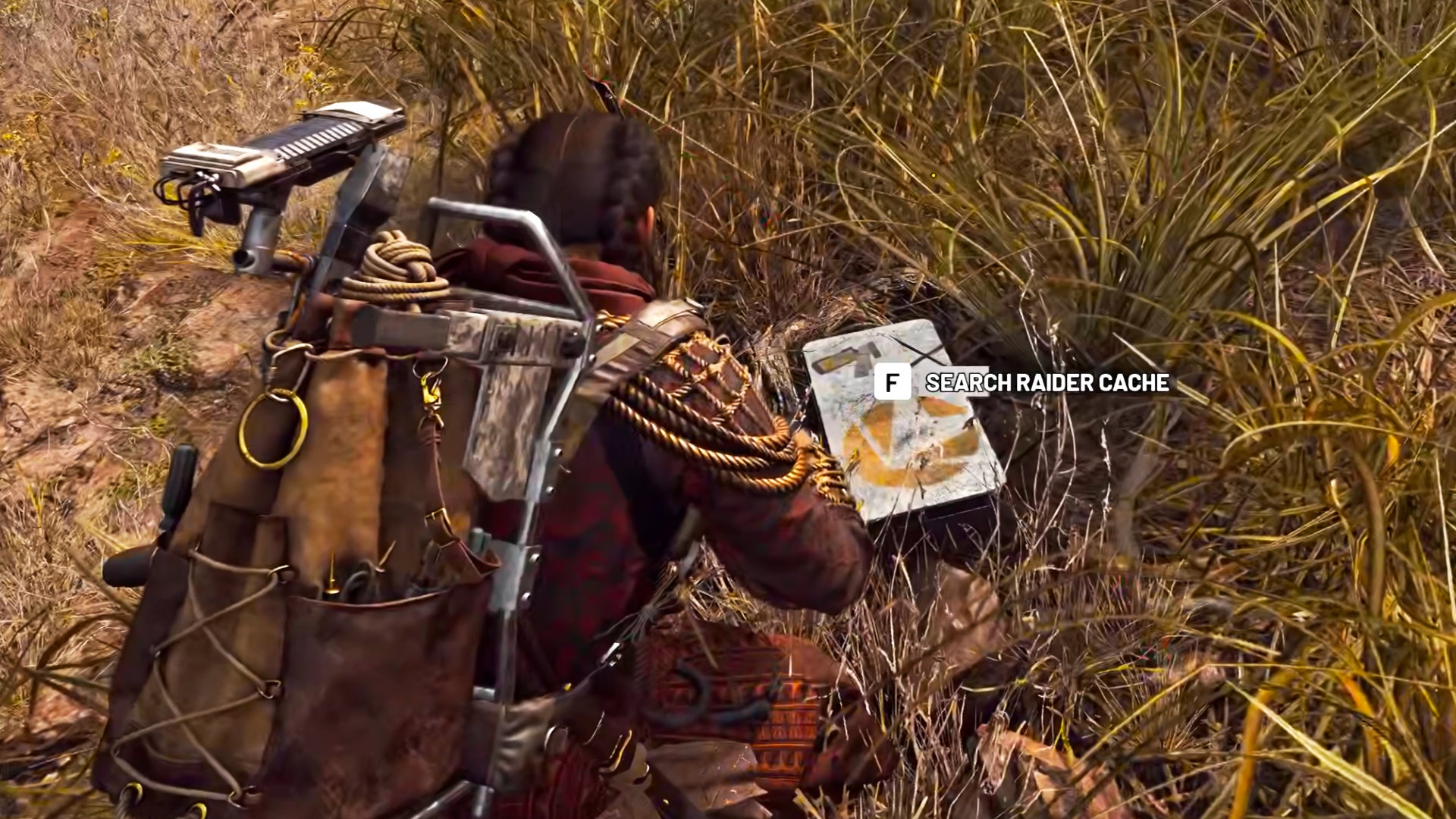
Raider Caches, Weapon Boxes, and other raider-oriented container types have a good chance of offering Blueprints. |Image credit:Rock Paper Shotgun/Embark Studios
Blueprints have a very low chance of spawning in any container in Arc Raiders, around 1-2% on average. However, there is a higher chance of finding Blueprints in particular container types. Specifically, you can find more Blueprints in Raider containers and security lockers.
Beyond this, if you’re looking for Blueprints you should focus on regions of the map which are marked as having particularly high-value loot. Areas such as the Control Tower in Dam Battlegrounds, the Arrival and Departure Buildings in Spaceport, and Pilgrim’s Peak in Blue Gate all have a better-than-average chance of spawning Blueprints somewhere amongst all their containers. Night Raids and Electromagnetic Storm events also increase the drop chances of certain Blueprints .
In addition to these containers, you can often loot Blueprints from destroyed Surveyors - the largest of the rolling ball ARC. Surveyors are more commonly found on the later maps - Spaceport and Blue Gate - and if one spawns in your match, you’ll likely see it by the blue laser beam that it casts into the sky while “surveying”.
Surveyors are quite well-armoured and will very speedily run away from you once it notices you, but if you can take one down then make sure you loot all its parts for a chance of obtaining certain unusual Blueprints.
Blueprints obtained from quests
One way in which you can get Blueprints is by completing certain quests for the vendors in Speranza. Some quests will reward you with a specific item Blueprint upon completion, so as long as you work through all the quests in Arc Raiders, you are guaranteed those Blueprints.
Here is the full list of all Blueprints you can get from quest rewards:
- Trigger Nade Blueprint: Rewarded after completing “Sparks Fly”.
- Lure Grenade Blueprint: Rewarded after completing “Greasing Her Palms”.
- Burletta Blueprint: Rewarded after completing “Industrial Espionage”.
- Hullcracker Blueprint (and Launcher Ammo Blueprint): Rewarded after completing “The Major’s Footlocker”.
Alas, that’s only 4 Blueprints out of a total of 75 to unlock, so for the vast majority you will need to find them yourself during a raid. If you’re intent on farming Blueprints, then it’s best to equip yourself with cheap gear in case you lose it, but don’t use a free loadout because then you won’t get a safe pocket to stash any new Blueprint you find. No pain in Arc Raiders is sharper than failing to extract with a new Blueprint you’ve been after for a dozen hours already.
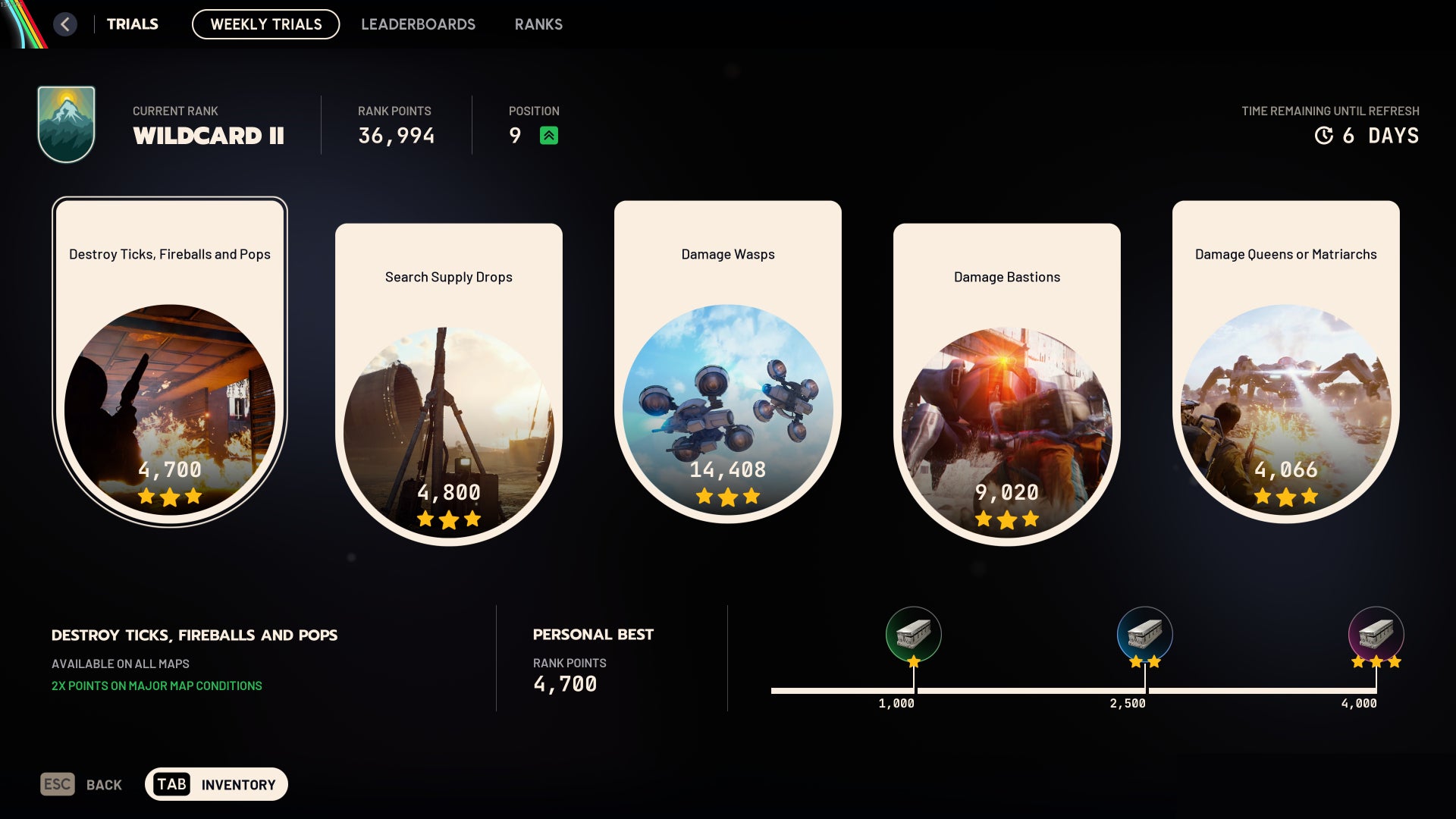
One of the best ways to get Blueprints is by hitting three stars on all five Trials every week. |Image credit:Rock Paper Shotgun/Embark Studios
Blueprints obtained from Trials
One of the very best ways to get Blueprints is as rewards for completing Trials in Arc Raiders. Trials are unlocked from Level 15 onwards, and allow you to earn rewards by focusing on certain tasks over the course of several raids. For example, one Trial might task you with dealing damage to Hornets, while another might challenge you to loot Supply Drops.
Trials refresh on a weekly basis, with a new week bringing five new Trials. Each Trial can offer up to three rewards after passing certain score milestones, and it’s possible to receive very high level loot from these reward crates - including Blueprints. So if you want to unlock as many Blueprints as possible, you should make a point of completing as many Trials as possible each week.
Best Blueprint farming locations
The very best way to get Blueprints is to frequent specific areas of the maps which combine high-tier loot pools with the right types of containers to search. Here are my recommendations for where to find Blueprints on every map, so you can always keep the search going for new crafting recipes to unlock.
Image credit:Rock Paper Shotgun/Embark Studios
Dam Battlegrounds
The best places to farm Blueprints on Dam Battlegrounds are the Control Tower, Power Generation Complex, Ruby Residence, and Pale Apartments . The first two regions, despite only being marked on the map as mid-tier loot, contain a phenomenal number of containers to loot. The Control Tower can also contain a couple of high-tier Security Lockers - though of course, you’ll need to have unlocked the Security Breach skill at the end of the Survival tree.
There’s also a lot of reporting amongst the playerbase that the Residential areas in the top-left of the map - Pale Apartments and Ruby Residence - give you a comparatively strong chance of finding Blueprints. Considering their size, there’s a high density of containers to loot in both locations, and they also have the benefit of being fairly out of the way. So you’re more likely to have all the containers to yourself.
Buried City
The best Blueprint farming locations on Buried City are the Santa Maria Houses, Grandioso Apartments, Town Hall, and the various buildings of the New District . Grandioso Apartments has a lower number of containers than the rest, but a high chance of spawning weapon cases - which have good Blueprint drop rates. The others are high-tier loot areas, with plenty of lootable containers - including Security Lockers.
Spaceport
The best places to find Blueprints on Spaceport are the Arrival and Departure Buildings, as well as Control Tower A6 and the Launch Towers . All these areas are labelled as high-value loot regions, and many of them are also very handily connected to one another by the Spaceport wall, which you can use to quickly run from one area to the next. At the tops of most of these buildings you’ll find at least one Security Locker, so this is an excellent farming route for players looking to find Blueprints.
The downside to looting Blueprints on Spaceport is that all these areas are hotly contested, particularly in Duos and Squads. You’ll need to be very focused and fast in order to complete the full farming route.
Image credit:Rock Paper Shotgun/Embark Studios
Blue Gate
Blue Gate tends to have a good chance of dropping Blueprints, potentially because it generally has a high number of containers which can hold lots of items; so there’s a higher chance of a Blueprint spawning in each container. In my experience, the best Blueprint farming spots on Blue Gate are Pilgrim’s Peak, Raider’s Refuge, the Ancient Fort, and the Underground Complex beneath the Warehouse .
All of these areas contain a wealth of containers to loot. Raider’s Refuge has less to loot, but the majority of the containers in and around the Refuge are raider containers, which have a high chance of containing Blueprints - particularly during major events.
Stella Montis
On the whole, Stella Montis seems to have a very low drop rate for Blueprints (though a high chance of dropping other high-tier loot). If you do want to try farming Blueprints on this map, the best places to find Blueprints in Stella Montis are Medical Research, Assembly Workshop, and the Business Center . These areas have the highest density of containers to loot on the map.
In addition to this, the Western Tunnel has a few different Security Lockers to loot, so while there’s very little to loot elsewhere in this area of the map, it’s worth hitting those Security Lockers if you spawn there at the start of a match.
That wraps up this primer on how to get all the Blueprints in Arc Raiders as quickly as possible. With the Expedition system constantly resetting a large number of players’ Blueprints, it’s more important than ever to have the most up-to-date information on where to find all these Blueprints.
While you’re here, be sure to check out our Arc Raiders best guns tier list , as well as our primers on the best skills to unlock and all the different Field Depot locations on every map.
ARC Raiders
PS5 , Xbox Series X/S , PC
Rock Paper Shotgun is better when you sign in
Sign in and join us on our journey to discover strange and compelling PC games.

